
-
ceo.bfi@gmail.com
Send Email
-
2C, C-6/A Block, Janakpuri, Delhi India 110058
Visit Our Office
99902-92279
Confidentiality Guaranteed
99902-92279
Confidentiality Guaranteed
09
Jun

Jun
Courtroom Showdown: Cash or Crash Live Court Cases in Canada
Exploring entertainment and digital trends as a journalist, I’ve watched a curious shift in how Canadians view risk and reward cashorcrash.ca. We used to envision high-stakes drama on trading floors or at casino tables. Now, that same sensation has an unexpected echo in the way people regard legal proceedings. Courtrooms, with their built-in tension and clear-cut verdicts, tap into a similar part of our collective imagination. This brings us to a platform like Cash or Crash Live. It doesn’t engage in legal matters. Instead, it functions as a cultural mirror, showcasing a broad curiosity about moments of intense pressure. Outcomes in a real Canadian courtroom settle matters of justice, with profound and lasting impact. Cash or Crash Live harnesses the basic thrill of an “all-or-nothing” moment and delivers it into a controlled, entertaining format. We must keep this distinction sharp: the live legal system works with solemn duty, not for amusement. Still, recognizing our shared fascination with pivotal moments helps explain why games that simulate edge-of-your-seat tension hold such appeal. They present a version where everything can be won or lost in an instant, without real-world fallout.
Comprehending the Canadian Legal Landscape
To recognize where any similarities with games of chance diverge, you must have a handle on Canada’s legal underpinnings. The system is a meticulously built institution. It relies on the rule of law, legal authority, and strict protocol. Its purpose is to administer justice, never spectacle. Provincial courts manage everyday cases, while the Supreme Court of Canada tackles constitutional questions. Every step complies with statutes like the Criminal Code or provincial acts. The process is methodical and gradual. Pleadings get presented. Evidence is revealed under strict rules. Arguments must hinge on law and fact. A trial isn’t a impromptu event; it’s the final step of this detailed planning. The outcomes—guilty or not guilty, liable or not liable—change lives for the people concerned. Judges or juries determine these verdicts through careful consideration. They carry a heavy duty. The outcome is never settled by a spinning wheel or a crashing market. This principled, careful setting couldn’t be more dissimilar from the quick, chance-based excitement of a live game show. The distinction emphasizes the critical divide between societal judgment for fairness and a personal decision for entertainment.
Conclusion: Different Realms, Universal Human Captivation
The figurative line between a “courthouse break” and a game like Cash or Crash Live is sharp and should not be muddled. Canada’s legal system is a sophisticated, crucial institution for rule and law. Its decisions are weighed, not arbitrarily determined. Cash or Crash Live is interactive entertainment. It presents the universal rush of risk and reward into a fast-paced, digital format. What they share isn’t mechanics or consequence. It’s a ingrained human obsession with pivotal moments, with tension and its unwinding. One fulfills our societal need for order and fairness. The other appeals to a personal appetite for excitement within a safe, recreational framework. Recognizing this difference lets us appreciate both the gravity of the law and the crafted fun of a game. Examining culture, I see them as two distinct reflections of how we, as a society and as individuals, navigate the ever-present concepts of chance and decision.
The Function of Entertainment in Observing Law
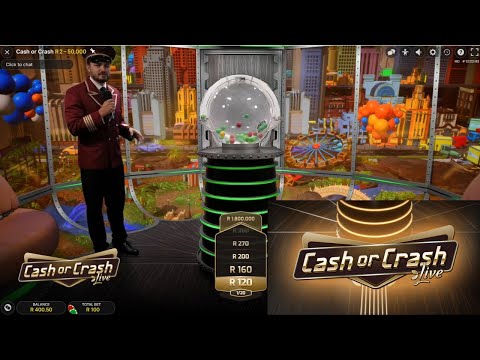
Even with the law’s solemnity, the public has always engaged with legal drama with an component of entertainment. Think of courtroom sketches on the nightly news, the seemingly infinite stream of true-crime documentaries, or dramatic legal thrillers. Canadians are captivated by narratives of justice. This observation doesn’t diminish the system. It emphasizes a human need to understand conflict and resolution. Platforms providing interactive entertainment, like live game shows, function in a separate sphere. Yet they satisfy a similar need for engaging narrative tension in real time. They deliver a structured, predictable form of excitement. The rules are clear and the outcomes are instant, bounded by financial limits. This lets people explore feelings of risk and anticipation in a safe, consensual, recreational context. It’s a form of play. It’s fundamentally different from the often grim and always serious business of law. Still, it appeals to a similar cognitive hunger for resolved tension and clear outcomes.
Safe Engagement with Risk-Based Entertainment
For Canadians who appreciate the excitement of chance-based entertainment like live dealer games, responsible engagement isn’t just a recommendation—it’s vital. Rule one is to view the activity as paid entertainment. It is not a source of income or a cure for financial difficulties. Set a firm budget, an amount you can manage to lose completely, and stick to it without justifications. Set time restrictions for your playing times. Avoid participating when you’re emotionally unsettled. Choose to trustworthy, licensed platforms governed by provincial agencies in Canada. These provide crucial measures like certified random number generators, along with features for setting deposit limits or self-exclusion. Your approach should match a leisure activity. The cost of playing should be like getting a ticket to a movie or a ball game. The instant it stops feeling like fun, the instant it becomes like a habit or a financial need, it’s time to walk away. Every Canadian province offers responsible gambling support. Take advantage of them.
Juxtaposing Virtual Risk with Actual Consequences
The main distinction here is absolute. It revolves around the essence of the stakes. In Cash or Crash Live, the risk is strictly financial and optional. It’s restricted to the entertainment budget a player chooses to spend. The “crash” means losing that wager. It carries no additional legal, social, or personal consequences. The environment is built for excitement. A Canadian courtroom addresses consequences of a separate magnitude altogether. The stakes are essential rights: freedom, financial security, child custody, reputation. The procedures aren’t meant for entertainment. They function for truth-seeking and the fair application of law. A trial’s outcome can alter the course of lives, families, and entire communities. Both arenas feature tension and unknown outcomes. But linking them is a false equivalence. One is a leisure activity that simulates risk. The other is a pillar of democracy, managing real human conflict with deep and permanent effects.
Legal Proceedings Are Not a Sport
We must dismantle any idea that legal proceedings resemble games of chance. The Canadian justice system is built on fairness, evidence, and reasoned argument. A verdict is not a random event. Optimally, it’s the logical conclusion drawn from applying the law to proven facts. Lawyers don’t “gamble” on strategies blindly. They construct arguments from research, precedent, and testimony. Judges and juries are not passive spectators hoping for luck. They are diligent, duty-bound arbiters who must deliberate with care. The timeline stretches over months and years, not seconds. Framing this as a “cash or crash” scenario misinterprets and undermines the pursuit of justice. The metaphor endangers reducing complex human stories and legal principles to mere spectacle. The public might follow a sensational trial with a game-like fascination. But the people inside the system are engaged in a deadly serious process. There is zero element of chance in its rulings.
Cash or Crash Live game: A Test of Planning and Courage
Cash or Crash Live is a hosted game show built on the psychology of danger. A live host broadcasts the event in live time. The premise is basic and captivating. A multiplier, tied to a simulated rocket, starts climbing from 1x. Participants place a stake before the round begins. As the multiplier rises, they encounter a simple decision: withdraw to guarantee their wager increased by the present value, or wait for higher gains. The hook is that the ship can “blow up” at any sudden instant. When it explodes, the value returns to 1x. Whoever who didn’t cash out loses their wager. No ability can anticipate the crash. It’s a chance occurrence governed by a certified algorithm. All the tactics lies in the timing of the collecting move. This builds a palpable, communal excitement. Viewers watch the value rise, observing which participants collect their gains and which observe likely profits vanish. It’s a true, refined experience of uncertainty versus profit.
The Appeal of High-Risk Moments
What draws people, Canadians included, to high-stakes situations? The psychology is clear. These scenarios activate a powerful cocktail of adrenaline and dopamine, chemicals linked to alertness and reward. You notice this pull in suspenseful films, rival sports, and games that mimic risk. A courtroom verdict or a key piece of evidence shares a narrative shape with these moments. There’s a buildup of tension, a pivotal instant of unveiling, and a clear conclusion. Platforms like Cash or Crash Live plug directly into this wiring. They condense the narrative into a fast-paced, pictorial format. The core “cash or crash” mechanic poses a common human dilemma. Do you cash your winnings or bet them for more? It’s a basic, safe version of life’s bigger gambles, like placing savings or waiting for a jury. For players, it establishes a safe space to experience the thrill of deciding under pressure. The stakes are private points or tokens, not someone’s liberty or livelihood.