

-
ceo.bfi@gmail.com
Send Email
-
2C, C-6/A Block, Janakpuri, Delhi India 110058
Visit Our Office
99902-92279
Confidentiality Guaranteed
99902-92279
Confidentiality Guaranteed
29
Aug


Aug
Naina Sahni Tandoor Murder Case
Introduction
The Indian criminal justice system has witnessed several cases that have not only shocked the collective conscience of society but have also tested the complex interplay between criminal law, forensic science, investigation, and judicial reasoning. One such landmark case is State v. Sushil Sharma, popularly known as the “Tandoor Murder Case” of 1995.
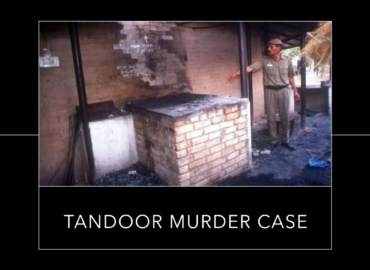
The case attracted widespread national attention because of the brutal nature of the crime, the attempt to destroy the victim’s remains, and the significant role played by forensic evidence in establishing the circumstances surrounding the offence.Naina Sahni was murdered by her husband, Sushil Sharma, who was associated with the political sphere. The prosecution alleged that Sharma suspected Sahni of having an extramarital relationship. On the night of 2 July 1995, following a confrontation, Sharma shot Naina Sahni and subsequently transported her body to the Bagiya Restaurant at Ashok Yatri Niwas, Delhi. He then allegedly attempted to destroy the body and conceal her identity by burning the remains in a tandoor. The discovery of the severely burned body created substantial challenges for investigators, particularly with regard to determining the cause of death and establishing the identity of the deceased.The circumstances of the case required investigators to rely extensively upon scientific and forensic evidence. Examination of the remains, post-mortem findings, ballistic evidence, biological evidence, and DNA examination became important components of the investigation. The case consequently demonstrated the significance of forensic science in criminal investigations where conventional evidence may be unavailable, compromised, or deliberately destroyed.The legal significance of the case is equally important. The Trial Court convicted Sushil Sharma and imposed the death penalty, and the Delhi High Court subsequently upheld the conviction and sentence. The courts considered the nature and brutality of the offence in the context of the “rarest of rare” doctrine established by the Supreme Court in Bachan Singh v. State of Punjab.³ However, the Supreme Court, while upholding Sharma’s conviction, commuted the death sentence to life imprisonment in 2013. The decision reflected the Court’s consideration of the principles governing capital punishment, including the balance between aggravating circumstances, mitigating factors, deterrence, and the possibility of reformation.The Naina Sahni case is therefore significant not merely because of its sensational circumstances, but because it provides an important example of the manner in which forensic science can complement circumstantial evidence and assist the courts in reconstructing a crime. The case illustrates how evidence obtained from a severely burned body, firearm examination, biological examination, DNA analysis, and other investigative findings can collectively contribute to establishing an evidentiary chain.
Factual Background of the Case
Naina Sahni was a graduate of the University of Delhi and was actively associated with the Indian National Congress (INC). She was married to Sushil Sharma, who was then associated with the Youth Congress and was regarded as an emerging political figure.
Their marital relationship was reportedly strained by frequent disagreements and allegations concerning Sahni’s relationship with Matloob Karim, a former college acquaintance. The prosecution case suggested that Sharma was suspicious of the nature of Sahni’s relationship with Karim, which contributed to continuing tension between the couple .On the night of 2 July 1995, Sharma returned to his residence and allegedly found Naina Sahni speaking on the telephone. He suspected that she was communicating with Matloob Karim and confronted her. According to the prosecution version, the ensuing argument escalated into a violent confrontation. Sharma allegedly took out his licensed .32-bore revolver and fired at Sahni, causing fatal firearm injuries. The subsequent forensic examination of the remains and recovery of projectile evidence became significant in establishing that the death was not merely the result of burning but involved firearm injuries .Following the shooting, Sharma allegedly attempted to conceal the crime and destroy evidence by transporting Sahni’s body in his car to the Bagiya Restaurant at Ashok Yatri Niwas, New Delhi. Sharma was familiar with the restaurant and was reportedly known to its management. The prosecution alleged that, after reaching the restaurant, he sought assistance from the restaurant manager, Keshav Kumar, in disposing of the body. The body was subsequently placed inside a tandoor, where an attempt was made to burn the remains and thereby destroy the physical evidence and conceal the identity of the deceased .The attempt to dispose of the body, however, did not succeed. The unusual smoke and activity surrounding the tandoor attracted attention, resulting in the matter being brought to the notice of the police. The severely burned remains were recovered and subjected to forensic examination. The condition of the body initially created considerable difficulty in establishing both the identity of the deceased and the actual cause of death. This led to further forensic investigation, including a detailed post-mortem examination and subsequent scientific analysis.The investigation subsequently developed into a multidisciplinary forensic inquiry involving forensic pathology, ballistic examination, biological evidence and DNA analysis. The recovery of firearm-related evidence and the identification of firearm injuries were particularly significant because they provided evidence that the victim had sustained fatal injuries before the body was subjected to burning. DNA examination subsequently played an important role in establishing the identity of the charred remains as those of Naina Sahni.
Circumstances of the Crime
The Naina Sahni murder case emerged from a troubled marital relationship between Naina Sahni and Sushil Sharma. Naina Sahni was educated at the University of Delhi and was associated with the Indian National Congress, while Sushil Sharma was active in the Youth Congress and was regarded as a politically emerging figure. Their relationship was reportedly marked by disagreements and mistrust. One of the major sources of tension was Sharma’s suspicion regarding Sahni’s friendship with Matloob Karim, whom she had known since her college years. These circumstances were subsequently relied upon by the prosecution in explaining the possible motive behind the offence.The events leading to the murder occurred on the night of 2 July 1995. According to the prosecution, Sharma returned to his residence and found Naina Sahni engaged in a telephone conversation. He suspected that she was speaking with Karim, which allegedly resulted in an argument between the couple. The confrontation reportedly became violent, following which Sharma used his licensed .32-bore revolver and fired at Sahni. The firearm injuries proved to be a crucial aspect of the subsequent forensic investigation because the body was later subjected to an attempt at destruction by fire . After the shooting, the prosecution alleged that Sharma did not immediately report the incident. Instead, he placed Sahni’s body in his vehicle and drove to the Bagiya Restaurant situated at Ashok Yatri Niwas, New Delhi. Sharma was familiar with the establishment and was known to persons working there. Upon reaching the restaurant, he allegedly sought the assistance of its manager, Keshav Kumar, to dispose of the body.The condition of the recovered body presented investigators with a significant forensic challenge. Severe burning had altered and destroyed much of the physical appearance of the deceased, making ordinary visual identification difficult. More importantly, the investigators had to determine whether the victim had died as a result of burning or whether death had occurred before the body was placed in the tandoor. This distinction became central to the subsequent medical and forensic investigation.
Forensic Examination and Scientific Reconstruction
The Naina Sahni murder case demonstrates the importance of forensic science in reconstructing a crime where an attempt had allegedly been made to destroy the principal physical evidence. The burning of the body in a tandoor substantially altered the remains and created difficulties in determining both the identity of the deceased and the actual cause of death. In such circumstances, the investigation could not depend solely upon conventional testimonial evidence. Scientific examination of the firearm, recovered projectiles, human remains and associated material evidence became essential for establishing the sequence of events. The forensic findings, when considered together with the other circumstances of the case, assisted in connecting the alleged act of shooting with the subsequent attempt to conceal the body.
Firearm and Ballistic Examination
Firearm examination constituted one of the significant scientific components of the investigation. The prosecution case was that Naina Sahni had sustained firearm injuries from a .32-bore revolver associated with Sushil Sharma. The weapon was subjected to forensic examination, while the projectiles recovered during the medical examination of the remains were examined for their individual characteristics.As part of the ballistic examination, test-firing was carried out using the recovered revolver and the test-fired bullets were compared with the bullets recovered from the deceased. The examination involved comparison of the characteristic markings produced on the projectile by the internal surface of the firearm barrel. The Central Forensic Science Laboratory (CFSL), New Delhi, reported findings connecting the recovered projectiles with the seized firearm.The ballistic findings were particularly significant because the prosecution did not have a conventional eyewitness account of the actual shooting. Scientific linkage between the firearm and the projectile evidence therefore provided an important evidentiary connection between the alleged weapon and the fatal injuries. It also helped distinguish the original firearm trauma from the subsequent attempt to burn the body.
Forensic Pathology and Post-Mortem Examination
The condition of the body presented a substantial challenge to the medical investigators. The remains recovered from the tandoor were extensively burned, with the effects of heat substantially affecting the external appearance and tissues. Such circumstances can complicate the determination of identity, cause of death and the timing of injuries.A detailed post-mortem examination was therefore undertaken by a medical team at the All India Institute of Medical Sciences (AIIMS), New Delhi. Despite the extensive thermal damage, the examination revealed evidence of firearm trauma. Examination of the skull and associated injuries provided important information indicating that the victim had sustained gunshot injuries before the body was subjected to extensive burning.The medical findings were important in distinguishing between ante-mortem trauma and post-mortem burning. In other words, the central forensic question was not simply whether the body had been burned, but whether the burning had caused death or had occurred after death as an attempt to conceal the offence.
Forensic Importance of the Case
The case has considerable forensic significance because it demonstrates the value of examining damaged, burned and partially destroyed evidence rather than assuming that such evidence has lost all evidentiary value. Even when the external appearance of a body has been severely altered, careful pathological examination may reveal information concerning injuries and the circumstances of death.Similarly, the recovery and examination of projectiles provided an opportunity to conduct ballistic comparison despite the subsequent attempt to destroy the body. The case consequently illustrates an important principle of forensic investigation: the destruction of evidence may alter its condition, but it does not necessarily eliminate its scientific value.
Scientific Identification of the Deceased
One of the major forensic challenges in the Naina Sahni case was establishing the identity of the person whose remains were recovered from the tandoor. The extensive exposure of the body to intense heat had caused severe destruction and alteration of the tissues and external features. Consequently, conventional methods of identification based on visual recognition were of limited value. Establishing the identity of the deceased therefore became an essential component of the investigation.To address this difficulty, forensic scientists relied upon DNA-based identification. Biological material obtained from the recovered remains, including suitable tissue and skeletal material, was subjected to genetic examination. The resulting DNA profile was compared with reference genetic material obtained from the biological relatives of Naina Sahni. The comparison provided scientific support for the conclusion that the charred remains recovered from the tandoor belonged to Naina Sahni.The identification evidence also complemented the findings obtained from forensic pathology and ballistic examination. Once the remains were scientifically associated with Naina Sahni, the medical evidence concerning the firearm injuries could be evaluated in the context of the identified victim. In this manner, DNA evidence helped connect separate stages of the investigation—recovery of the remains, identification of the deceased, determination of the cause of death, and reconstruction of the circumstances of the offence
Investigative and Evidentiary Challenges
The Naina Sahni case presented investigators with an unusual set of forensic difficulties because the body had allegedly been subjected to intense heat inside a commercial tandoor. The deliberate burning of human remains significantly altered the physical evidence and created obstacles in determining the identity of the deceased, the nature of the injuries and the circumstances surrounding the death. The investigation therefore required careful recovery and examination of whatever biological, skeletal and physical evidence had survived the burning process.
Difficulty in Establishing Identity
The destruction of the body’s external characteristics created a major identification problem. Investigators could not depend solely upon facial recognition, clothing or other ordinary identifying features. Scientific methods, particularly DNA-based identification, consequently became important in establishing the identity of the deceased.The successful identification of the remains demonstrated the value of biological and genetic evidence in circumstances where conventional identification methods are compromised. It also helped ensure that the medical and circumstantial evidence could be properly attributed to the deceased person involved in the case.
Determination of Cause and Circumstances of Death
Another important challenge was distinguishing between injuries responsible for death and injuries or changes produced by subsequent burning. When a body has been exposed to intense heat after death, the resulting thermal damage can complicate interpretation of anatomical findings.The medical examination therefore had to consider whether the victim had died as a consequence of the fire or had sustained fatal injuries before being placed inside the tandoor. The identification of firearm trauma provided an important basis for reconstructing the sequence of events and supported the interpretation that the burning was associated with the attempted disposal of the body rather than being the primary cause of death.
Preservation and Chain of Custody
The evidentiary value of forensic findings depends not only upon scientific examination but also upon the proper collection, packaging, labelling, transportation and storage of exhibits. In a case involving multiple forms of evidence—such as human remains, projectiles, firearm-related exhibits, biological material and other physical objects—maintaining an uninterrupted chain of custody becomes particularly important.Any uncertainty regarding the origin, handling or integrity of an exhibit can provide grounds for challenging its reliability during judicial proceedings. Accordingly, the investigation required careful documentation of the movement and examination of the relevant exhibits so that the scientific findings could be properly connected with the material recovered from the crime scene.
Destruction of Evidence and Forensic Resilience
The circumstances of the case demonstrate a significant paradox in forensic investigation: an attempt to destroy evidence can substantially reduce the quantity and quality of recoverable material, but it does not necessarily eliminate all scientific information. Even after extensive thermal damage, investigators were able to obtain information relevant to identity, injury and weapon-related evidence.The case consequently highlights two complementary principles of forensic practice. First, physical evidence is vulnerable to deliberate destruction and must therefore be recovered and preserved as early and carefully as possible. Second, even highly compromised evidence may retain sufficient information to assist in a criminal investigation when appropriate scientific methods are applied.Thus, the forensic challenges in the Naina Sahni case were not limited to the condition of the body. They extended to identification, interpretation of injuries, preservation of exhibits, continuity of evidence and presentation of scientific findings before the court. The manner in which these challenges were addressed illustrates the role of forensic science in extracting reliable information from evidence that has been deliberately damaged or altered.
Legal Framework and Judicial Proceedings
The Naina Sahni murder case raised significant legal questions in addition to the forensic issues involved in the investigation. Since the prosecution case depended substantially upon a combination of scientific findings and circumstantial evidence, the courts were required to assess whether the available evidence, taken as a whole, established the guilt of the accused beyond reasonable doubt. The proceedings also involved important questions concerning the assessment of forensic evidence, the reliability of circumstantial evidence, and the appropriate punishment for an offence of exceptional brutality.
Proceedings Before the Trial Court
Following the investigation, Sushil Sharma was prosecuted for the murder of Naina Sahni and for offences connected with the subsequent handling and attempted destruction of her remains. The prosecution presented medical, ballistic, biological, documentary and testimonial evidence to establish the circumstances of the offence.A significant feature of the prosecution case was the absence of a direct eyewitness to the alleged shooting. The Trial Court therefore examined whether the individual circumstances, supported by scientific evidence, formed a sufficiently complete chain to establish Sharma’s involvement. The forensic findings concerning the firearm injuries, the recovered weapon, the identity of the deceased and the circumstances surrounding the disposal of the body were considered along with the other evidence.The Trial Court ultimately found Sharma guilty and imposed the death penalty, considering the nature and circumstances of the offence to be sufficiently grave to attract the exceptional punishment applicable under the prevailing judicial principles.
Proceedings Before the Delhi High Court
The conviction and sentence were subsequently challenged before the Delhi High Court. The High Court reassessed the evidence presented during the trial, including the scientific and circumstantial evidence relied upon by the prosecution.
Consideration of the Death Penalty
The sentencing aspect of the case raised a separate constitutional and jurisprudential question. Indian courts have consistently recognised that the death penalty may be imposed only in the most exceptional cases, in accordance with the “rarest of rare” principle established in Bachan Singh v. State of Punjab.
Supreme Court Proceedings
In 2013, the Supreme Court commuted the death sentence to life imprisonment. The decision reflected the Court’s consideration of the principles governing capital punishment, including the distinction between aggravating circumstances and mitigating considerations and the possibility of reformation of the offender.
Charges and Allegations Against the Accused
The prosecution case against Sushil Sharma was founded on allegations relating to the killing of Naina Sahni and the subsequent attempt to conceal the offence. Since the incident occurred in 1995, the substantive offences were dealt with under the Indian Penal Code, 1860 (IPC) and the procedural and evidentiary framework applicable at that time.
Charge of Murder – Section 302 IPC
The principal allegation against Sushil Sharma was murder under Section 302 of the Indian Penal Code, 1860. The prosecution alleged that Sharma intentionally caused the death of Naina Sahni by firing at her with a firearm during a confrontation at their residence.
Causing Disappearance of Evidence – Section 201 IPC
The prosecution also relied upon Section 201 IPC, concerning causing disappearance of evidence of an offence or giving false information with the intention of screening the offender from legal punishment.It was alleged that after the killing, an attempt was made to conceal the offence by transporting Naina Sahni’s body to the Bagiya Restaurant and placing it in a tandoor for burning. The alleged objective was to destroy or substantially alter the remains and thereby make identification and investigation of the offence more difficult.
Alleged Role of Keshav Kumar
The prosecution also investigated the alleged involvement of Keshav Kumar, the manager of the Bagiya Restaurant, in the events concerning disposal of the body. The prosecution sought to establish the circumstances under which Sharma reached the restaurant and how the attempt to burn the remains was carried out.
Conclusion: Forensic Evidence, Criminal Liability and Constitutional Justice
The Naina Sahni (Tandoor Murder) Case remains an important case study in the interaction between forensic science, criminal law and constitutional principles of justice. The principal charge against Sushil Sharma was under Section 302 of the Indian Penal Code, 1860, relating to murder. He was also prosecuted under Section 201 IPC for the alleged disappearance or destruction of evidence in connection with the attempt to burn and conceal the victim’s remains. The prosecution also examined the alleged involvement of other persons in the disposal of the body. It is important to clarify that these sections were charges against the accused and were not “sections imposed on the victim.” Naina Sahni was the victim of the alleged offences, while the criminal provisions were applied to the persons accused of committing or facilitating those offences.
Forensic science played a particularly important role because there was no direct eyewitness account of the alleged shooting and the victim’s body had been severely damaged by fire. Forensic pathology assisted in determining the nature and cause of the fatal injuries, while ballistic examination was used to examine the relationship between the firearm and projectile evidence. DNA analysis was significant in establishing the identity of the severely burned remains. These scientific findings were not considered independently but were evaluated along with circumstantial, testimonial and other physical evidence. Their combined contribution strengthened the prosecution’s evidentiary framework and assisted the courts in reconstructing the circumstances of the offence.
The evidentiary role of forensic experts can also be understood in the context of Section 45 of the Indian Evidence Act, 1872, which recognised expert opinion on matters requiring specialised scientific or technical knowledge. Similarly, Section 106 of the Evidence Act dealt with facts particularly within the knowledge of an individual. However, this provision did not transfer the primary burden of proving guilt from the prosecution to the accused. The prosecution was still required to establish its case beyond reasonable doubt, while circumstances within the special knowledge of the accused could be considered as part of the overall evidentiary assessment.
The case also illustrates the importance of circumstantial evidence in criminal trials. Although no eyewitness directly witnessed the alleged shooting, the courts considered the surrounding circumstances together with the medical, ballistic and identification evidence. The principle laid down in Sharad Birdhichand Sarda v. State of Maharashtra requires the circumstances relied upon by the prosecution to be firmly established and to form a complete chain consistent with the guilt of the accused. The Naina Sahni case demonstrates how forensic findings can strengthen individual links within such a chain and assist the court in reaching a conclusion based upon the totality of the evidence.
The sentencing history of the case provides an equally important legal dimension. The Trial Court and subsequently the Delhi High Court imposed the death penalty after considering the exceptional circumstances and brutality associated with the offence. The matter ultimately reached the Supreme Court, which upheld the conviction but commuted the death sentence to life imprisonment. The Supreme Court’s approach reflected the established “rarest of rare” doctrine, under which capital punishment is reserved for exceptional cases where the alternative punishment of life imprisonment is considered inadequate. The Court considered mitigating circumstances and the possibility of reformation before determining that the death penalty should not be retained.
The constitutional dimension of sentencing is particularly relevant to Article 21 of the Constitution of India, which protects life and personal liberty. While Article 21 does not prevent the State from imposing lawful punishment following conviction, it requires criminal justice to operate within a framework of fairness, legality and constitutional protection of individual liberty. The Supreme Court’s decision to commute the death sentence therefore demonstrated that even in a highly disturbing and brutal criminal case, sentencing must remain subject to proportionality and constitutional principles.
From a forensic-investigation perspective, the case provides significant lessons regarding the examination of burned and deliberately altered evidence. Investigators should not assume that evidence subjected to fire or other destructive processes has completely lost its evidentiary value. Careful crime-scene examination, recovery of biological and physical material, appropriate laboratory analysis, proper documentation and maintenance of the chain of custody can allow valuable information to be recovered even from severely compromised evidence. The case therefore highlights the importance of multidisciplinary cooperation between investigating officers, forensic scientists, medical experts and the judiciary.
Overall, the Naina Sahni case demonstrates that criminal justice depends upon the combined operation of law, forensic science and judicial reasoning. Section 302 IPC addressed the alleged murder, Section 201 IPC addressed the alleged destruction or concealment of evidence, Section 45 of the Indian Evidence Act provided the framework for considering expert opinion, and Section 106 dealt with facts particularly within the knowledge of the accused. These legal provisions operated alongside forensic findings and circumstantial evidence to form the evidentiary framework considered by the courts. The case ultimately illustrates that establishing guilt and determining punishment are separate judicial exercises: forensic science may assist in establishing the facts, while the courts must independently determine criminal liability and impose a punishment consistent with proportionality, fairness, rehabilitation and constitutional justice.
Recent Posts
Archives
Categories
Recent Posts


Popular Tags
Automated fingerprint identification system (2)
Ballistics (2)
Business due diligence (2)
Case Study (2)
Celebrity Freedom of Expression (1)
Computer forensics (2)
Computer vision AI (2)
Court-Admissible Evidence (2)
Crime Scene Documentation (2)
Crime scene investigation (12)
CrimeSceneInvestigation (2)
CriminalInvestigation (2)
cybercrime investigation (2)
deepfake detection (2)
Digital evidence recovery (2)
digital forensics (4)
DNA Evidence (2)
DNA Fingerprinting (2)
DNA Profiling (4)
Expert Witness Services (2)
forensic ballistic (2)
Forensic Biology (2)
Forensic Case Review (2)
Forensic DNA Analysis (7)
Forensic Document Examination (2)
Forensic evidence analysis (10)
Forensic Examination (2)
Forensic fingerprint analysis (2)
forensic handwriting analysis (2)
Forensic investigation (10)
Forensic Photography (3)
forensic science (8)
ForensicScience (6)
Forensic Video Examination (2)
Forgery Detection (2)
handwriting analysis (5)
MicroscopicEvidence (2)
Network forensics (2)
Photo Forensic Analysis (2)
Questioned Document Analysis (2)
Questioned Document Examination (2)
Ranveer Singh Case (1)
Risk assessment services (2)
signature verification (4)
video forensics (2)