

-
ceo.bfi@gmail.com
Send Email
-
2C, C-6/A Block, Janakpuri, Delhi India 110058
Visit Our Office
99902-92279
Confidentiality Guaranteed
99902-92279
Confidentiality Guaranteed

10
Oct
Oct
Polygraph Test in India
Introduction : Polygraph Test in India
A polygraph test in India, commonly known as a lie detector test, is a forensic examination used to record physiological responses while a person answers a structured series of questions. It may be considered in certain criminal investigations, corporate inquiries, suspected fraud cases and other disputes where specific facts require further examination. However, a polygraph test does not directly detect lies. It records physiological changes that may be associated with stress, emotional arousal or other responses, which must be interpreted carefully by a trained examiner.
What Is a Polygraph Test?
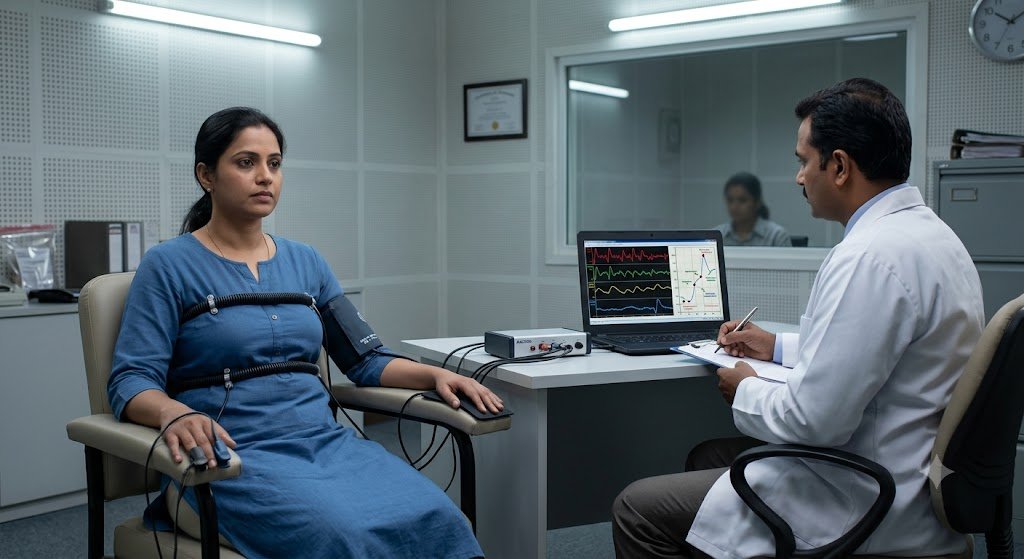
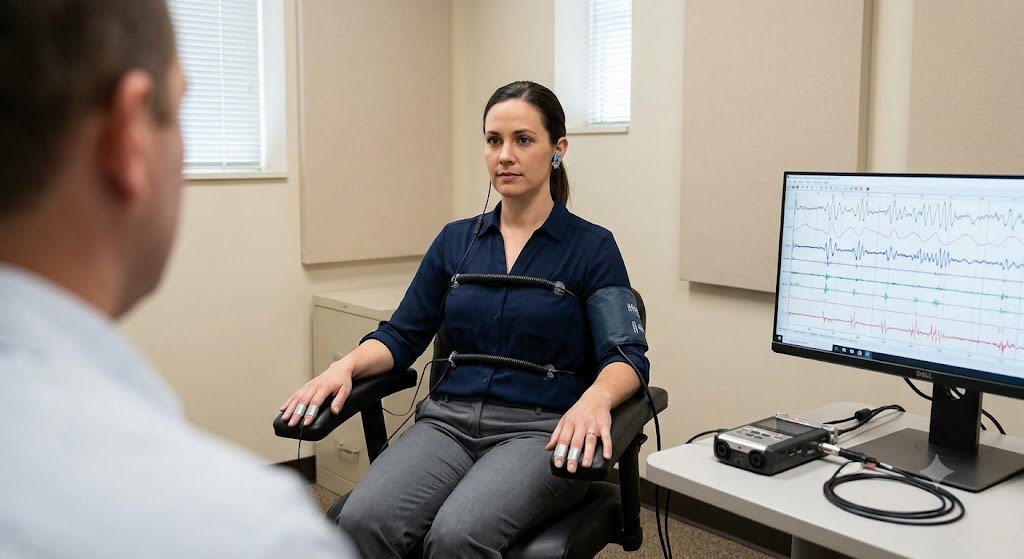
A polygraph test is a physiological examination in which specialised equipment records several bodily responses during structured questioning. The instrument typically monitors respiratory activity, cardiovascular activity, including changes in blood pressure and pulse, and electrodermal activity associated with changes in skin conductivity. These measurements are recorded while the examiner asks relevant questions according to a selected testing protocol. The resulting physiological patterns are then assessed in the context of the questions, the examination conditions and other relevant information.
Why Is a Polygraph Test Conducted in India?
Polygraph examinations may be considered in certain situations where investigators or other authorised parties seek additional information about a specific allegation or disputed event. In corporate investigations, for example, a polygraph examination may be proposed in relation to suspected internal theft, financial misconduct, information leaks or workplace disputes, provided the examination is appropriate and conducted with valid, voluntary consent.
In personal disputes or other private inquiries, individuals may also consider polygraph testing to explore particular factual allegations. Its potential usefulness depends on the nature of the issue, the suitability of the person being examined and the quality of the examination process.
Procedure of a Polygraph Test in India
The procedure for a polygraph test generally involves a preliminary interview, physiological recording and professional evaluation. The exact process may vary depending on the examination protocol, the purpose of the inquiry and the circumstances of the case.
Pre-Test Interview and Case Assessment
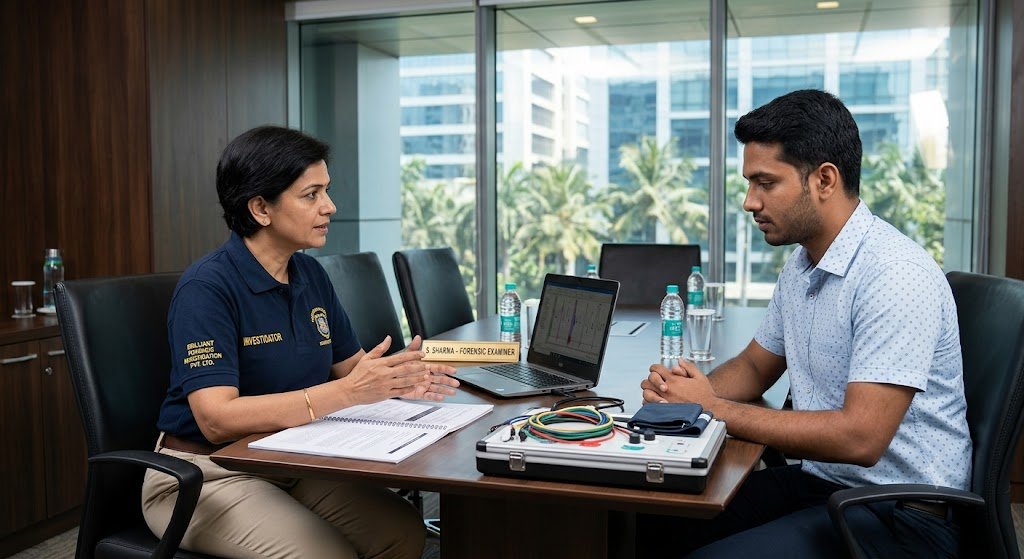
Before testing begins, the examiner reviews the purpose of the examination, the relevant background information and the specific issues that need to be addressed. The proposed questions are discussed with the subject to ensure that they are clear, understandable and relevant to the matter under investigation. The examiner should also consider whether medical, psychological, linguistic or situational factors may affect the suitability of the examination.
How to Conduct Polygraph Examination
During the examination, suitable sensors are attached to the subject to record physiological activity. The examiner asks a structured series of questions according to the selected protocol while the instrument records changes in respiration, cardiovascular activity and electrodermal responses. The questions must be appropriately formulated, and the subject must understand what is being asked. Ambiguous questions, unsuitable testing conditions or an inappropriate examination protocol may affect the quality and interpretation of the recordings.
Analysis and Preparation of the Report
After the recording session, the examiner evaluates the physiological charts and other relevant examination information using the selected methodology. The analysis should take account of the examination conditions, the nature of the questions and the limitations of the technique. A professional report should clearly describe the procedure, methodology, observations and interpretation. It should also explain relevant limitations and avoid presenting physiological responses as definitive proof that a person has lied or told the truth.
Accuracy of a Polygraph Test: How Reliable Is It?
The accuracy of a polygraph test is one of the most important considerations for anyone planning an examination. There is no single accuracy percentage that can be applied to every polygraph test because performance depends on the testing protocol, the issue being investigated, the quality of the examination, the subject’s circumstances and the criteria used to evaluate the results. A polygraph measures physiological responses rather than deception itself. An innocent person may experience considerable anxiety or fear when questioned about a serious allegation, while a deceptive person may not produce a response pattern that the selected method identifies as significant. Consequently, both false-positive and false-negative interpretations are possible. A scientifically responsible approach requires that the findings be interpreted cautiously and, where relevant, compared with independently obtained evidence. Claims that a polygraph test can reveal the truth with complete certainty should be treated with caution.
Limitations of Polygraph Testing
Despite its potential investigative applications, polygraph testing has important scientific and practical limitations. The instrument records physiological changes that may occur for several reasons, and these responses are not unique to deception. Anxiety, fear, anger, fatigue, physical discomfort and other individual circumstances may influence the recorded patterns.
Another limitation is that different testing protocols and interpretation methods may produce different conclusions. The quality of the questions, the examination environment and the examiner’s experience can also affect the assessment. In addition, some individuals may produce physiological responses that are difficult to interpret reliably.
A polygraph examination cannot independently establish that a crime occurred, identify every person involved or prove that a particular individual committed an offence. Its findings must be distinguished from independently verifiable facts. These limitations make it important to evaluate whether the technique is suitable for the specific investigative question before proceeding.
Is a Polygraph Test Legal in India?
The legal position regarding polygraph testing in India is governed by important constitutional protections and judicial decisions. The Supreme Court held that individuals cannot be forcibly subjected to these techniques. The judgment recognised constitutional protections against compelled self-incrimination under Article 20(3) and protections of personal liberty under Article 21.
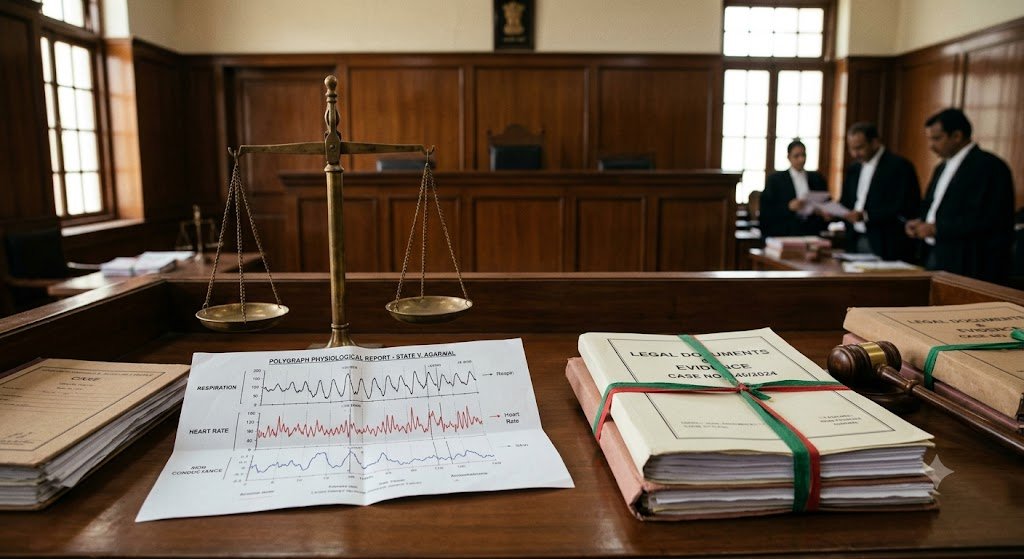
The Court also addressed the evidentiary status of test results. The results of voluntarily administered polygraph examinations cannot, by themselves, be treated as admissible evidence to establish guilt. Information or material subsequently discovered with the assistance of a voluntary examination may be considered where the applicable evidentiary requirements are satisfied. The legal position must be considered in the context of the particular matter. A private agreement to undertake an examination does not automatically make the resulting report admissible in court, nor does it remove the need to respect consent, privacy and other applicable legal requirements.
Can Polygraph Test Results Be Used in Court?
Polygraph test results are not automatically admissible as substantive evidence in Indian criminal proceedings. However, information or material discovered as a result of a voluntary examination may be considered if the applicable legal requirements are fulfilled. Its admissibility and evidentiary value depend on the circumstances in which it was obtained and the relevant law. This distinction is particularly important in forensic investigations. An investigative lead may help direct further inquiries, but it is not equivalent to legally admissible proof. Where a case involves litigation or criminal proceedings, legal advice should be obtained before arranging a polygraph examination or relying on its findings.
Polygraph Test for Corporate Investigations and Private Inquiries
Polygraph testing may be considered in certain corporate investigations involving suspected theft, financial misconduct, information leakage or other specific workplace allegations. Before proposing such an examination, the organisation should establish a clear investigative purpose and consider whether the test is suitable for the issue being examined. In private disputes, a polygraph examination may similarly be considered when the relevant participants voluntarily agree and understand its limitations. In either setting, the examination should not replace the collection and analysis of available documentary, digital or physical evidence.
Difference Between a Polygraph Test and Other Forensic Examinations
A polygraph examination differs from forensic techniques that analyse physical evidence or electronic records. Its primary function is to record physiological responses during structured questioning, whereas other forensic examinations focus on specific characteristics of evidence. The appropriate examination depends on the question being investigated and the evidence available. In many cases, a combination of investigative methods may be more informative than relying on a single technique.
How to Choose a Polygraph Testing Service in India
Selecting a suitable provider requires more than comparing prices or relying on claims of high accuracy. Individuals and organisations should verify the examiner’s relevant qualifications, experience, testing methodology and approach to professional reporting.
Frequently Asked Questions About Polygraph Tests in India
- What is the cost of a polygraph test in India?
- How long does a polygraph test take?
- Can an innocent person fail a polygraph test?
- Can a polygraph test prove that someone is lying?
- Can a person refuse a polygraph test in India?
- Is a polygraph test compulsory in criminal cases?
- Are polygraph testing and narcoanalysis the same?
- Is a polygraph report sufficient to establish guilt?
Conclusion
A polygraph test in India may be considered as a limited investigative aid when the circumstances are suitable and participation is voluntary. However, physiological measurements cannot independently establish deception, guilt or innocence. Its potential value depends on the examination methodology, the examiner’s competence, the circumstances of the case and the careful interpretation of the findings.
Recent Posts
Archives
Categories
Recent Posts


Popular Tags
Automated fingerprint identification system (2)
Ballistics (2)
Business due diligence (2)
Case Study (2)
Celebrity Freedom of Expression (1)
Computer forensics (2)
Computer vision AI (2)
Court-Admissible Evidence (2)
Crime Scene Documentation (2)
Crime scene investigation (12)
CrimeSceneInvestigation (2)
CriminalInvestigation (2)
cybercrime investigation (2)
deepfake detection (2)
Digital evidence recovery (2)
digital forensics (4)
DNA Evidence (2)
DNA Fingerprinting (2)
DNA Profiling (4)
Expert Witness Services (2)
forensic ballistic (2)
Forensic Biology (2)
Forensic Case Review (2)
Forensic DNA Analysis (7)
Forensic Document Examination (2)
Forensic evidence analysis (10)
Forensic Examination (2)
Forensic fingerprint analysis (2)
forensic handwriting analysis (2)
Forensic investigation (10)
Forensic Photography (3)
forensic science (8)
ForensicScience (6)
Forensic Video Examination (2)
Forgery Detection (2)
handwriting analysis (5)
MicroscopicEvidence (2)
Network forensics (2)
Photo Forensic Analysis (2)
Questioned Document Analysis (2)
Questioned Document Examination (2)
Ranveer Singh Case (1)
Risk assessment services (2)
signature verification (4)
video forensics (2)