

-
ceo.bfi@gmail.com
Send Email
-
2C, C-6/A Block, Janakpuri, Delhi India 110058
Visit Our Office
99902-92279
Confidentiality Guaranteed
99902-92279
Confidentiality Guaranteed
06
Oct
Oct
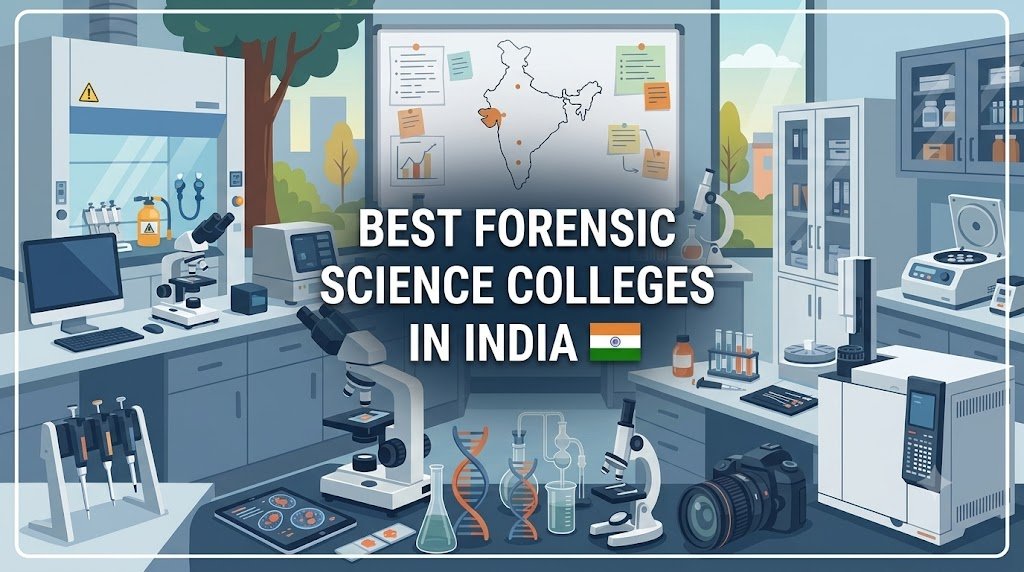
Best Forensic Science Colleges in India: Courses, Admission & Career Scope
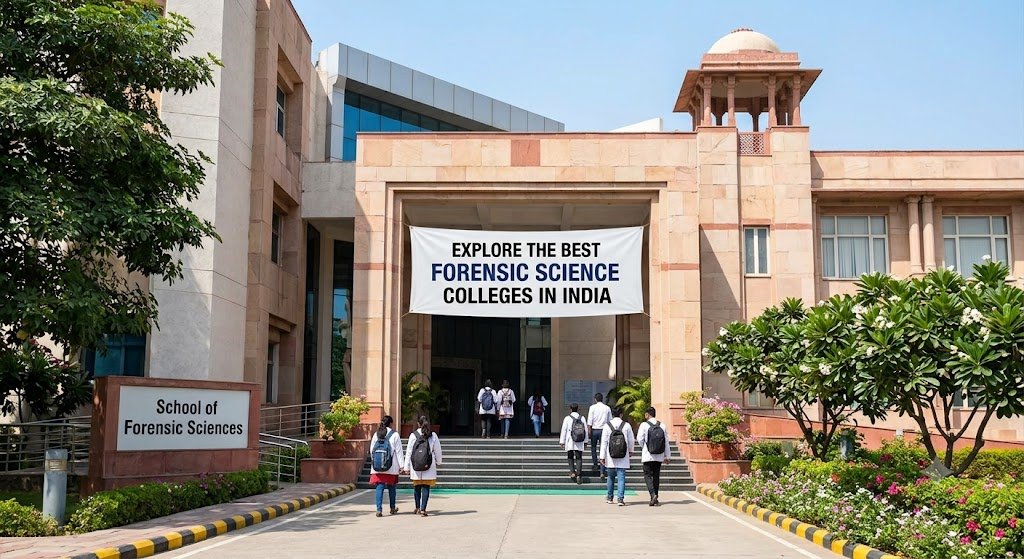
Students looking for the best forensic science colleges in India have several options across government and private universities. These institutions offer undergraduate and postgraduate programs in forensic science, providing students with theoretical knowledge, practical training, and opportunities to build careers in forensic laboratories, investigation agencies, research, and related fields.
Forensic Science is an interdisciplinary field that applies scientific principles and analytical techniques to the examination and interpretation of evidence. Students who have completed Class 12 in the Science stream can choose from several colleges and universities across India to pursue forensic science programs. Admission to these institutions may be based on merit or entrance examinations such as CUET, CUET PG, UGC NET, and other relevant entrance tests. India currently has more than 270 colleges offering forensic science education, including over 180 private institutions, more than 50 government colleges, and a few semi-government institutions. Some of the reputed names in this field include Banaras Hindu University, Aligarh Muslim University, Delhi University, Lloyd Institute of Forensic Science, Amity University Noida, Lovely Professional University, Chandigarh University, Bharathiar University, University of Madras, Panjab University, and many others.
Candidates looking for detailed information about forensic science colleges and educational opportunities in India can read this article till the end.
Best Forensic Science Colleges in India
India has universities and institutions offering undergraduate or integrated programmes in forensic science, criminology and related disciplines.The following institutions are examples that students can research. Course names, campuses, eligibility and admission requirements can change, so students should verify the current information directly from the institution before applying.
National Forensic Sciences University (NFSU)
National Forensic Sciences University (NFSU) is a specialised university focused on forensic science, criminology, security studies and related areas.NFSU offers undergraduate and integrated programmes related to forensic science. Its programmes include B.Sc.–M.Sc. Forensic Science and B.Sc. Criminology and Forensic Science, subject to the current programme and admission cycle.Students searching for a Forensic Science university in India can review the university’s current academic programmes, eligibility requirements and admission process.
National Forensic Sciences University (NFSU)
Main Campus: Gandhinagar, Gujarat
Other Campuses: Delhi, Goa, Tripura, Bhopal, Dharwad, Guwahati, Pune, Manipur, Bhubaneswar, Chennai, Nagpur, Jaipur, Raipur and Varanasi.
Best Forensic Science Colleges in North India
- National Forensic Sciences University (NFSU), Delhi
- Punjab University, Chandigarh
- Amity University, Noida
- Galgotias University, Greater Noida
- And many other reputed institutions across North India.
Best Forensic Science Colleges in West India
- National Forensic Science University, Gujarat
- Rashtriya Raksha University, Gujarat
- Amity University Mumbai
- Other Maharashtra/Gujarat institutions offering forensic science programmes
Best Forensic Science Colleges in South India
- NFSU, Dharwad
- Bharathiar University, Coimbatore
- Christ University, Bengaluru
- Manipal Academy of Higher Education, Manipal
- And many other reputed universities and institutions across South India.
Best Forensic Science Colleges in Central and East India
- National Forensic Sciences University (NFSU), Bhopal
- NFSU, Raipur
- NFSU, Bhubaneswar
- University of Calcutta, Kolkata
- And many other reputed universities and institutions across Central and East India.
Eligibility for B.Sc. Forensic Science After 12th
Although the requirements for enrollment in forensic science programs differ from college to college, the list of government forensic science colleges in India adheres to the following fundamental standards:
Undergraduate: Students willing to apply for the undergraduate forensic courses must have passed at least the 12th class with the Science stream with 50% marks from any recognized board.
Postgraduate: Students who have completed their graduation level study with 55% marks are eligible to apply for the PG courses.
Top Forensic Science Entrance Test in India
AIFSET, NFAT, and CUET are some of the best forensic science entrance exams in India for undergraduate and graduate programs at prestigious central institutions. A few more important tests, like BHU-PET, LPUNEST, etc., typically call for a 10+2 with PCM or PCB.
Let’s quickly review the list of entry exams:
- AIFSET: All India Forensic Science Entrance Test is an online, national-level exam for UG and PG programs. The exam is widely accepted by various Indian private universities.
- NFAT: NFAT stands for NFSU Aptitude Test. The entrance exam is conducted by the National Forensic Sciences University (NFSU) for different specialized forensic courses.
- CUET-UG/PG: The CUET UG or PG entrance exam for forensic science courses is held every year by the National Testing Agency for admission to central universities like Banaras Hindu University and Delhi University.
- LPUNEST: Lovely Professional University National Entrance and Scholarship Test is considered a major entrance exam for students willing to get admitted to LPU’s forensics programs.
- Other University Exams: CUET and others.
Career Opportunities After M.Sc Forensic Science
An M.Sc. in Forensic Science provides advanced knowledge and practical skills for working in forensic investigation and scientific evidence analysis. Graduates can explore opportunities in government forensic laboratories, private forensic firms, police and investigation agencies, research institutions, and academic organizations. Depending on their specialization, they can work in forensic biology, chemistry, toxicology, questioned documents, fingerprints, digital forensics, crime scene investigation, and forensic psychology. Some common career options after M.Sc. Forensic Science include:
- Forensic Scientist
- Scientific Officer
- Crime Scene Investigator
- Forensic Laboratory Analyst
- Digital Forensics Analyst
- Fingerprint Examiner
- Questioned Document Examiner
- Forensic Toxicologist
- Forensic Researcher
- Assistant Professor/Lecturer
Graduates can also pursue a Ph.D. in Forensic Science or a related specialization for careers in advanced research and academia. Practical training, specialization, and relevant certifications can further improve career prospects in this field.
Government Career Opportunities in Forensic Science
An M.Sc. in Forensic Science offers graduates opportunities in government forensic laboratories, police departments, investigation agencies, and research institutions. Depending on their specialization and eligibility, they can work as Forensic Scientists, Scientific Officers, Scientific Assistants, Crime Scene Investigators, Fingerprint Examiners, Questioned Document Examiners, Digital Forensic Experts, and Research Officers. Career opportunities are available in Central and State Forensic Science Laboratories and other government scientific organizations through recruitment examinations and official vacancies.
Conclusion
Forensic science is more than a career—it is a field where science meets investigation and helps uncover facts from evidence. An M.Sc. in Forensic Science can open doors to opportunities in laboratories, law enforcement, digital investigation, research, and private forensic services. With curiosity, practical expertise, and continuous learning, aspiring forensic professionals can turn scientific knowledge into meaningful investigative work and become an important part of the justice system.
Recent Posts
Archives
Categories
Recent Posts


Popular Tags
Automated fingerprint identification system (2)
Ballistics (2)
Business due diligence (2)
Case Study (2)
Celebrity Freedom of Expression (1)
Computer forensics (2)
Computer vision AI (2)
Court-Admissible Evidence (2)
Crime Scene Documentation (2)
Crime scene investigation (12)
CrimeSceneInvestigation (2)
CriminalInvestigation (2)
cybercrime investigation (2)
deepfake detection (2)
Digital evidence recovery (2)
digital forensics (4)
DNA Evidence (2)
DNA Fingerprinting (2)
DNA Profiling (4)
Expert Witness Services (2)
forensic ballistic (2)
Forensic Biology (2)
Forensic Case Review (2)
Forensic DNA Analysis (7)
Forensic Document Examination (2)
Forensic evidence analysis (10)
Forensic Examination (2)
Forensic fingerprint analysis (2)
forensic handwriting analysis (2)
Forensic investigation (10)
Forensic Photography (3)
forensic science (8)
ForensicScience (6)
Forensic Video Examination (2)
Forgery Detection (2)
handwriting analysis (5)
MicroscopicEvidence (2)
Network forensics (2)
Photo Forensic Analysis (2)
Questioned Document Analysis (2)
Questioned Document Examination (2)
Ranveer Singh Case (1)
Risk assessment services (2)
signature verification (4)
video forensics (2)