

-
ceo.bfi@gmail.com
Send Email
-
2C, C-6/A Block, Janakpuri, Delhi India 110058
Visit Our Office
99902-92279
Confidentiality Guaranteed
99902-92279
Confidentiality Guaranteed
06
Aug

Aug
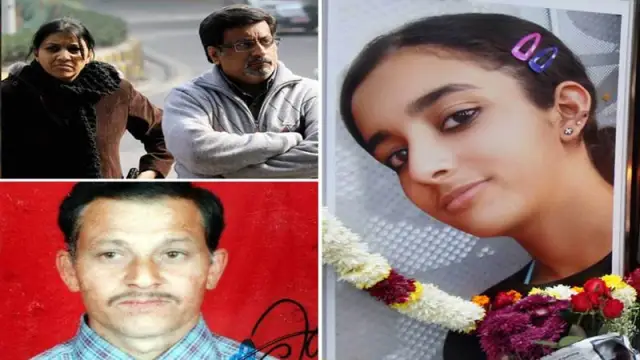
Aarushi Talwar Murder Case
Introduction
The Aarushi Talwar Double Murder Case is one of the most controversial and extensively debated criminal investigations in India’s judicial history. The case not only captured nationwide attention because of its mysterious circumstances but also became a landmark example of how shortcomings in crime scene management and forensic investigation can influence the course of a criminal investigation.
On the morning of 16 May 2008, Aarushi Talwar, a 14-year-old Class IX student of Delhi Public School (DPS), Noida, was found murdered in her bedroom at her family’s residence in Sector 25, Jalvayu Vihar, Noida. Her throat had been slit, and she had sustained fatal head injuries. Initially, suspicion fell on the family’s live-in domestic worker, Hemraj Banjade, who was missing from the house and was presumed to have fled after committing the crime. However, the investigation took a dramatic turn the following day when Hemraj’s body was discovered on the locked terrace of the same residence, revealing that both Aarushi and Hemraj had been murdered during the night of 15–16 May 2008.
The case quickly evolved into one of India’s most complex homicide investigations. Multiple investigative agencies, including the Uttar Pradesh Police and later the Central Bureau of Investigation (CBI), conducted extensive inquiries using forensic science, crime scene reconstruction, fingerprint examination, DNA analysis, forensic pathology, digital evidence analysis, and behavioural investigation. Despite years of investigation, conflicting theories, and prolonged legal proceedings, the case remains one of the most studied examples of the challenges associated with forensic evidence interpretation and criminal investigation in India.
For students and professionals of forensic science, the Aarushi Talwar case serves as a significant learning resource that highlights the importance of scientific investigation, meticulous evidence preservation, and unbiased forensic interpretation in the pursuit of justice.
History of the Case :
Aarushi Talwar was born on 24 May 1994 and was the only daughter of Dr. Rajesh Talwar and Dr. Nupur Talwar, both well-known dental surgeons practicing in Noida, Uttar Pradesh. The family resided in a three-bedroom apartment in Jalvayu Vihar, Sector 25, Noida, while also operating dental clinics in Noida and Delhi. Their live-in domestic worker, Yam Prasad “Hemraj” Banjade, originally from Nepal, was responsible for household duties and cooking.
On 15 May 2008, the Talwar family followed their usual daily routine. Aarushi returned home from school in the afternoon, while her parents attended to their professional commitments. During the evening, the family had dinner together, after which Dr. Rajesh Talwar gifted Aarushi a Sony DSC-W130 digital camera as an early birthday present. Aarushi spent some time taking photographs with her parents before retiring to her bedroom. Later that night, internet activity from the household computer and router was recorded until shortly after midnight, providing investigators with one of the important digital timelines examined during the investigation.
The following morning, the household maid arrived at approximately 6:00 a.m. and noticed that Hemraj did not open the door as he normally did. After several attempts to enter the house, Aarushi’s parents discovered their daughter’s body lying on her bed with severe throat injuries. Believing Hemraj to be missing, Dr. Rajesh Talwar informed the police and identified him as the prime suspect in the murder.
The initial investigation conducted by the Uttar Pradesh Police was widely criticised for serious procedural lapses. The crime scene was not immediately sealed, unrestricted access was allowed to neighbours, relatives, visitors, and members of the media, and potential forensic evidence was compromised before scientific documentation could be completed. Although 24 sets of fingerprints were collected from various exhibits within the residence, the majority were rendered unsuitable for comparison due to improper handling and contamination. These shortcomings significantly reduced the evidentiary value of the physical evidence collected during the crucial early stages of the investigation.
On 17 May 2008, investigators finally gained access to the locked terrace of the Talwar residence, where Hemraj’s decomposed body was discovered. This revelation completely altered the direction of the investigation, confirming that both Aarushi and Hemraj had been murdered during the same night. The investigation subsequently shifted from a single homicide to a double murder inquiry, prompting the transfer of the case to the Central Bureau of Investigation (CBI) for a more comprehensive forensic examination.
The Aarushi Talwar case thereafter witnessed multiple investigations, changing theories, extensive forensic examinations, and prolonged judicial proceedings. The contrasting conclusions reached by different investigating teams, coupled with debates surrounding forensic evidence and crime scene management, have made this case one of the most important forensic science case studies in India. It continues to be studied by investigators, forensic experts, legal professionals, and students to understand the critical role of evidence preservation, scientific analysis, and objective investigation in solving complex criminal cases.
Police Investigation, Court Proceedings and Forensic Work in the Aarushi Talwar Murder Case :
Police Investigation
Initial Investigation by Uttar Pradesh Police (16–31 May 2008)
The investigation began immediately after Aarushi Talwar’s body was discovered on 16 May 2008. In his written complaint, Dr. Rajesh Talwar suspected that the family’s domestic worker, Hemraj Banjade, had murdered Aarushi and fled the house. However, the investigation took an unexpected turn on 17 May 2008, when Hemraj’s body was discovered on the locked terrace of the Talwar residence, confirming that the incident was a double murder.
The initial investigation conducted by the Uttar Pradesh Police was widely criticized due to several procedural lapses. The crime scene was not immediately sealed, allowing unrestricted access to neighbours, relatives, media personnel, and visitors before forensic documentation was completed. Such contamination compromised valuable physical evidence and reduced the reliability of forensic findings.
Police collected 24 latent fingerprints from various objects inside the residence, including a whisky bottle, but only two fingerprints were considered suitable for comparison, while the remaining samples were rendered unusable due to improper handling and contamination. Despite the absence of conclusive forensic evidence linking any suspect to the crime, Dr. Rajesh Talwar was arrested on 23 May 2008 on suspicion of murdering both Aarushi and Hemraj.
Because of growing concerns regarding the quality of the investigation, the Talwar family requested that the case be transferred to the Central Bureau of Investigation (CBI).
Investigation by the First CBI Team (May 2008 – August 2009)
The first CBI investigation was led by Joint Director Arun Kumar, with Vijay Kumar serving as the Investigating Officer. The agency adopted a more scientific approach by conducting detailed forensic examinations and reconstructing the crime scene.
The investigative team carried out a sound propagation test within the apartment to determine whether sounds originating from Aarushi’s bedroom could have been heard from the parents’ bedroom. The experiment suggested that noises from Aarushi’s room may not necessarily have been audible, which weakened one of the assumptions made during the initial investigation.
The CBI also conducted extensive interrogations and scientific examinations of several suspects, including Krishna (compounder of Dr. Talwar), Rajkumar, and Vijay Mandal. These individuals underwent Polygraph Examination (Lie Detector Test), Brain Mapping, and Narco Analysis at the Forensic Science Laboratory (FSL), Bangalore. Although certain statements emerged during these examinations, the CBI failed to obtain independent physical or forensic evidence corroborating their involvement. Consequently, they were released after the statutory period because no charge sheet could be filed within the prescribed time.
Based on the available scientific evidence, the first CBI team informed the court that it could not establish Dr. Rajesh Talwar’s involvement in the murders, following which he was granted bail.
Investigation by the Second CBI Team (September 2009 – December 2010)
In September 2009, a new CBI team headed by Joint Director Javed Ahmed and Additional SP A.G.L. Kaul took over the investigation.
The second team proposed alternative theories regarding the murders. It suggested that blunt force injuries may have been inflicted using golf clubs and that the fatal neck injuries could have been caused by a surgical scalpel. However, no blood, DNA, or other biological evidence was reportedly recovered from the golf clubs, and the alleged surgical weapon was never recovered during the investigation.
The second team also subjected Dr. Rajesh Talwar and Dr. Nupur Talwar to additional scientific examinations, including Narco Analysis. According to the report prepared by the Directorate of Forensic Sciences, Gandhinagar, the examination did not indicate their participation or prior knowledge of the crime. Despite this, the investigation continued on the basis of circumstantial evidence and reconstructed theories.
On 29 December 2010, the CBI submitted a Closure Report, stating that there was insufficient evidence to prosecute anyone while expressing suspicion against the parents.
Forensic Work Conducted During the Investigation :
The Aarushi Talwar case involved multiple forensic disciplines, making it one of the most extensively examined criminal investigations in India.
1. Crime Scene Investigation (CSI)
- Scientific documentation of the crime scene.
- Photography of the apartment.
- Collection of bloodstains and biological evidence.
- Search for the murder weapon.
- Examination of entry and exit points.
- Reconstruction of the movement of victims and suspects.
However, contamination of the crime scene significantly reduced the evidentiary value of many exhibits.
2. Fingerprint Examination
Fingerprint experts lifted latent prints from:
- Bedroom furniture
- Doors
- Whisky bottle
- Household articles
Although 24 fingerprint samples were collected, most were unsuitable for comparison because of improper handling during the initial investigation.
3. DNA and Biological Examination
Forensic scientists examined:
- Blood samples
- Bedsheets
- Pillow covers
- Clothing
- Biological stains recovered from the apartment
DNA profiling was undertaken to identify the victims and examine possible links between recovered exhibits and potential suspects.
4. Forensic Pathology
Post-mortem examinations were conducted on both Aarushi and Hemraj to determine:
- Cause of death
- Nature of injuries
- Approximate time of death
- Possible weapon characteristics
- Sequence of injuries
The autopsy findings became one of the central pieces of forensic evidence during the investigation.
5. Bloodstain Pattern Analysis
Investigators analysed bloodstain distribution to reconstruct:
- Position of the victims
- Direction of assault
- Possible movement after injuries
- Sequence of attacks
Because the crime scene had already been disturbed, reconstruction was considerably more difficult.
6. Digital Forensic Examination
Digital evidence examined during the investigation included:
- Internet router activity
- Computer usage logs
- E-mails
- Mobile phone records
- Call Detail Records (CDRs)
Investigators used this information to establish the timeline of events before and after the murders.
7. Behavioural and Circumstantial Analysis
Investigators also relied upon:
- Statements of witnesses
- Behaviour of suspects
- Opportunity analysis
- Circumstantial reconstruction
These findings formed an important part of the prosecution’s theory alongside forensic evidence.
Court Proceedings
Following the submission of the CBI Closure Report, the Talwar family filed a protest petition challenging the findings and requested further scientific investigation.
Major judicial developments included:
- 29 December 2010: CBI submitted Closure Report citing insufficient evidence.
- 25 January 2011: Talwars filed a Protest Petition challenging the Closure Report.
- 9 February 2011: Special Judicial Magistrate rejected the Closure Report and summoned Dr. Rajesh Talwar and Dr. Nupur Talwar to face trial.
- 2011–2012: The summoning order was challenged before the Allahabad High Court and later the Supreme Court.
- 30 April 2012: Dr. Nupur Talwar surrendered before the Ghaziabad Court and was sent to judicial custody.
- 25 May 2012: Charges were framed against both parents under offences relating to murder, destruction of evidence, and criminal conspiracy.
- June 2012: Trial commenced before the Special CBI Court, Ghaziabad.
- 25 November 2013: The Special CBI Court convicted Dr. Rajesh Talwar and Dr. Nupur Talwar and sentenced them to life imprisonment.
- 12 October 2017: The Allahabad High Court acquitted both Rajesh and Nupur Talwar, observing that the prosecution had failed to establish guilt beyond reasonable doubt. The acquittal highlighted the importance of reliable forensic evidence and adherence to scientific investigative standards.
Significance :
The Aarushi Talwar murder case remains one of India’s most significant forensic case studies because it demonstrates that forensic science is only as effective as the quality of evidence collected and preserved. The case underscores the necessity of immediate crime scene preservation, strict chain of custody, scientifically validated forensic examinations, and objective interpretation of evidence. It continues to be studied by forensic scientists, investigators, legal professionals, and students as a landmark example of the critical role forensic science plays in the criminal justice system.
Recent Posts
- The Psychology of Criminal Behaviour: Understanding the Mind Behind Crime
- Legal Rights of Protesters at Jantar Mantar, Delhi: What Every Citizen Should Know
- Polygraph Test in India
- What is Forensic Science? Intoduction, History, Branches & Role of forensic science
- Best Forensic Science Colleges in India: Courses, Admission & Career Scope
Archives
Categories
Recent Posts


Popular Tags
Automated fingerprint identification system (2)
Ballistics (2)
Business due diligence (2)
Case Study (2)
Celebrity Freedom of Expression (1)
Computer forensics (2)
Computer vision AI (2)
Court-Admissible Evidence (2)
Crime Scene Documentation (2)
Crime scene investigation (12)
CrimeSceneInvestigation (2)
CriminalInvestigation (2)
cybercrime investigation (2)
deepfake detection (2)
Digital evidence recovery (2)
digital forensics (4)
DNA Evidence (2)
DNA Fingerprinting (2)
DNA Profiling (4)
Expert Witness Services (2)
forensic ballistic (2)
Forensic Biology (2)
Forensic Case Review (2)
Forensic DNA Analysis (7)
Forensic Document Examination (2)
Forensic evidence analysis (10)
Forensic Examination (2)
Forensic fingerprint analysis (2)
forensic handwriting analysis (2)
Forensic investigation (10)
Forensic Photography (3)
forensic science (8)
ForensicScience (6)
Forensic Video Examination (2)
Forgery Detection (2)
handwriting analysis (5)
MicroscopicEvidence (2)
Network forensics (2)
Photo Forensic Analysis (2)
Questioned Document Analysis (2)
Questioned Document Examination (2)
Ranveer Singh Case (1)
Risk assessment services (2)
signature verification (4)
video forensics (2)