
-
ceo.bfi@gmail.com
Send Email
-
2C, C-6/A Block, Janakpuri, Delhi India 110058
Visit Our Office
99902-92279
Confidentiality Guaranteed
99902-92279
Confidentiality Guaranteed

01
Aug
Aug
Nithari Serial Murder Case Study
Nithari Case : Complete Case Study, Investigation, Court Judgments and Legal Analysis
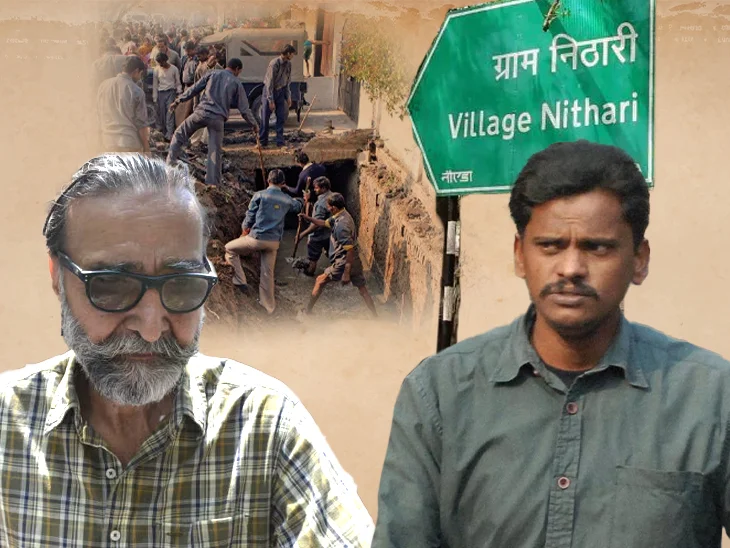
The Nithari serial murder case remains one of the most shocking and widely discussed criminal cases in the history of India. The case emerged in 2006 after the discovery of human remains, including skulls and bones, near a residential area in Nithari village, Noida, Uttar Pradesh. The revelations exposed a series of alleged murders and disappearances of children and young women, creating nationwide outrage and raising serious questions about police investigation, criminal justice administration, forensic procedures, and protection of vulnerable communities.
The case involved two main accused persons: Surendra Koli, a domestic servant, and Moninder Singh Pandher, a businessman and owner of the house where several alleged crimes were investigated. Initially, the prosecution claimed that multiple victims were sexually assaulted and murdered at Pandher’s residence in Sector 31, Noida.
The investigation attracted significant public attention because many victims belonged to economically weaker sections, and their families had repeatedly complained about missing persons before the case gained national attention. The matter became a symbol of concerns regarding delayed police action, investigative failures, and the challenges of proving criminal liability through scientific evidence.
Over nearly two decades, the Nithari case passed through multiple judicial stages, including investigation by the Uttar Pradesh Police, transfer to the Central Bureau of Investigation (CBI), trials before the Special CBI Court, appeals before the Allahabad High Court, and proceedings before the Supreme Court of India.
The case is significant not only because of its criminal allegations but also because it highlights important legal principles relating to:
- Presumption of innocence,
- Burden of proof,
- Reliability of confessions,
- Admissibility of forensic evidence,
- Investigative fairness,
- Constitutional safeguards for accused persons.
Historical Background of the Nithari Serial Murder Case:
Nithari village is located in Noida, Uttar Pradesh, a rapidly developing urban region near Delhi. During the early 2000s, the area experienced rapid expansion, attracting migrant workers and economically disadvantaged families searching for employment opportunities.
Many children and young women from nearby communities started disappearing between 2005 and 2006. Families alleged that complaints regarding missing persons were not taken seriously by local authorities. The repeated disappearances created fear among residents, but the matter received limited public attention initially.
The turning point occurred in December 2006 when the father of a missing girl, along with local residents, demanded immediate investigation. During searches near the residence of Moninder Singh Pandher in Sector 31, Noida, police recovered human remains from a drain behind the house.
The discovery led to widespread media coverage and public protests. Further searches resulted in the recovery of additional remains, including skulls and bones. The incident revealed the possibility of multiple criminal acts having taken place over a period of time.
Following public pressure, the Uttar Pradesh government transferred the investigation to the CBI in January 2007. The agency examined evidence collected by the state police and conducted further investigation into allegations of murder, kidnapping, sexual assault, and destruction of evidence.
Chronological Timeline of the Nithari Case (2005–2025)
2005 – Disappearances Begin
- Several children and young women from Nithari village reportedly went missing.
- Families approached police authorities regarding missing persons.
Complaints regarding inadequate police response later became a major criticism during public discussions.
December 2006 – Discovery of Human Remains
- Several children and young women from Nithari village reportedly went missing.
- Families approached police authorities regarding missing persons.
- Complaints regarding inadequate police response later became a major criticism during public discussions.
December 2006 – Discovery of Human Remains
- Human remains were discovered near the residence of Moninder Singh Pandher in Nithari, Noida.
- The discovery triggered nationwide outrage.
Police began investigating the possibility of multiple murders.
January 2007 – Transfer to CBI
- Due to public pressure and criticism of the local police investigation, the Uttar Pradesh government transferred the matter to the CBI.
- The CBI registered cases relating to murder, kidnapping, rape, criminal conspiracy, and destruction of evidence.
2007 – Arrests and Investigation
- Surendra Koli and Moninder Singh Pandher were arrested.
- The CBI conducted searches and collected physical evidence.
- DNA testing and forensic examination were conducted to identify victims.
2008 – First Conviction of Surendra Koli
- The Special CBI Court convicted Surendra Koli in one of the cases.
- He was awarded the death penalty.
- The prosecution relied heavily on circumstantial evidence, statements, and alleged confessional material.
2009–2015 – Appeals and Mercy Proceedings
- Several convictions against Surendra Koli were challenged before higher courts.
- The death penalty remained a major legal issue.
- The Supreme Court examined questions relating to delay in mercy petitions and execution procedures.
2014 – Supreme Court Intervention on Death Penalty
- The Supreme Court commuted Koli’s death sentence in one matter due to delay in deciding his mercy petition.
- The judgment highlighted constitutional protections under Article 21 of the Indian Constitution, which guarantees the right to life and personal liberty.
2015–2022 – Multiple Trials and Appeals
- Different criminal cases arising from the Nithari investigation continued separately.
- Courts examined evidence case-by-case.
Some convictions were maintained while others faced legal challenges.
2023 – Allahabad High Court Judgment
- The Allahabad High Court overturned convictions against Surendra Koli and Moninder Singh Pandher in several cases.
- The court criticized weaknesses in the investigation and found that the prosecution failed to establish guilt beyond reasonable doubt.
The judgment raised important questions about evidentiary standards and investigative reliability.
2024–2025 – Supreme Court Proceedings
- Appeals were filed before the Supreme Court challenging the High Court judgment.
- The Supreme Court examined whether the prosecution evidence was sufficient to sustain convictions.
- The Court upheld the acquittals, emphasizing that criminal convictions require proof beyond reasonable doubt.
2025 – Final Legal Position
- The Supreme Court proceedings marked the conclusion of major criminal litigation connected with the Nithari case.
- The case became an important precedent regarding investigation quality, evidentiary standards, and protection of constitutional rights of accused persons.
Suicide of Surendra Koli
18 September 2026: Surendra Koli, who had been acquitted in all 13 Nithari-related cases, was found hanging inside his tea stall in Haridwar. Police began investigating the circumstances of his death.
19 September 2026: A post-mortem examination was conducted to establish the medical cause and manner of death.
23 September 2026: Uttarakhand Police reported that the post-mortem concluded asphyxia due to ante-mortem hanging and classified the death as suicidal. Police also stated that their investigation found no forensic evidence, CCTV footage, or suspicious activity indicating involvement of another person.
A post-mortem examination was conducted, and the reported medical finding was asphyxia due to ante-mortem hanging. The findings were considered consistent with death by hanging, and the police treated the incident as suicide. Investigators also examined the scene and available evidence, including CCTV footage and circumstances surrounding the death. From a forensic perspective, determining the manner of death requires correlation of the autopsy findings with the scene, ligature evidence, injury patterns, toxicology and other investigative material. The case demonstrates the importance of comprehensive forensic examination before reaching a final conclusion regarding the manner of death.
Final Conclusion – Nithari Serial Murder Case
The Nithari killings came to light in December 2006 following the recovery of human remains near D-5, Nithari, Noida. After prolonged investigation and trials, the legal position changed substantially. The Allahabad High Court acquitted Surendra Koli in 12 connected cases in 2023, and the Supreme Court upheld those acquittals in July 2025. On 11 November 2025, the Supreme Court also set aside Koli’s conviction in the final pending case and acquitted him, directing his release. The Court found serious defects in the evidentiary foundation, including problems concerning the alleged confession and recoveries. It observed that, despite the prolonged investigation, the identity of the actual perpetrator had not been established to the required legal standard.
Final conclusion: As a matter of judicial outcome, Surendra Koli was acquitted in all 13 Nithari-related prosecutions. The Supreme Court’s decision does not establish an alternative perpetrator; rather, it reflects that the prosecution evidence was insufficient to sustain his conviction beyond the required legal standard.
Recent Posts
Archives
Categories
Recent Posts
Popular Tags
Automated fingerprint identification system (2)
Ballistics (2)
Business due diligence (2)
Call Log Analysis (1)
Case Study (2)
Computer forensics (2)
Computer vision AI (2)
Court-Admissible Evidence (2)
Crime Scene Documentation (2)
Crime scene investigation (12)
CrimeSceneInvestigation (2)
CriminalInvestigation (2)
cybercrime investigation (2)
deepfake detection (2)
Digital evidence recovery (2)
digital forensics (4)
DNA Evidence (2)
DNA Fingerprinting (2)
DNA Profiling (4)
Expert Witness Services (2)
forensic ballistic (2)
Forensic Case Review (2)
Forensic DNA Analysis (7)
Forensic Document Examination (2)
Forensic evidence analysis (10)
Forensic Examination (2)
Forensic fingerprint analysis (2)
forensic handwriting analysis (2)
Forensic investigation (10)
Forensic Photography (3)
forensic science (7)
ForensicScience (6)
Forensic Video Examination (2)
Forgery Detection (2)
handwriting analysis (5)
MicroscopicEvidence (2)
Mobile Evidence Extraction (1)
Network forensics (2)
Online Crime Investigation (1)
Photo Forensic Analysis (2)
Questioned Document Examination (2)
Risk assessment services (2)
signature verification (4)
TikTok Ban India (1)
video forensics (2)