
-
ceo.bfi@gmail.com
Send Email
-
2C, C-6/A Block, Janakpuri, Delhi India 110058
Visit Our Office
99902-92279
Confidentiality Guaranteed
99902-92279
Confidentiality Guaranteed
13
Jan


Jan
Social Media Forensics
Social Media Forensics in Cybercrime Investigations
Introduction
Social Media Forensics is a distinct field within digital forensics, dedicated to the organized process of finding, gathering, safeguarding, scrutinizing, and interpreting information created on social networking and communication sites. In the current digital era, social media is deeply embedded in everyday routines, enabling individuals to share personal details, converse in real-time, upload various media, and engage in online groups. Consequently, these platforms produce extensive digital information that can be vital evidence in investigations.
As social media platforms like Facebook, Instagram, X (formerly Twitter), WhatsApp, Snapchat, LinkedIn, and TikTok experience swift expansion and widespread use, people leave behind substantial digital trails. These trails encompass profile information, published content, remarks, endorsements, shared items, personal correspondence, visual media, video recordings, real-time broadcasts, and related metadata such as time stamps, location data, IP addresses, and device specifics. Social media forensics is the process of gathering and examining this information to comprehend user actions, communication styles, and online engagements.
Social media forensics is crucial for detecting a range of criminal and civil offenses, such as cybercrime, online scams, identity theft, cyberbullying, harassment, human trafficking, terrorism, and financial offenses. Law enforcement professionals leverage social media evidence to confirm user identities, connect suspects to illegal actions, identify associates, and track how information originates and disseminates. Frequently, social media material aids in reconstructing event sequences, determining motivations and intentions, and either supporting or refuting witness accounts. Beyond law enforcement, social media forensics is extensively applied in corporate inquiries, intelligence operations, pre-employment screening, and civil lawsuits. Companies might employ social media forensics to examine internal threats or breaches of company policy, while legal practitioners utilize it to collect evidence in matters like divorce proceedings, defamation cases, and intellectual property conflicts.
For social media evidence to be accepted in court, investigators must adhere to rigorous forensic standards. This includes safeguarding the data’s integrity and genuineness, meticulously recording its handling from collection to presentation, and adhering to applicable cyber laws and privacy rules. Often, specialized forensic software and open-source intelligence methods are utilized to gather and examine data in a way that preserves its forensic validity. Ultimately, Social Media Forensics is now a vital part of contemporary digital investigations. As social media sites keep changing and producing more intricate data, the role of social media forensics in upholding justice, safety, and responsibility will only become more significant.
Importance of Social Media Forensics
• Provides key evidence in cyber crime investigations.
• It helps identify suspects and victims.
• It assists law enforcement in tracking illegal activities.
• Supports civil and corporate investigations.
• Serves a crucial function in collecting intelligence and ensuring national security.
Types of Social Media Platforms
Social media platforms can be categorized as:
• Social Networking Sites (Facebook, LinkedIn)
• Microblogging Platforms (X / Twitter)
• Media Sharing Platforms (Instagram, TikTok, YouTube)
• Messaging Applications (WhatsApp, Telegram, Snapchat)
• Discussion Forums & Communities (Reddit, Discord)
Types of Evidence in Social Media Forensics
Investigations conducted via social media may encompass the following types of evidence:
• User accounts and profile information
• Updates, tweets, remarks, and responses.
• Direct messages and group communications
• Photographs, videos, live broadcasts, and stories.
• Metadata (including date, time, location, and IP address)
• Connections, followers, and interaction networks
• Content that has been deleted or previously archived.
Social Media Forensic Investigation Process
Social Media Forensic Investigation adheres to a systematic and legally recognized approach to guarantee that digital evidence obtained from social networking sites is precise, dependable, and permissible in legal proceedings. This process involves multiple organized phases, each serving a vital function in preserving the integrity of the evidence.
Identification
The identification phase represents the initial and most critical step in a social media forensic investigation. In this stage, investigators ascertain which social media platforms are pertinent to the case, including Facebook, Instagram, X (Twitter), WhatsApp, and LinkedIn. They pinpoint specific user accounts, usernames, email addresses, phone numbers, keywords, hashtags, and digital artifacts associated with the incident. Additionally, investigators may uncover potential aliases, fraudulent accounts, or interconnected profiles. The objective of this phase is to precisely delineate the investigation’s scope and to prevent the collection of extraneous data.
Collection
Collection refers to the procedure of gathering social media information for comprehensive forensic examination. This phase is performed utilizing authorized and legal methods to guarantee the data’s admissibility in court.
Collection methods consist of:
• Utilizing platform APIs to retrieve authorized user information.
• Implementing forensic software such as Cellebrite, Magnet AXIOM, or Oxygen Forensics.
• Using web scraping technologies to access publicly available content.
• Making legitimate requests, subpoenas, or warrants directed at social media service providers.
The gathered data may encompass messages, media files, metadata, IP logs, timestamps, and account activity records. Investigators take care to ensure that the collection does not modify the original evidence, and all procedures are appropriately documented.
Preservation
Preservation guarantees that the identified social media information is safeguarded against modification, deletion, or tampering. Given that social media content can be easily altered or removed, prompt preservation is essential.
Common techniques for preservation include:
• Taking screenshots with timestamps and URLs.
• Recording screen captures to document dynamic content.
• Utilizing forensic tools to produce verified copies.
• Creating cryptographic hash values (MD5, SHA-1, SHA-256) to ensure data integrity.
Preservation must be conducted in a forensically sound manner, which means the original data must not be altered. Investigators typically utilize write-protected storage devices and keep secure backups. This process helps to demonstrate that the evidence presented later is identical to what was originally obtained.
Documentation (Chain of Custody)
Documentation is crucial for upholding the credibility and admissibility of social media evidence. Every step undertaken during the identification, preservation, and collection processes must be meticulously recorded.
The documentation encompasses:
• The date and time of evidence acquisition
• The name and signature of the investigator.
• The tools and methods employed.
• The hash values of the collected data
• The storage location and access logs
The chain of custody provides a comprehensive record of the evidence’s journey from its collection to its presentation in court. Any interruption in this chain may render the evidence inadmissible. Adequate documentation guarantees transparency, accountability, and the reliability of the forensic procedure.
Tools Used in Social Media Forensics
Social Media Forensics relies on specific tools to collect, preserve, analyze, and present evidence from online platforms in a manner that is legally acceptable. These tools assist investigators in managing substantial amounts of data, recovering deleted content, and establishing user behaviors and relationships.
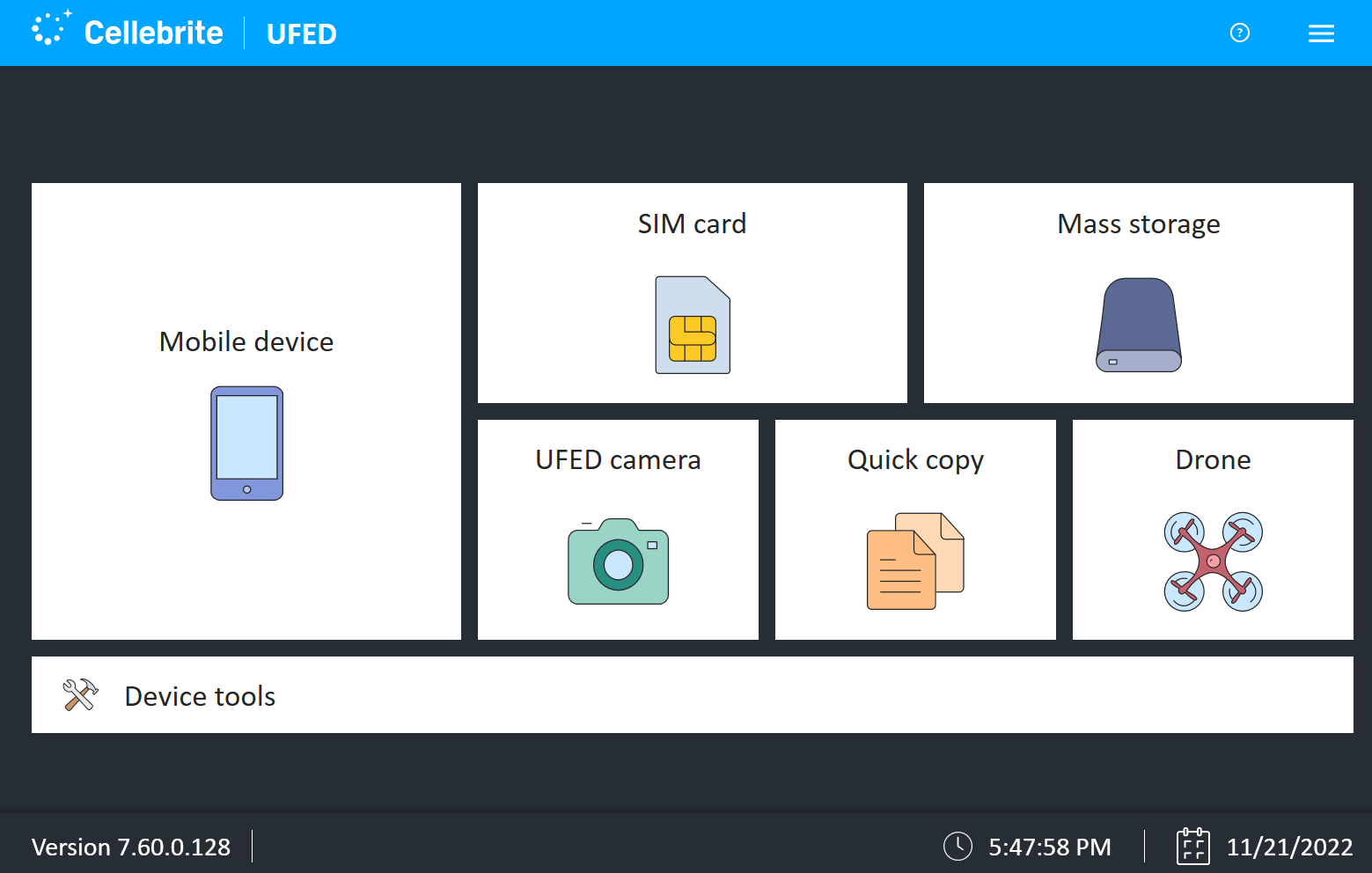
1.Cellebrite UFED (Universal Forensic Extraction Device)
Cellebrite UFED is among the most frequently utilized digital forensic tools by law enforcement agencies globally. It is chiefly employed for extracting data from mobile devices, yet it proves to be highly effective in investigations involving social media.
Key Features:
• Extracts social media data from smartphones, tablets, and cloud backups.
• Recovers messages, images, videos, contacts, and application data.
• Supports platforms such as Facebook, WhatsApp, Instagram, Twitter, and Telegram.
• Conducts logical, file system, and physical extractions.
• Provides timeline and artifact analysis
Importance in Social Media Forensics:
Cellebrite UFED allows investigators to obtain both active and deleted social media content from user devices while ensuring data integrity and forensic validity.
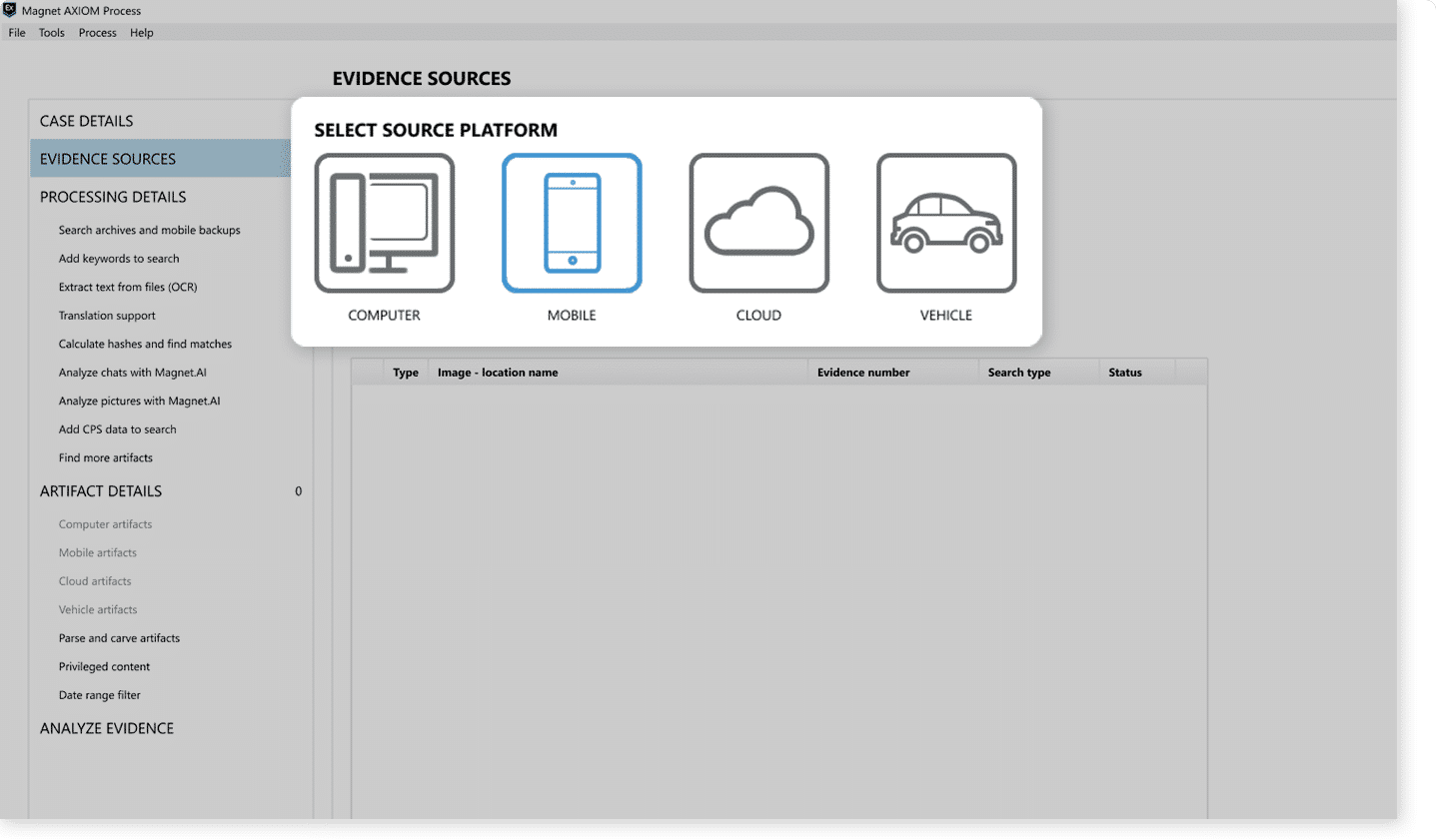
2.Magnet AXIOM
Magnet AXIOM is a sophisticated digital forensics and incident response tool tailored for in-depth analysis of mobile, computer, and cloud data.
Key Features:
• Collects and analyzes data from social media applications and cloud services.
• Recovers chat messages, media files, and metadata.
• Automatically correlates evidence across various sources.
• Constructs timelines and reconstructs user activities.
• Supports analysis of encrypted data (where authorized)
Importance in Social Media Forensics:
Magnet AXIOM assists investigators in discerning user behavior patterns and linking social media activities across different devices and platforms.
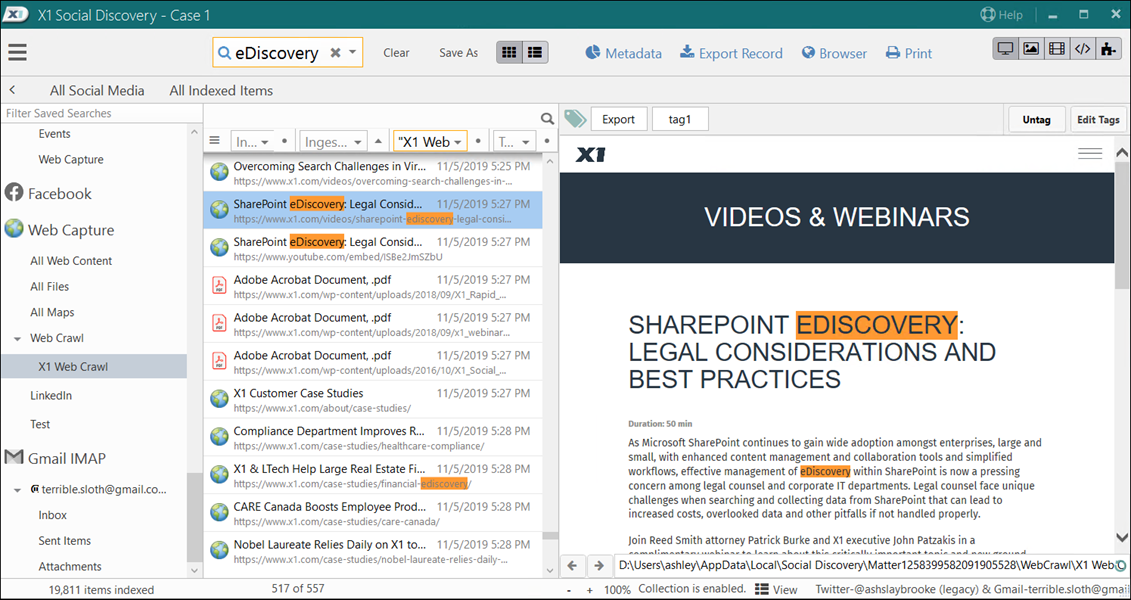
3.X1 Social Discovery
X1 Social Discovery is a specialized tool primarily utilized in legal investigations and e-discovery concerning social media content.
Key Features:
• Collects data directly from social media platforms through authorized access.
• Captures posts, comments, messages, likes, shares, and metadata.
• Preserves data in a legally defensible format.
• Automatically maintains the chain of custody.
• Supports platforms such as Facebook, Instagram, Twitter, and LinkedIn
Importance in Social Media Forensics:
X1 Social Discovery is notably beneficial in civil litigation, corporate investigations, and compliance scenarios due to its strong legal defensibility.
4.Oxygen Forensic Detective
Oxygen Forensic Detective is a comprehensive digital forensic tool that provides extensive access to mobile devices, cloud data, and social media applications.
Key Features:
• Extracts data from mobile devices, drones, and cloud services.
• Analyzes social media applications, emails, and messaging platforms.
• Offers advanced analytics such as keyword search and timeline analysis.
• Supports social graph and contact mapping.
• Can access cloud-based social media data using credentials or tokens
Importance in Social Media Forensics:
Oxygen Forensic Detective is particularly efficient for analyzing cloud-based social media data and visualizing user relationships.
5.Hunchly
Hunchly is a web capture and online investigation tool designed to document online activities in a forensically sound manner.
Key Features:
Automatically captures web pages, social media posts, and comments.
• Records timestamps, URLs, and metadata.
• Generates hash values for captured content
• Maintains an audit trail for legal considerations.
• Beneficial for open-source intelligence (OSINT) investigations.
Importance in Social Media Forensics:
Hunchly ensures that online evidence is preserved as it appeared at the time of collection, making it particularly suitable for investigations involving public social media content.
6.Maltego (Relationship Analysis Tool):
Maltego is a potent intelligence and data-mining tool employed for relationship mapping and link analysis.
Key Features:
Maps connections between social media accounts, email addresses, domains, and IPs
• Visualizes social networks and communication patterns.
• Identifies concealed relationships and fraudulent accounts.
• Integrates OSINT data from diverse sources.
• Provides graph-based analysis.
Importance in Social Media Forensics:
Maltego aids investigators in comprehending how individuals, groups, and accounts are interconnected, rendering it extremely valuable in cases concerning cybercrime, terrorism, and fraud.
Analysis Techniques:
• Timeline Reconstruction
• Sentiment and Language Analysis.
• Network and Relationship Mapping.
• Image and Video Verification.
• Metadata Analysis.
Legal and Ethical Considerations
• Adherence to privacy regulations (such as GDPR, IT Act, etc.).
• Securing appropriate authorization or warrants.
• Maintaining the integrity and authenticity of evidence.
• Preventing unauthorized access to or manipulation of data.
Challenges in Social Media Forensics:
• Encrypted communications.
• Deleted or transient content.
• Fabricated accounts and automated bots.
• Jurisdictional and legal obstacles.
• Vast quantities of data to analyze
Applications:
• Criminal investigations.
• Detection of cybercrime and fraud.
• Analysis of terrorism and threats.
• Corporate investigations for compliance and misconduct.
• Civil litigation, including divorce proceedings.
Conclusion
Social Media Forensics has become an essential aspect of contemporary digital investigations, highlighting the ubiquitous influence of social media in both personal and professional contexts. This field encompasses more than simply retrieving posts or messages; it involves a thorough methodology for identifying, collecting, preserving, analyzing, and presenting digital evidence in a manner that is both legally sound and ethically responsible. As platforms develop with features such as temporary content, encrypted communications, AI-generated postings, and decentralized systems, forensic specialists encounter growing technical and legal challenges. It is imperative to remain informed about advancements in technology, newly developed forensic tools, and changing legal guidelines to uphold the integrity and admissibility of evidence. Furthermore, meticulous upkeep of the chain of custody, accurate documentation, and compliance with privacy and data protection regulations enhance the reliability of social media evidence in legal contexts. Ultimately, Social Media Forensics is crucial in uncovering digital realities, facilitating law enforcement efforts, aiding corporate investigations, and supporting civil litigation, thereby upholding justice in an age where online interactions greatly impact real-world results.
Content Created By Aanya Kinkar | Forensic Science Student | GD Goenka University
Call To Action
Are you interested in learning more about forensic expert or seeking professional forensic-expert services? Contact us today to inquire about our expertise.
📞 Contact Us: 9990292279
🌐 Visit Our Website: https://forensicexpertinvestigation.com/
✉️ Email: ceo.bfi@gmail.com
Share Page
Facebook
Twitter
LinkedIn
WhatsApp
Email


Recent Posts
Archives
Categories
Recent Posts


Popular Tags
59 Chinese Apps Banned (1)
Automated fingerprint identification system (2)
Business due diligence (2)
Chinese Apps Ban India (1)
Computer forensics (2)
Computer vision AI (2)
Court-Admissible Evidence (2)
Crime Scene Analysis (1)
Crime Scene Documentation (2)
Crime scene investigation (3)
CrimeSceneInvestigation (2)
CriminalInvestigation (2)
CSI Forensics (1)
cybercrime investigation (2)
deepfake detection (2)
Digital evidence recovery (2)
digital forensics (4)
DNA Evidence (2)
DNA Fingerprinting (2)
DNA Profiling (3)
Expert Witness Services (2)
Forensic Data Recovery (1)
Forensic DNA Analysis (2)
Forensic Document Examination (2)
Forensic evidence analysis (3)
Forensic Examination (2)
Forensic fingerprint analysis (2)
forensic handwriting analysis (2)
Forensic investigation (2)
Forensic Photography (3)
forensic science (4)
ForensicScience (4)
Forensic Video Examination (2)
Forgery Detection (2)
handwriting analysis (5)
MicroscopicEvidence (2)
Network forensics (2)
Photo Forensic Analysis (2)
Questioned Document Examination (2)
Risk assessment services (2)
signature verification (4)
TikTok Ban India (1)
UC Browser Ban (1)
video forensics (2)
WeChat Ban (1)