
-
ceo.bfi@gmail.com
Send Email
-
2C, C-6/A Block, Janakpuri, Delhi India 110058
Visit Our Office
99902-92279
Confidentiality Guaranteed
99902-92279
Confidentiality Guaranteed
15
Jan





Jan
Nanotechnology in trace evidence analysis
Nanotechnology in Trace Evidence Analysis: Advancing Forensic Science
Introduction
Nanotechnology has developed into a significant and innovative asset within forensic science, especially regarding the analysis of trace evidence. This encompasses minute and often microscopic materials such as fibers, paints, glass fragments, gunshot residue, drugs, explosives, and biological traces. Trace evidence is integral to criminal investigations as it can connect a suspect, a victim, and a crime scene; however, the diminutive size and deteriorated quality of such evidence frequently complicate analysis through traditional forensic methods. Operating within the nanoscale range of 1–100 nanometers, nanotechnology harnesses the distinctive physical, chemical, and optical characteristics of nanomaterials to enhance the detection, identification, and interpretation of this evidence, achieving markedly improved sensitivity, accuracy, and speed.
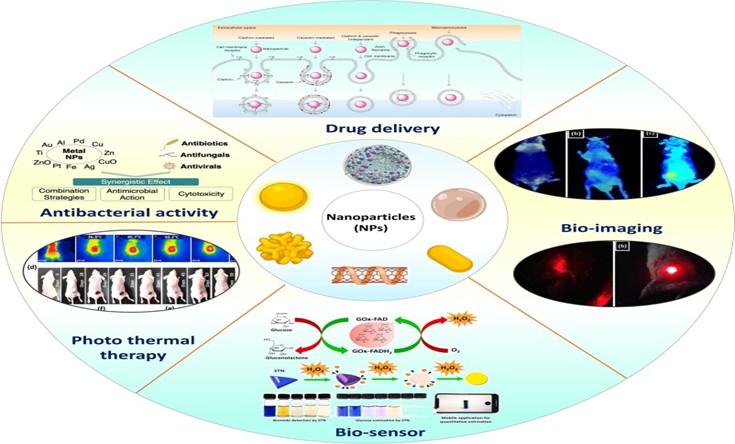
At the nanoscale, materials present a high surface area-to-volume ratio and heightened chemical reactivity, enabling nanomaterials to engage more effectively with trace substances. Metallic nanoparticles, such as gold and silver nanoparticles, are extensively utilized in forensic analysis due to their remarkable optical properties. These nanoparticles can amplify signals in analytical methods such as Surface-Enhanced Raman Spectroscopy (SERS), facilitating the identification of exceedingly small quantities of drugs, explosives, dyes, inks, and gunshot residue that might otherwise remain undetected. This increased sensitivity is particularly advantageous in situations where evidence is scarce or partially compromised.
Nanotechnology significantly contributes to the visualization and examination of fingerprints and fibers. Quantum dots, which are fluorescent semiconductor nanoparticles, facilitate the development of latent fingerprints on difficult surfaces and aid in the analysis of textile fibers and dyes. Their strong fluorescence, durability against photobleaching, and capacity to emit various colors when exposed to a single light source render them superior to conventional fluorescent dyes. In a similar vein, coatings and powders based on nanomaterials enhance the retrieval and clarity of fingerprints and other trace evidence from crime scenes, thereby augmenting their evidentiary significance.
In the realm of gunshot residue analysis, nanotechnology has markedly enhanced both sensitivity and specificity. Sensors and analytical frameworks utilizing nanoparticles can detect inorganic elements such as lead, barium, and antimony, along with organic residues from propellants, even at minimal concentrations. This capability enables forensic experts to differentiate between residues from firearm discharges and those resulting from environmental pollution. Moreover, nanotechnology improves the evaluation of paint and glass evidence by facilitating meticulous analysis of elemental composition, layer structure, and refractive index, which aids in accurately matching samples to their origins.
Additionally, nanotechnology has revolutionized the detection of drugs and explosives within forensic investigations. Nanosensors and detection systems based on nanomaterials can identify illicit substances at nanogram or even picogram levels, providing rapid and portable alternatives to conventional laboratory procedures such as chromatography. This feature is particularly advantageous for on-site screening at crime scenes, airports, and border checkpoints. Furthermore, in the analysis of biological trace evidence, magnetic nanoparticles enhance the efficiency of DNA extraction and purification from very small or degraded samples, thereby increasing the success rate of DNA profiling and subsequent identification.
Nonetheless, the implementation of nanotechnology in forensic science encounters specific challenges, such as elevated costs, the necessity for standardization, potential health and environmental hazards, and the obligation for legal validation prior to widespread acceptance in courtrooms. Nevertheless, continuous research and technological progress are actively addressing these challenges. In summary, nanotechnology has substantially improved the analysis of trace evidence by furnishing highly sensitive, precise, and rapid analytical methods. Its incorporation into forensic science not only enhances the reliability of evidence assessment but also bolsters the overall efficacy of the criminal justice system, establishing it as an essential element of contemporary forensic investigations.
Principle of Nanotechnology in Forensics
At the nanoscale, materials display fundamentally distinct physical, chemical, and electronic properties when compared to their bulk forms, rendering them particularly advantageous in forensic science, especially in the analysis of trace evidence. A prominent characteristic of nanomaterials is their increased surface area-to-volume ratio. As the size of particles diminishes to the nanometer scale, a significantly larger fraction of atoms resides on the surface rather than within the bulk. This heightened surface exposure facilitates more efficient interactions with trace elements of evidence, such as drugs, explosives, gunshot residue, and biological molecules. Even minuscule amounts of substances can adhere to the surfaces of nanoparticles, enabling forensic scientists to detect evidence that would typically fall below the detection thresholds of standard analytical methods.
Another crucial attribute of nanomaterials is their enhanced chemical reactivity. At the nanoscale, atoms and molecules possess elevated energy levels and increased mobility, which renders them more reactive than bulk materials. This augmented reactivity allows nanomaterials to selectively associate with specific chemical compounds found in trace evidence. For instance, functionalized nanoparticles can be engineered to react exclusively with certain drug molecules, explosive traces, or metal ions present in gunshot residue. Such specificity enhances the precision of forensic analyses and diminishes the likelihood of false-positive or false-negative results, which is vital in legal inquiries.
Moreover, nanomaterials exhibit unique optical and electrical characteristics that are not present in larger materials. Metallic nanoparticles, such as gold and silver, demonstrate surface plasmon resonance, leading to pronounced color changes and improved light absorption and scattering. These optical properties are leveraged in sophisticated forensic methodologies, such as Surface-Enhanced Raman Spectroscopy (SERS) and fluorescence-based detection techniques. By amplifying signals, even single molecules of a compound can produce detectable responses, allowing for the highly sensitive identification of dyes, fibers, inks, explosives, and narcotics. Similarly, carbon-based nanomaterials like graphene and carbon nanotubes exhibit remarkable electrical conductivity, which is harnessed in the creation of highly sensitive electrochemical sensors for trace evidence detection.
The unique nanoscale characteristics of nanotechnology permit the identification of tiny amounts of evidence that are frequently undetectable or unreachable through conventional forensic techniques. This feature is especially crucial in situations involving trace-level contamination, degraded samples, or limited evidence. Additionally, nanomaterials enhance signal amplification, whereby chemical or biological signals faint are amplified significantly, thus improving the clarity and dependability of analytical findings. Methods such as nanoparticle-enhanced spectroscopy and nanosensors yield rapid, precise, and reproducible data from minimal sample sizes.
Moreover, nanotechnology provides accurate chemical and structural characterization of trace evidence. Sophisticated nanoscale analytical instruments can disclose intricate details regarding the composition, molecular structure, and morphology of materials including paint layers, glass shards, fibers, and biological specimens. This level of accuracy aids forensic scientists in forming robust connections between evidence and its origin, thus increasing the evidentiary significance in criminal inquiries. In summary, the augmented surface area, improved reactivity, and distinctive optical and electrical characteristics of nanomaterials create a scientific basis for their use in forensic science, allowing for highly sensitive detection, effective signal amplification, and precise characterization of trace evidence, thereby establishing nanotechnology as an essential resource in contemporary forensic analysis.
Types of Nanomaterials Used in Trace Evidence Analysis
Metallic Nanoparticles
Gold and silver nanoparticles are widely recognized as some of the most employed nanomaterials in the field of forensic science, owing to their exceptional and unique optical attributes, which primarily stem from a phenomenon termed surface plasmon resonance (SPR). When light interacts with these metallic nanoparticles, the free electrons on their surfaces oscillate in unison, resulting in significant absorption and scattering of light. This distinctive behavior causes notable color variations and enhances signals, rendering gold and silver nanoparticles particularly advantageous for the detection and analysis of trace evidence. Theoptical properties of these nanoparticles can be meticulously adjusted by modifying their size, shape, and surface chemistry, allowing forensic scientists the ability to customize them for targeted analytical applications.
A significant application of gold and silver nanoparticles in forensic investigations is the detection of drugs and explosives. These nanoparticles can be modified with specific chemical groups that preferentially bind to targeted substances, including narcotics, explosive residues, or hazardous compounds. Upon successful binding, a visible color shift or an intensified optical signal occurs, facilitating prompt and sensitive detection even at extremely low concentrations. This colorimetric response permits rapid screening assessments at crime scenes, airports, and border checkpoints without the immediate necessity for sophisticated laboratory equipment.
Moreover, gold and silver nanoparticles are pivotal in the enhancement of Raman and fluorescence signals, particularly in methodologies such as Surface-Enhanced Raman Spectroscopy (SERS). Within SERS, metallic nanoparticles significantly amplify the Raman scattering signals of molecules adhering to their surfaces by several magnitudes. This amplification empowers forensic analysts to accurately identify trace amounts of substances such as dyes, inks, drugs, explosives, and gunshot residue with great specificity and precision. Concurrently, these nanoparticles also enhance fluorescence signals by improving light absorption and emission efficiency, thereby advancing the detection of compounds that exhibit weak fluorescence in forensic samples.
An additional notable utilization of gold and silver nanoparticles is in the visualization of fingerprints, particularly latent fingerprints that cannot be seen by the naked eye. These nanoparticles exhibit selective adherence to fingerprint residues, including sweat, oils, and amino acids found on the fingerprint ridges. Given their remarkable optical contrast and reflective characteristics, gold and silver nanoparticles enhance the clarity and resolution of ridges across various surfaces, encompassing both porous and non-porous materials as well as multicolored backgrounds. This improved visualization facilitates precise fingerprint comparison and identification, which is crucial for criminal investigations.
The foremost benefit of employing gold and silver nanoparticles is their high sensitivity and colorimetric detection capability. Even minimal interactions between these nanoparticles and target compounds can result in detectable optical alterations, thus enabling the identification of trace-level evidence that conventional techniques might overlook. Furthermore, gold and silver nanoparticles are chemically stable, biocompatible, and relatively simple to synthesize and modify, rendering them appropriate for regular forensic practices. In summary, the extraordinary optical characteristics of gold and silver nanoparticles have considerably enhanced the analysis of forensic trace evidence by allowing for sensitive, rapid, and accurate detection of drugs, explosives, and fingerprints, thereby reinforcing the scientific basis of contemporary forensic investigation.
Quantum Dots
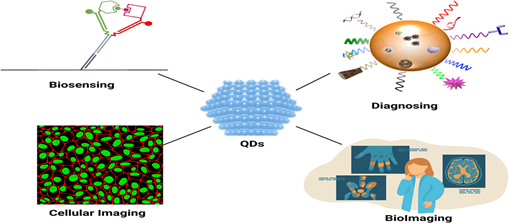
Quantum dots are nanoscale semiconductor particles, generally measuring between 2 to 10 nanometers, characterized by their remarkable fluorescence features. This property renders them particularly useful in forensic science, especially in the examination of trace evidence. Unlike traditional fluorescent dyes, quantum dots demonstrate size-dependent optical characteristics, indicating that their emission color can be accurately manipulated by varying their size and composition. When stimulated by a light source, they produce strong, sharp, and stable fluorescence, facilitating the sensitive detection and visualization of forensic materials that might be challenging to identify through conventional techniques.
One of the principal applications of quantum dots in forensic science is in the identification of latent fingerprints. Latent fingerprints are frequently undetectable and may exist on intricate or multicolored surfaces, where traditional powders and dyes fail to offer adequate contrast. Quantum dots can selectively bind to constituents of fingerprint residues, including amino acids, lipids, and sweat. When illuminated with ultraviolet or visible light, they yield intense fluorescence, resulting in clear and high-resolution ridge patterns. This improved visualization enhances fingerprint clarity and assists in precise identification, even on complex surfaces like plastics, metals, and patterned backgrounds.
Quantum dots are also widely utilized in fiber and dye analysis, which is a crucial component in the examination of trace evidence. Textile fibers and dyes often appear alike under standard microscopic or spectroscopic techniques, complicating differentiation. Due to their adjustable fluorescence properties, quantum dots can serve as labeling agents or contrast enhancers to differentiate between various fiber types and dye compositions. Their narrow emission spectra enable forensic scientists to identify subtle variations in color and chemical makeup, thereby enhancing source attribution and the comparison of fibers recovered from crime scenes.
In the domain of biological labeling, quantum dots present notable advantages over conventional fluorescent markers. They can be conjugated with biomolecules such as antibodies, DNA, or proteins, allowing for precise labeling and identification of biological traces, including blood, saliva, and cellular material. Their high fluorescence intensity permits the detection of minuscule or degraded biological samples, while their resilience to photobleaching guarantees stable signals during extended examinations. This makes quantum dots especially valuable in forensic biology and DNA-focused investigations.
The primary benefits of quantum dots include their high brightness, which ensures strong signal intensity even at low concentrations, and outstanding photostability, indicating that they do not quickly diminish in brightness under continuous light exposure. Furthermore, quantum dots can be tailored to emit multiple distinct colors simultaneously when excited by a single light source. This multicolor functionality enables the simultaneous detection of different targets within one sample, enhancing efficiency and analytical capability. In conclusion, the unique fluorescent characteristics of quantum dots have significantly advanced the analysis of forensic trace evidence by facilitating sensitive, stable, and multi-target detection, establishing them as a vital resource in contemporary forensic science.
Carbon-Based nanomaterials
Carbon-based nanomaterials, particularly carbon nanotubes (CNTs) and graphene, have increasingly become pivotal in forensic science owing to their outstanding physical, chemical, and electrical attributes. Carbon nanotubes are cylindrical formations derived from the rolled configuration of graphene sheets, while graphene itself comprises a single layer of carbon atoms organized in a two-dimensional hexagonal lattice. At the nanoscale, these substances display remarkable features that render them exceptionally effective for trace evidence analysis, particularly in scenarios where heightened sensitivity and accuracy are paramount.
A principal forensic application of carbon nanotubes and graphene lies in the creation of chemical sensors. Owing to their considerably vast surface area and heightened electrical conductivity, even minimal interactions between these nanomaterials and chemical entities can lead to detectable variations in electrical signals. This capability enables forensic sensors to identify trace-level chemicals, such as narcotics, explosives, and volatile organic compounds, with notable sensitivity. Such sensors are typically fast, portable, and apt for on-site forensic assessments, thereby lessening the reliance on lengthy laboratory evaluations.
Carbon-based nanomaterials are also extensively utilized in the identification of toxic substances, which includes heavy metals, poisons, and hazardous chemicals from industrial sources. Functionalized surfaces of carbon nanotubes and graphene can specifically attach to toxic molecules, resulting in alterations in electrical or electrochemical responses. This selectivity improves detection accuracy and reduces interference from other components present in intricate forensic samples. Consequently, these nanomaterials are crucial in environmental forensics, poisoning investigations, and cases of chemical terrorism.
Another significant area of application for CNTs and graphene is in the electrochemical assessment of drugs. Their exceptional electrical conductivity and rapid electron transfer rates greatly enhance the sensitivity of electrochemical methods utilized to identify and quantify illegal drugs. Interactions between drug molecules and electrodes modified with CNTs or graphene generate distinct electrochemical signals, facilitating precise identification even at very low concentrations. This methodology is especially beneficial in the examination of confiscated drug samples and traces of drugs retrieved from crime scenes.
The merits of carbon nanotubes and graphene encompass their remarkable electrical conductivity, which supports swift signal transmission and improved sensor efficiency, alongside their substantial mechanical strength that guarantees endurance and stability through repeated usage. Furthermore, these materials are lightweight, chemically robust, and can be readily tailored with functional groups to pinpoint specific substances. In summary, the distinctive amalgamation of electrical, mechanical, and chemical characteristics inherent in carbon-based nanomaterials has established carbon nanotubes and graphene as essential instruments in contemporary forensic science, significantly enhancing the detection, assessment, and interpretation of trace evidence.
Magnetic Nanoparticles
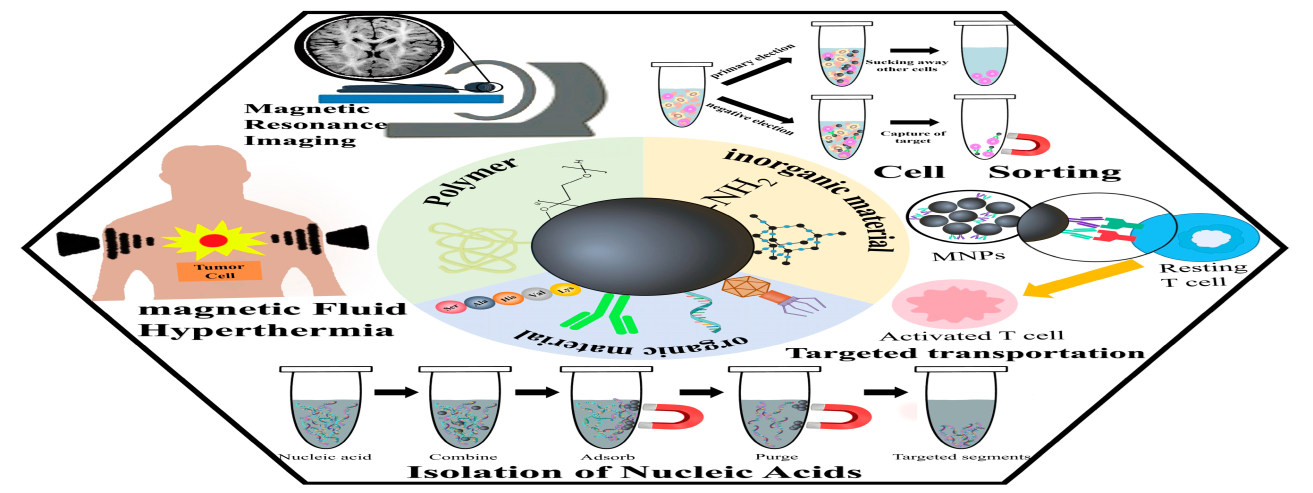
Iron oxide nanoparticles, especially magnetite (Fe₃O₄) and maghemite (γ-Fe₂O₃), are becoming more vital in forensic science, particularly for managing and examining biological trace evidence. At the nanoscale, these particles exhibit superparamagnetism, meaning they are highly responsive to an external magnetic field but lose their magnetism when the field is withdrawn. This distinctive characteristic enables precise manipulation and separation, rendering them valuable for forensic tasks that demand efficient and targeted isolation of biological substances. A key use of iron oxide nanoparticles is in extracting and purifying DNA. In forensic analyses, biological specimens such as blood, saliva, hair roots, and touch DNA are often scarce or degraded by environmental factors. Magnetic nanoparticles can be modified with silica or other coatings that specifically attach to DNA. When a magnetic field is introduced, the DNA-attached nanoparticles are quickly separated from the sample, efficiently isolating genetic material. This method enhances DNA yield and purity, crucial for effective DNA profiling and PCR amplification.
Magnetic nanoparticles find widespread application in isolating minute biological substances from intricate mixtures. Forensic investigations at crime scenes frequently encounter impurities like soil, textiles, or chemical residues that impede analytical processes. Specifically, iron oxide nanoparticles possess the capability to bind to desired biological elements, such as cells, proteins, or nucleic acids, and then be extracted from extraneous matter through the application of a magnetic field. This targeted separation process leads to improved precision and dependability in subsequent forensic examinations, including serological analysis and DNA identification.
Key benefits of employing iron oxide nanoparticles are swift isolation and minimal loss of the sample. Conventional extraction techniques typically involve numerous centrifugation and washing stages, which are both time-consuming and can result in the loss of critical evidence. Conversely, methodologies utilizing magnetic nanoparticles are rapid, necessitate fewer manipulation steps, and substantially decrease the likelihood of sample deterioration or contamination. Moreover, these approaches are readily automatable and align with contemporary forensic procedures, making them well-suited for handling a large volume of cases.
Additionally, iron oxide nanoparticles are compatible with biological systems, exhibit chemical resilience, and can be reused, thus increasing their utility in standard forensic laboratories. In summary, the integration of magnetic iron oxide nanoparticles has significantly boosted the efficiency and trustworthiness of biological trace evidence examination by facilitating swift, selective, and low-loss extraction and separation of DNA and other biological materials, thereby reinforcing the overall efficacy of forensic investigations.
Nanotechnology-Based Analytical Techniques
Surface-Enhanced Raman Spectroscopy (SERS)
• Employs metallic nanoparticles to enhance Raman signals.
• Facilitates the identification of trace-level substances.
Applications include:
• Pharmaceuticals.
• Explosives.
• Inks and dyes.
• Gunshot residue (GSR)
Nanosensors
Sensors based on nanomaterials that facilitate real-time detection.
Applications:
• Immediate identification of explosives and illicit substances.
• Surveillance of hazardous chemicals
Advantage:
• Compact design and swift analytical capability.
Lab-on-a-Chip Technology
Combines nanotechnology with microfluidic systems.
Uses:
• DNA characterization.
• Pharmaceutical testing.
• Screening of biological specimens.
Benefit:
• Necessitates an extremely minimal sample volume.
Application of Nanotechnology to Specific Trace Evidence
Gunshot Residue (GSR)
• Sensors utilizing nanoparticles can identify both inorganic elements (such as lead, barium, and antimony) and organic gunshot residue (GSR).
• Enhanced capability to distinguish between residues from firearm discharges and those arising from environmental contamination.
Fiber and Paint Analysis
Nanotechnology improves spectroscopic methods for the identification of:
• Polymer composition.
• Dye structure.
• Sequence of paint layers.
Glass Evidence
• Nanoparticles enhance the precision of refractive index assessments.
• Identification of trace elemental composition.
Drugs and Explosives
• Nanomaterials facilitate the detection of substances at levels as low as nanograms.
• They operate more rapidly than traditional chromatography techniques.
Biological Trace Evidence
• Nanoparticles enhance the extraction of DNA from degraded or limited samples.
• Improved efficiency and sensitivity of PCR.
Advantages of Nanotechnology in Trace Evidence Analysis
• Exceptional sensitivity.
• Accelerated analytical procedures.
• Reduced sample destruction.
• Improved accuracy and dependability.
• Potential for on-site forensic analysis.
Limitations and Challenges
• Elevated expenses associated with the synthesis of nanomaterials.
• Requirement for standardization and rigorous validation.
• Concerns related to health and the environment.
• Acceptance in legal contexts and admissibility in court.
Future Prospects
• Incorporation of artificial intelligence.
• Advancement of mobile forensic instruments.
• Greater adoption in standard forensic laboratories.
Conclusion
Nanotechnology has transformed the analysis of trace evidence by facilitating the detection and characterization of exceedingly small and intricate forensic samples.
Its implementation improves the sensitivity, precision, and efficiency of forensic investigations, resulting in more dependable outcomes and greater evidentiary significance within the criminal justice system. While there are some challenges, the potential of nanotechnology is substantial, and it is anticipated to become a fundamental element of forensic science going forward.
Content Created By Aanya Kinkar | Forensic Science Student | GD Goenka University
Call To Action
Are you interested in learning more about forensic expert or seeking professional forensic-expert services? Contact us today to inquire about our expertise.
📞 Contact Us: 9990292279
🌐 Visit Our Website: https://forensicexpertinvestigation.com/
✉️ Email: ceo.bfi@gmail.com
Share Page
Facebook
Twitter
LinkedIn
WhatsApp
Email


Recent Posts
Archives
Recent Posts


Popular Tags
59 Chinese Apps Banned (1)
Automated fingerprint identification system (2)
Business due diligence (2)
Chinese Apps Ban India (1)
Computer forensics (2)
Computer vision AI (2)
Court-Admissible Evidence (2)
Crime Scene Analysis (1)
Crime Scene Documentation (2)
Crime scene investigation (3)
CrimeSceneInvestigation (2)
CriminalInvestigation (2)
CSI Forensics (1)
cybercrime investigation (2)
deepfake detection (2)
Digital evidence recovery (2)
digital forensics (4)
DNA Evidence (2)
DNA Fingerprinting (2)
DNA Profiling (3)
Expert Witness Services (2)
Forensic Data Recovery (1)
Forensic DNA Analysis (2)
Forensic Document Examination (2)
Forensic evidence analysis (3)
Forensic Examination (2)
Forensic fingerprint analysis (2)
forensic handwriting analysis (2)
Forensic investigation (2)
Forensic Photography (3)
forensic science (4)
ForensicScience (4)
Forensic Video Examination (2)
Forgery Detection (2)
handwriting analysis (5)
MicroscopicEvidence (2)
Network forensics (2)
Photo Forensic Analysis (2)
Questioned Document Examination (2)
Risk assessment services (2)
signature verification (4)
TikTok Ban India (1)
UC Browser Ban (1)
video forensics (2)
WeChat Ban (1)