Send Email
Visit Our Office
Confidentiality Guaranteed
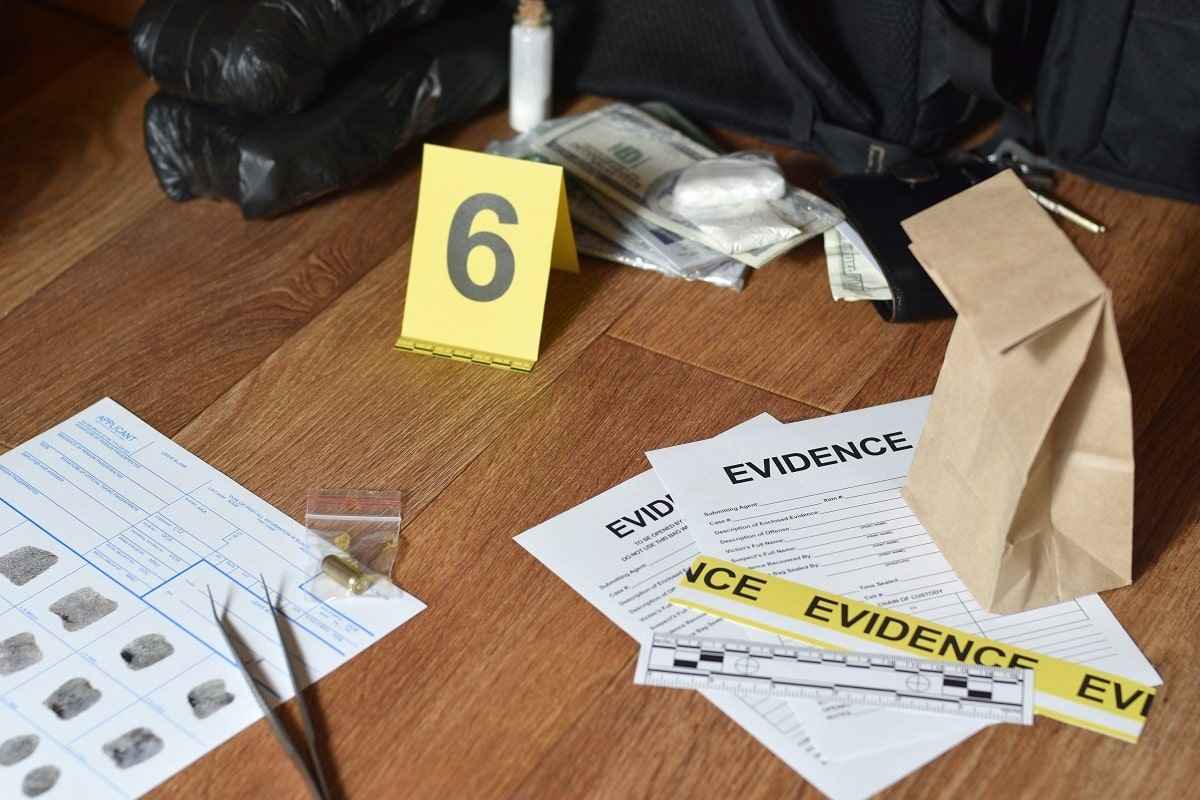
Physical evidence lies at the heart of every forensic investigation. Whether a case involves homicide, burglary, sexual assault, fraud, or a hit and run incident, physical clues provide objective and scientific proof that helps investigators reconstruct events and identify offenders. Unlike witness statements—which can be influenced by memory, emotions, or bias—physical evidence is silent, unbiased, and enduring. It tells a story rooted in science.
In modern forensic science, the value of physical evidence has become more important than ever. Courts depend heavily on it, investigators rely on it, and forensic laboratories analyze it using sophisticated tools. Understanding what physical evidence is, how it is collected, and why it is crucial can transform the outcome of any investigation.
Physical evidence refers to any tangible object that can be collected from a crime scene, victim, suspect, or related location. It includes anything that can establish whether a crime occurred, identify those involved, or reconstruct the sequence of events.
Examples include:
Fingerprints
Blood, saliva, or hair
Fibers and clothing
Weapons or tool marks
Tire impressions
Broken glass
Documents
Digital storage devices
Paint chips
Biological fluids
Physical evidence is classified into various types—biological, trace, impression, digital, chemical, and more—each with its own role in forensic interpretation.
Physical evidence plays a critical role, including:
1. Establishing That a Crime Occurred
A broken lock may indicate forced entry, while bloodstains can prove violence.
2. Identifying the Suspect or Victim
DNA, fingerprints, and footprints can directly link individuals to the scene.
3. Reconstructing Events
Bloodstain patterns, bullet trajectories, and skid marks in hit and run cases help recreate what happened.
4. Corroborating or Contradicting Statements
Physical evidence can confirm or disprove alibis, witness testimonies, or suspect confessions.
5. Providing Reliable, Court-Admissible Proof
Forensic experts analyze physical evidence scientifically, producing reports that hold strong credibility in court.
Hit and run cases rely heavily on physical evidence because the offender often flees the scene, leaving behind crucial clues.
Key forms of physical evidence in hit and run investigations include:
1. Vehicle Paint Transfer
Small paint chips or smears on the victim’s clothing, vehicle, or road surface can identify the model or make of the offending vehicle.
2. Skid Marks and Tire Impressions
These marks help investigators calculate speed, direction, and the point of impact.
3. Broken Vehicle Parts
Fragments like headlights, mirrors, bumpers, or glass often fall off during impact and serve as unique identifiers.
4. Biological Evidence
Blood, hair, or skin cells may be found on the vehicle that hit the victim.
5. Surveillance Footage and Digital Evidence
Though digital, these recordings document vehicle movement and can direct investigators to physical evidence.
Hit and run cases showcase how powerful physical evidence can be—often identifying suspects even when they attempt to escape unseen.
1. Biological Evidence
Includes blood, semen, saliva, hair, and other bodily fluids. DNA analysis helps establish identity and contact.
2. Impression Evidence
Consists of fingerprints, footprints, tire marks, and tool impressions. These help match suspects or vehicles to the scene.
3. Trace Evidence
Microscopic materials like fibers, soil, glass, gunshot residue, or pollen. Trace evidence follows Locard’s Principle: every contact leaves a trace.
4. Chemical Evidence
Toxic substances, drugs, accelerants, and poisons. Often crucial in poisoning, arson, and narcotics cases.
5. Physical Objects
Weapons, tools, clothing, bullets, documents, and personal belongings.
6. Digital Evidence
Although intangible, digital devices hold physical storage. Hard drives, mobile phones, and CCTV recordings augment physical evidence.
To ensure accuracy and legal admissibility, physical evidence must be handled systematically.
1. Crime Scene Documentation
Photographs, sketches, videos, and notes capture the original condition of the scene.
2. Evidence Collection
Investigators use gloves, tweezers, swabs, and specialized kits to avoid contamination.
3. Preservation
Biological samples are refrigerated; flammable residues are collected in airtight containers; fragile evidence is secured properly.
4. Chain of Custody
A documented path showing who handled the evidence ensures authenticity in court.
5. Laboratory Examination
Forensic experts use microscopes, chromatography, spectroscopy, DNA analysis, ballistic tools, and other scientific instruments.
Contamination or improper collection
Environmental degradation
Incomplete or damaged evidence
Mixed samples
Lack of proper crime scene security
Despite challenges, skilled forensic experts can often recover meaningful information from even the smallest traces.
A forensic expert transforms physical evidence into scientific conclusions. Their responsibilities include:
Examining the evidence using validated techniques
Interpreting results based on scientific principles
Preparing court-ready reports
Providing expert witness testimony
Assisting law enforcement in reconstructing crime scenes
Their expertise ensures that justice is supported by reliable scientific findings.
Physical evidence is the backbone of modern forensic science. From identifying suspects to solving complex hit and run cases, it provides objective proof that helps investigators uncover the truth. When collected, preserved, and analyzed correctly, it becomes one of the most powerful tools in the justice system.
Whether it’s a tiny fiber or a piece of shattered glass, every fragment of physical evidence has a story to tell—one that can change the direction of an entire investigation.
We invite readers to share their thoughts, experiences, or questions about physical evidence examination in forensic investigations. Join the conversation and explore further resources on forensic science and criminal investigations.
📞 Contact Us: 9990292279
🌐 Visit Our Website: https://forensicexpertinvestigation.com/
✉️ Email: ceo.bfi@gmail.com