
-
ceo.bfi@gmail.com
Send Email
-
2C, C-6/A Block, Janakpuri, Delhi India 110058
Visit Our Office
99902-92279
Confidentiality Guaranteed
99902-92279
Confidentiality Guaranteed
19
Sep

Sep
ARSON/FIRE INVESTIGATION
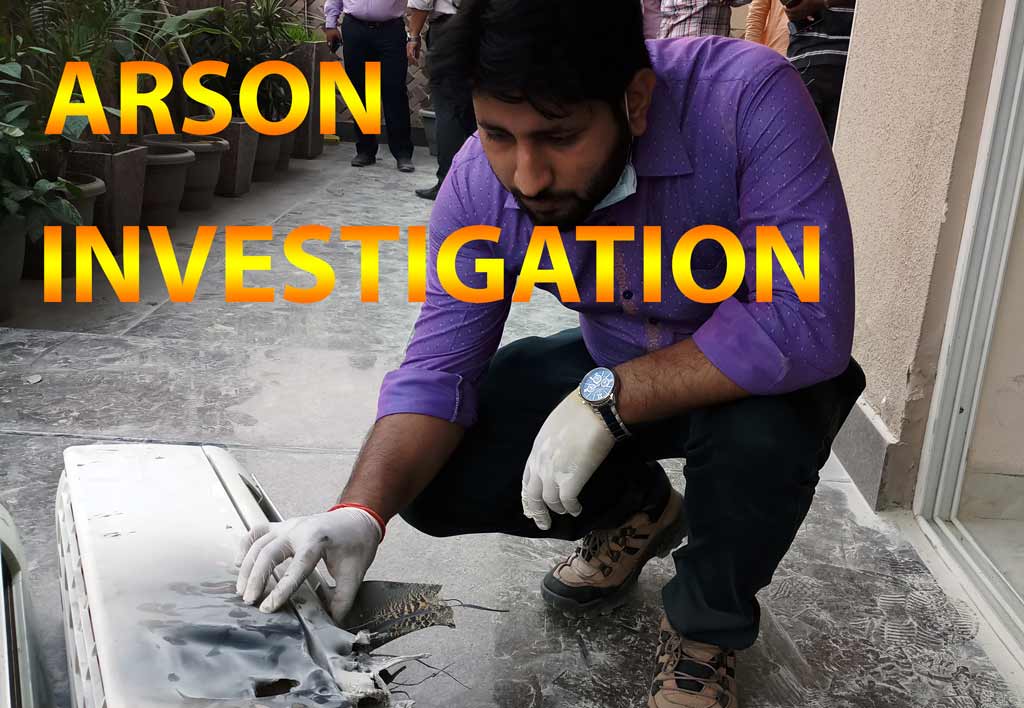
Arson Investigation
Arson Fire Investigation
Arson investigation is one of the most complex and scientifically demanding branches of forensic science. Whenever a fire and explosion takes place—whether in a home, vehicle, warehouse, or forest—investigators must work meticulously to determine how the fire started, what fueled it, whether it was accidental or intentional, and who is responsible.
This process is far more than examining burnt debris. It requires advanced knowledge of chemistry, physics, fire behavior, building structures, and human psychology. Arson investigators are trained to reconstruct the origin, cause, and progression of a fire with scientific precision.
In this comprehensive blog, we dive deep into how arson investigations unfold, the science behind fire patterns, and why expert analysis is crucial for justice.
What Is Arson Investigation?
Arson investigation is the forensic process of examining fire scenes to determine whether the fire was:
An accident
A result of negligence
An act of deliberate fire-setting (arson)
A cover-up to conceal another crime (fraud, murder, insurance deception, etc.)
Arson is a serious criminal offense in many jurisdictions and is monitored by national fire investigative authorities worldwide. These include fire departments, forensic teams, private investigators, and insurance investigators.
Understanding Fire Behavior: How Flames Tell a Story
Every fire leaves behind clues. Even when everything seems burned to ash, fire patterns, smoke deposits, burn marks, and debris shapes reveal what the fire went through.
Key scientific elements investigators study:
1. Point of Origin
Where did the fire begin?
This may be in a kitchen, electrical socket, trash bin, mattress, or vehicle engine.
Patterns such as:
V-shaped burn marks
Clean burn patterns
Deep charring
help identify the first point of ignition.
2. Cause of Fire
Common causes include:
Electrical malfunction
Overheating appliances
Gas leakage
Open flames (candles, cigarettes)
Chemical accelerants (petrol, kerosene)
Arson using deliberate ignition
Secondary causes of fire and explosion
3. Accelerants Detection
Arsonists often use accelerants to spread fire quickly. Investigators collect samples of:
Soil
Wood
Fabric
Burnt residues
These are sent for laboratory testing to detect gasoline, alcohol, kerosene, or chemical accelerants.
Stages of Arson Investigation
Arson investigation unfolds through a systematic and methodical process:
1. Arrival at the Scene
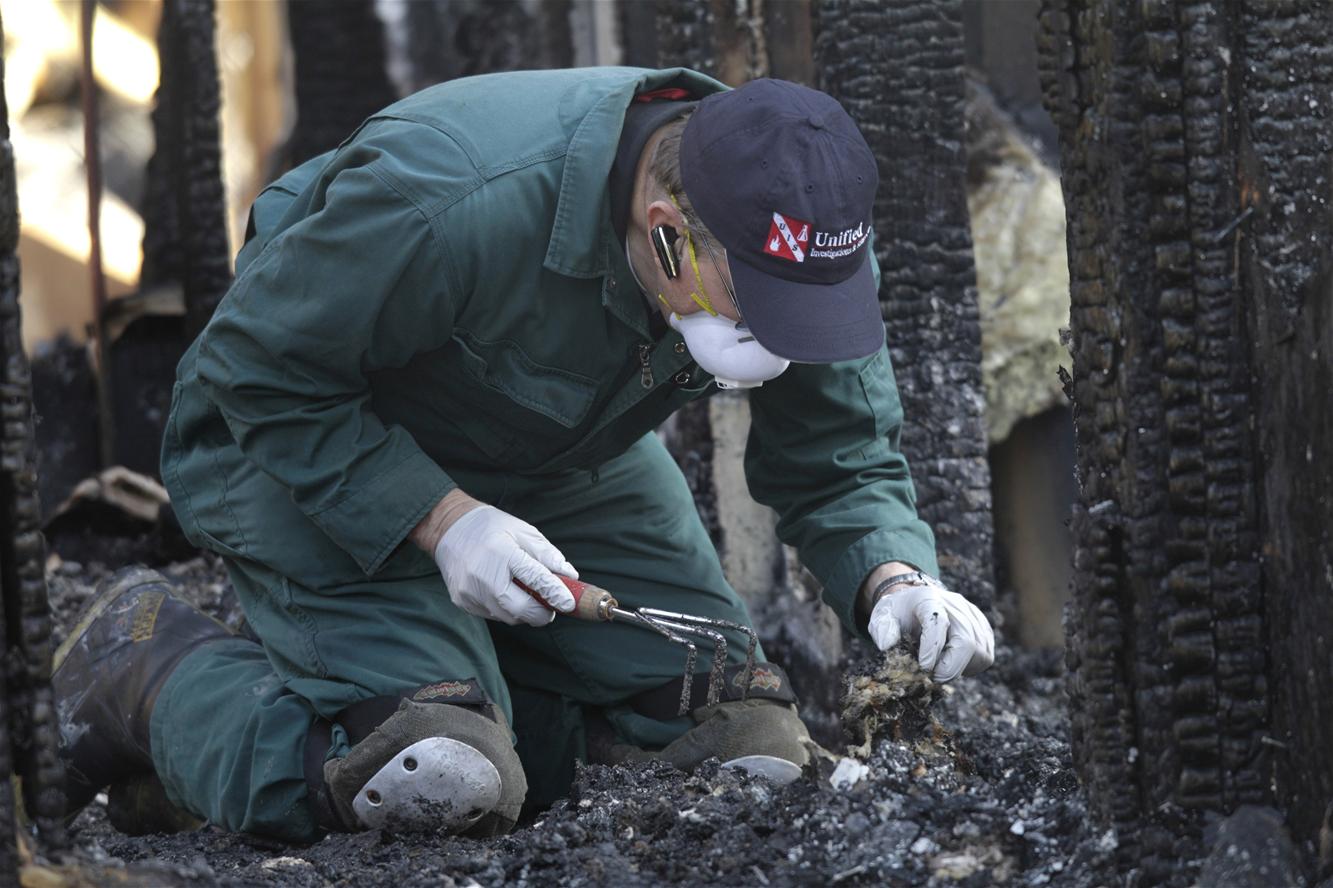
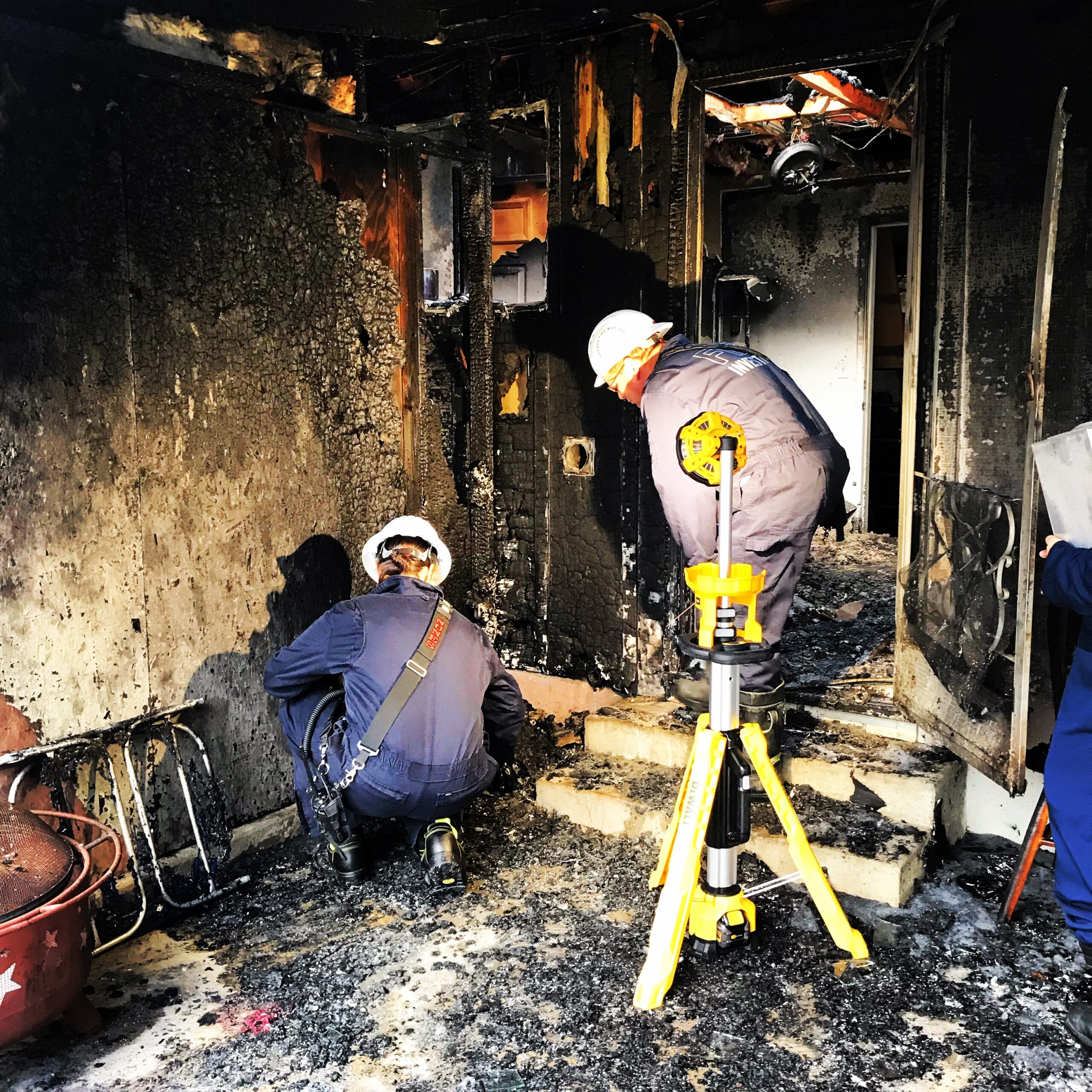
When investigators reach the location, the site is often still unsafe. Hazards like collapsing structures, hot spots, or toxic fumes must be controlled. The area is then secured to prevent contamination of critical evidence.
2. Scene Documentation
Before touching anything, investigators document EVERYTHING using:
Forensic photography
3D scanning
Drone footage
Notes & sketches
This helps reconstruct the fire narrative later.
3. Physical Evidence Collection
Evidence is handled carefully because fire damage can make samples fragile.
Common evidence includes:
Burnt wires
Melted switches
Fuel containers
Broken windows (possible forced entry)
Clothing fibers
Matches/lighters
Ignition sources
Residues from accelerants are preserved in airtight containers for laboratory analysis.
4. Interviews & Behavioral Clues
Arson often has psychological motives. Investigators interview:
Neighbors
Witnesses
Firefighters
Owners of the property
They also examine behavioral patterns such as:
Insurance claims
Financial distress
Personal disputes
Previous fire history
Suspicious activity before the fire
5. Laboratory Analysis
The national fire laboratories and private forensic labs examine:
Chemical residues
Fire debris
Accelerant presence
Burn patterns
Ignition sources
Gas chromatography–mass spectrometry (GC-MS) is commonly used for chemical testing.
6. Reconstruction & Conclusion
Using all collected evidence, investigators reconstruct:
How the fire started
How it spread
Whether an accelerant was used
Whether the fire was intentional
Who the possible suspect may be
The final report is prepared and submitted to:
Law enforcement
Courts
Insurance companies
Fire departments
This report is often crucial in criminal trials, insurance claims, and civil disputes.
Why Arson Investigation Is Crucial
A single fire can affect:
Human lives
Business operations
Public safety
Environment
Legal outcomes
Insurance disputes
Without proper investigation, false accusations or fraud may go undetected.
Arson Investigation Helps To:
✔ Detect insurance fraud
✔ Identify criminal intent
✔ Prevent future fires
✔ Strengthen legal cases
✔ Save innocent individuals from false blame
PROTOCOLS IN ARSON FIRE INVESTIGATION
A standardized protocol must be followed in arson and fire investigation which is as follows:
1. Identification of the first caller from the scene of incidence.
2. Identification of any injured person present at the scene of incidence and medical assistance must be provided to the personnel.
3. Protect the whole area by the barricading tape in order to avoid entry of unnecessary personnels.
4. Obtain photographs of the scene of incidence from all the possible angles.
5. Obtain insurance information and identification of the public or private insurance investigators.
6. Record check of the property is another crucial step by the forensic investigators. Record check includes assessor records or tax records.
7. Weather conditions must be taken into consideration as well as proper documentation of the scene of incidence must be taken in the form of notes.
8. Searching method must be employed by the forensic experts and crime scene investigators depending upon the area of the crime scene.
9. Remove all the debris and clean all the relevant tools or articles and establishing the area for evidence collection.
10. Evidences must be thoroughly searched and collected from the crime scene as well as preserved properly for the further laboratory analysis as evidences are admissible in court of law.
11. Analyze fire flow patterns, damage patterns, and evidences such as shields and shadows, inverted cone burn pattern, etc. Document the evidences with photos, sketches and notes.
The role of forensic fire investigator is to check for possible incendiary devices, license plate of automobiles in the area of fire, and to ensure that access to the scene is under control. Another major task of fire investigator is to survey the exterior as well as interior of the structure of the building. The goal is to assess probable fire origin, secure evidence and to control fire overhaul procedures to protect evidence.
Once the evidences are collected in secured manner, they will send to the forensic laboratory for further analysis and examination. After the results are interpretated, the report prepared by forensic expert is admissible under court of law.
Conclusion
Arson investigation is a blend of science, skill, and intuition. Each fire tells a story—hidden beneath ashes and debris—and it takes a trained forensic investigator to uncover the truth.
By studying burn patterns, accelerant residues, witness accounts, and scientific data, arson investigators play a major role in solving crimes and ensuring justice.
Whether it’s a minor house fire or a major fire and explosion case, each investigation strengthens community safety and helps prevent future tragedies.
Are you interested in learning more about forensic expert or seeking professional forensic-expert services? Contact us today to inquire about our expertise.
📞 Contact Us: 9990292279
🌐 Visit Our Website: https://forensicexpertinvestigation.com/
✉️ Email: ceo.bfi@gmail.com
Share Page
Facebook
Twitter
LinkedIn
WhatsApp
Email


Recent Posts
Archives
Categories
Recent Posts


Popular Tags
59 Chinese Apps Banned (1)
Automated fingerprint identification system (2)
Business due diligence (2)
Chinese Apps Ban India (1)
Computer forensics (2)
Computer vision AI (2)
Court-Admissible Evidence (2)
Crime Scene Analysis (1)
Crime Scene Documentation (2)
Crime scene investigation (3)
CrimeSceneInvestigation (2)
CriminalInvestigation (2)
CSI Forensics (1)
cybercrime investigation (2)
deepfake detection (2)
Digital evidence recovery (2)
digital forensics (4)
DNA Evidence (2)
DNA Fingerprinting (2)
DNA Profiling (3)
Expert Witness Services (2)
Forensic Data Recovery (1)
Forensic DNA Analysis (2)
Forensic Document Examination (2)
Forensic evidence analysis (3)
Forensic Examination (2)
Forensic fingerprint analysis (2)
forensic handwriting analysis (2)
Forensic investigation (2)
Forensic Photography (3)
forensic science (4)
ForensicScience (4)
Forensic Video Examination (2)
Forgery Detection (2)
handwriting analysis (5)
MicroscopicEvidence (2)
Network forensics (2)
Photo Forensic Analysis (2)
Questioned Document Examination (2)
Risk assessment services (2)
signature verification (4)
TikTok Ban India (1)
UC Browser Ban (1)
video forensics (2)
WeChat Ban (1)