
-
ceo.bfi@gmail.com
Send Email
-
2C, C-6/A Block, Janakpuri, Delhi India 110058
Visit Our Office
99902-92279
Confidentiality Guaranteed
99902-92279
Confidentiality Guaranteed
18
Jun


Jun
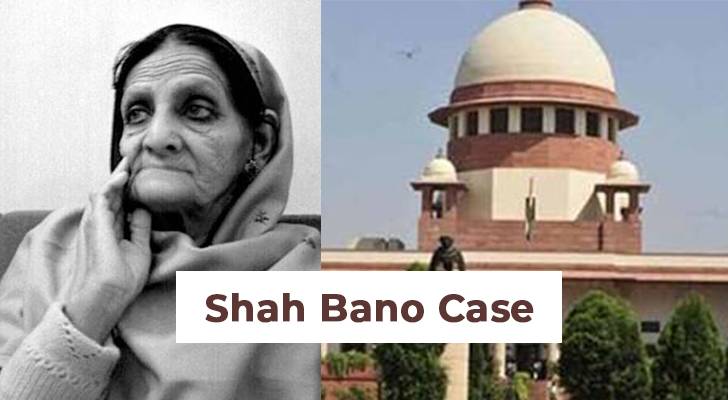
Shah Bano Begum Case
Shah Bano Begum Case: A Landmark Fight for Justice and Its Cultural Echo in Haq
Introduction: A Personal Struggle That Changed Indian Law
The Shah Bano Begum case represents one of the most consequential intersections of law, gender justice, religion, and constitutional morality in independent India. It began as a quiet plea from an elderly woman seeking subsistence after abandonment, but evolved into a legal earthquake that forced India to confront the limits of personal law, the meaning of secularism, and the Constitution’s promise of equality.
Shah Bano was not seeking social reform or constitutional change. Her demand was modest—maintenance to survive with dignity. Yet her insistence on invoking secular law rather than religious norms challenged deeply entrenched patriarchal structures. By approaching the judiciary, she transformed a personal grievance into a test of India’s constitutional conscience, permanently altering the trajectory of family law and women’s rights discourse.
Background: What Led to the Case?
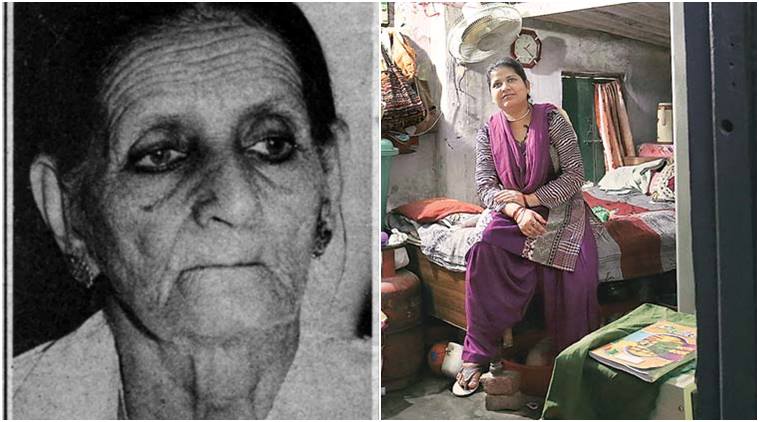
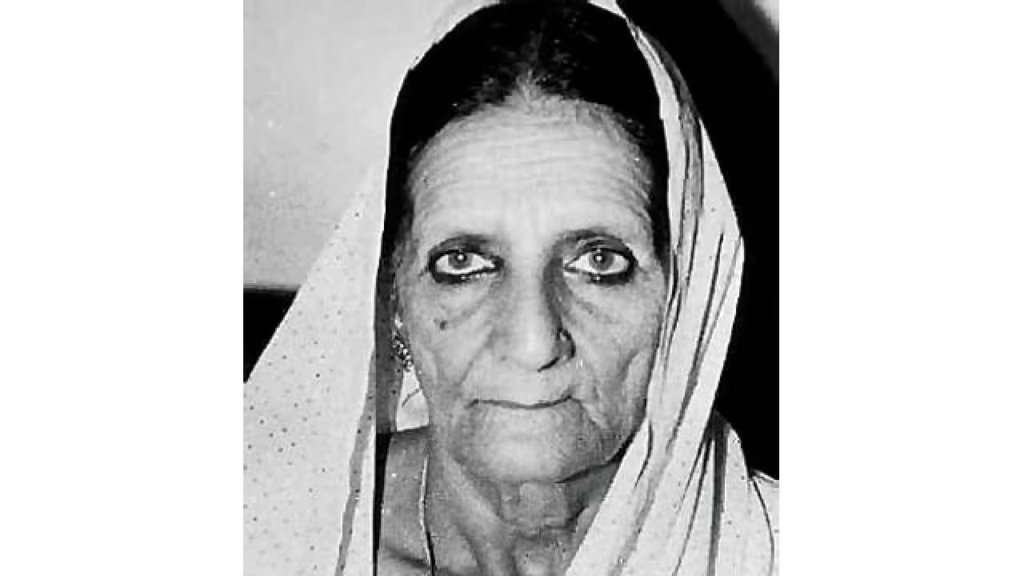
Shah Bano Begum was married for more than forty years to her husband, Mohammed Ahmed Khan. In her old age, she was divorced through triple talaq, a unilateral form of divorce permitted under Muslim personal law at the time. Following the divorce, she was denied adequate financial support and faced imminent destitution.
With no independent income and no social safety net, Shah Bano filed a petition under Section 125 of the Criminal Procedure Code (CrPC). This provision is a secular welfare mechanism, designed to prevent vagrancy and starvation by obligating financially capable individuals to support dependents—wives, divorced wives, children, and parents—who cannot maintain themselves.
Her husband contested the claim, asserting that under Muslim personal law, his obligation ended after the iddat period (approximately three lunar months). This defense reframed the dispute into a constitutional dilemma:
Does religious personal law override a secular statute enacted to protect human dignity?
The Supreme Court Judgment (1985): Equality Over Exclusivity
In 1985, the Supreme Court of India, in a landmark judgment delivered by a Constitution Bench, ruled decisively in favor of Shah Bano Begum.
The Court held that:
Section 125 CrPC is secular and applies uniformly to all citizens, irrespective of religion.
A divorced Muslim woman is entitled to maintenance beyond the iddat period if she cannot maintain herself.
Personal laws cannot supersede constitutional values of equality, dignity, and social justice.
The judgment emphasized that the Constitution does not allow any legal framework—religious or otherwise—that leaves women economically vulnerable. The Court reaffirmed that gender justice is inseparable from constitutional justice and that faith cannot be invoked to justify deprivation or abandonment.
This ruling elevated Shah Bano’s claim from a maintenance dispute to a constitutional affirmation of women’s right to live with dignity.
Political Backlash and Legislative Change
Despite its constitutional clarity, the judgment provoked intense political and religious backlash. Certain groups perceived the ruling as judicial intrusion into religious autonomy. The issue quickly escalated into a politically charged debate, exposing the fragile balance between law and vote-bank politics.
In response, Parliament enacted the Muslim Women (Protection of Rights on Divorce) Act, 1986. The Act sought to limit a husband’s liability largely to the iddat period and shifted responsibility for a woman’s future maintenance to relatives or community mechanisms.
This legislative intervention was widely criticized as a retreat from constitutional principles, subordinating women’s rights to political expediency. The Shah Bano episode thus became a textbook illustration of how judicial progress can be undermined by legislative reversal when social reform collides with political pressure.
Evolving Legal Interpretation
Although the 1986 Act appeared to nullify the Shah Bano judgment, the judiciary gradually restored constitutional balance through interpretation. Courts clarified that the Act must be read in a manner that does not leave divorced Muslim women destitute.
In Danial Latifi v. Union of India, the Supreme Court held that the Act requires a reasonable and fair provision for the woman’s future, effectively preserving the substance of Shah Bano’s victory. Subsequent rulings continued to assert that personal laws must operate within the framework of fundamental rights.
This judicial evolution demonstrated the resilience of constitutional morality and the courts’ role in safeguarding gender justice despite political setbacks.
Haq (2025 Film): Cultural Retelling of a Legal Struggle
The upcoming film Haq is described as a fictionalized adaptation inspired by the Shah Bano case and the book Bano: Bharat Ki Beti.
The narrative dramatises the emotional and legal journey of a woman seeking justice in a system structured by personal, religious, and political forces. While not a strictly factual biographical portrayal, the film aims to:
Highlight the human and moral dimensions of the Shah Bano judgment
Explore the tension between personal law and secular law
Showcase the quest for dignity and equality through the protagonist’s legal battle
Legal developments around the film’s release itself illustrate how powerful this story remains. Shah Bano’s daughter issued legal notices asserting that her mother’s personal story was used without consent; however, courts have upheld the film’s release on grounds of creative adaptation and lack of inheritable privacy claims.
Why the Shah Bano Case Still Matters
The legacy of the Shah Bano judgment continues to influence Indian legal and social discourse:
It clarified the application of secular law over personal law in cases of fundamental rights.
It underscored the importance of Section 125 CrPC as a protective provision for vulnerable persons irrespective of religion.
It sharpened debates over the Uniform Civil Code, women’s rights, and equality before the law under Articles 14 and 15 of the Constitution.
It remains a vivid reference point in discussions about legal reform, gender justice, and faith vs. secularism in Indian jurisprudence.
Conclusion: Law, Society and the Quest for Justice
The Shah Bano Begum case is far more than a legal precedent; it is a moral landmark in India’s democratic journey. Shah Bano did not seek to reform religion or challenge tradition—she sought survival and dignity. In asserting that right, she compelled the nation to examine whether its laws truly reflect its constitutional values.
Her legacy teaches enduring lessons:
Law must protect the weakest first
Dignity is non-negotiable
Gender justice is constitutional justice
Silence in the face of injustice enables injustice
The quest for justice, as the Shah Bano case reveals, is not linear. It is shaped by courage, contested by power, and sustained by constitutional principles. Shah Bano’s quiet determination continues to echo as a reminder that one woman’s fight can redefine a nation’s understanding of justice.
a reminder that one woman’s courage can force an entire nation to look at itself—and ask whether its laws truly reflect its values.
By Manvika Verma | Forensic Expert | Brilliant Forensic Investigation
Call To Action
Are you interested in learning more about forensic expert or seeking professional forensic-expert services? Contact us today to inquire about our expertise.
📞 Contact Us: 9990292279
🌐 Visit Our Website: https://forensicexpertinvestigation.com/
✉️ Email: ceo.bfi@gmail.com
Share Page
Facebook
Twitter
LinkedIn
WhatsApp
Email


Recent Posts
Archives
Categories
Recent Posts
Popular Tags
Automated fingerprint identification system (2)
Ballistics (2)
Business due diligence (2)
Call Log Analysis (1)
Case Study (2)
Computer forensics (2)
Computer vision AI (2)
Court-Admissible Evidence (2)
Crime Scene Documentation (2)
Crime scene investigation (12)
CrimeSceneInvestigation (2)
CriminalInvestigation (2)
cybercrime investigation (2)
deepfake detection (2)
Digital evidence recovery (2)
digital forensics (4)
DNA Evidence (2)
DNA Fingerprinting (2)
DNA Profiling (4)
Expert Witness Services (2)
forensic ballistic (2)
Forensic Case Review (2)
Forensic DNA Analysis (7)
Forensic Document Examination (2)
Forensic evidence analysis (10)
Forensic Examination (2)
Forensic fingerprint analysis (2)
forensic handwriting analysis (2)
Forensic investigation (10)
Forensic Photography (3)
forensic science (7)
ForensicScience (6)
Forensic Video Examination (2)
Forgery Detection (2)
handwriting analysis (5)
MicroscopicEvidence (2)
Mobile Evidence Extraction (1)
Network forensics (2)
Online Crime Investigation (1)
Photo Forensic Analysis (2)
Questioned Document Examination (2)
Risk assessment services (2)
signature verification (4)
TikTok Ban India (1)
video forensics (2)