Send Email
Visit Our Office
Confidentiality Guaranteed
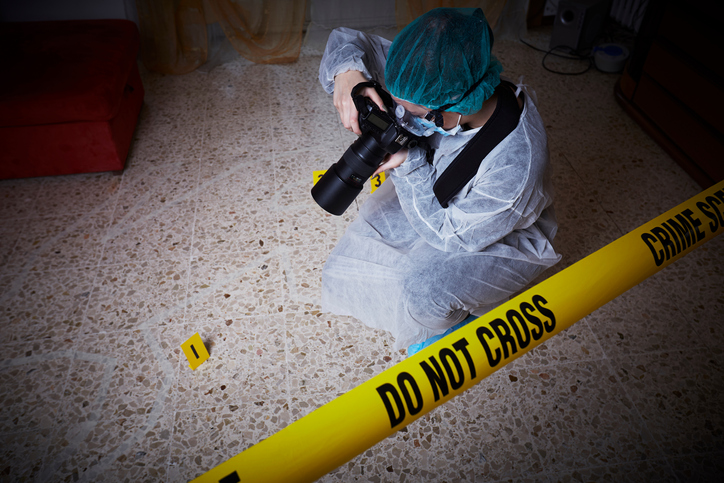
In the field of forensics, few tools are as powerful and indispensable as crime scene photography. Before evidence is touched, collected, or analyzed, it is first captured visually through forensic photographs. These images serve as permanent records of what investigators observe at a crime or accident scene, ensuring that every detail—big or small—is preserved for analysis, investigation, and future courtroom use.
Crime scene photography is not merely about taking pictures; it is about documenting facts with scientific accuracy. Photos must help reconstruct events, verify statements, and support legal arguments during a court case. Whether investigators are photographing bite marks, weapons, footprints, bloodstains, or damaged vehicles, every image contributes to the truthful documentation of evidence.
Crime scene photography is the systematic process of capturing visual records of a crime scene, victims, suspects, and physical evidence. The purpose is to create objective, accurate, and detailed images that investigators, forensic experts, and courts can rely on throughout the investigative and legal process.
These images form a crucial component of forensic imaging, helping professionals understand the environment, analyze spatial relationships, and preserve fleeting evidence that may degrade or disappear over time.
1. Permanent Documentation of Evidence
Evidence such as footprints, fingerprints, trace materials, bloodstains, or bite marks may change or be destroyed during handling. Crime scene photos preserve these critical details permanently.
2. Helps in Crime Scene Reconstruction
Images provide visual clarity on the order of events, movement of individuals, and interaction with objects.
3. Supports Investigations and Court Proceedings
Clear, accurate photos strengthen investigative findings and become powerful tools in court cases, helping juries understand the scene better.
4. Aids Forensic Experts in Analysis
Specialists rely on photographs to evaluate angles, injuries, patterns, and distances.
Crime scene photography follows a structured approach, generally categorized into overall photographs, mid-range photographs, and close-up photographs.
These capture the entire crime or accident scene from multiple angles. Their purpose is to show:
The surroundings
Entry and exit points
Position of major evidence
Spatial layout
Overall images help observers understand the environment before anything is disturbed.
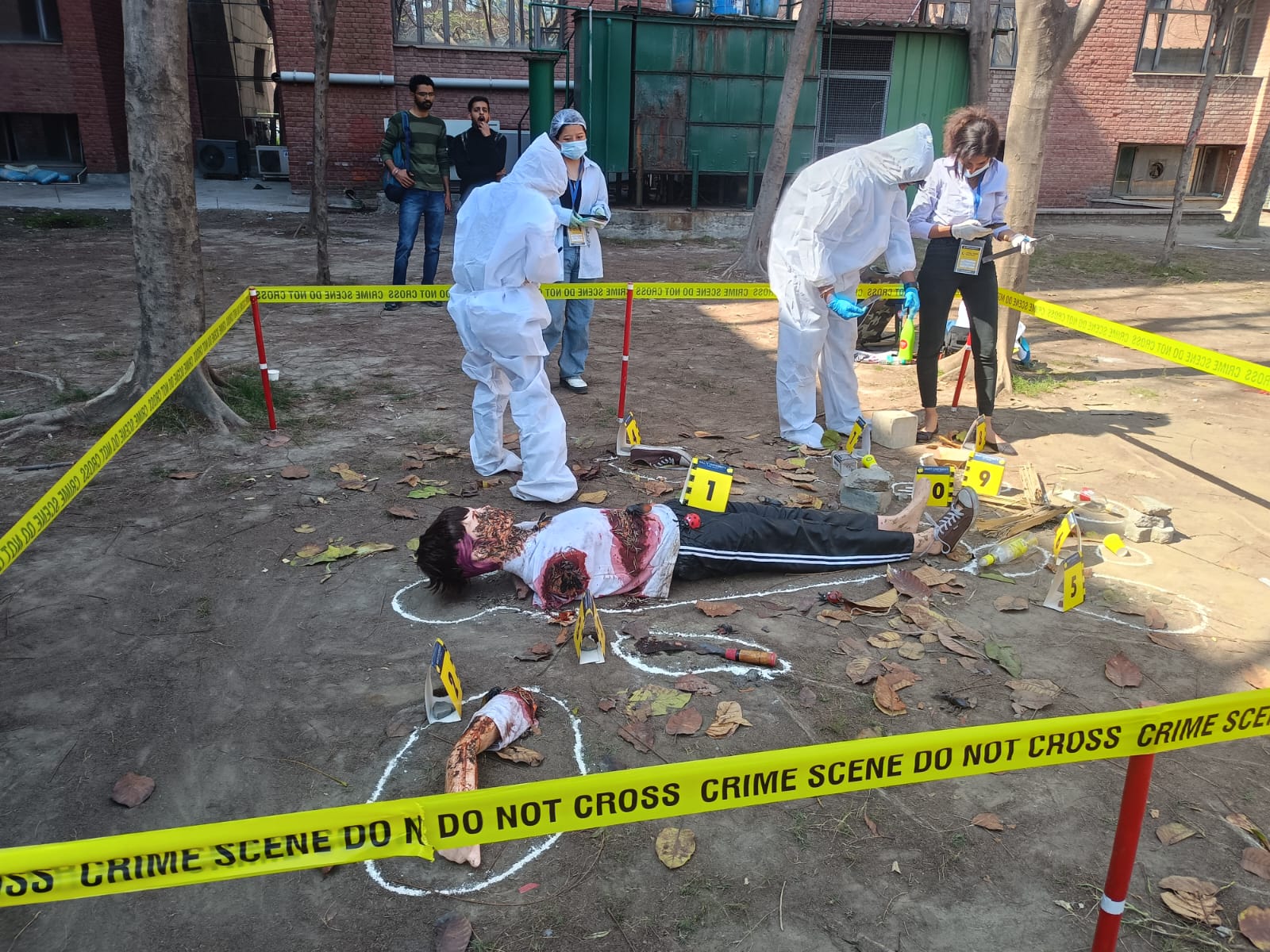
A range photograph focuses on the relationship between evidence and its surroundings. These photos bridge the gap between overall and close-up images by showing:
Evidence in relation to nearby objects
The position of a body
Location of weapons or blood patterns
This category is crucial for reconstructing the scene accurately.
These images document individual pieces of evidence with extreme detail. Close-ups may include:
Fingerprints
Bite marks
Injuries
Blood stains
Weapons
Tool marks
Footwear impressions
A scale (like a ruler) is often included to ensure proper measurement during analysis.
Modern forensic imaging goes beyond traditional photography, using advanced tools to reveal hidden details.
Infrared & Ultraviolet Photography
Helps detect bruises, blood, gunshot residue, and other substances invisible to the naked eye.
Alternate Light Source Imaging
Used in sexual assault cases, trace evidence recovery, and injury documentation.
3D Crime Scene Imaging
Produces digital reconstructions for enhanced courtroom presentations.
A well-trained forensic photographer follows a strict workflow during documentation of evidence:
1. Secure the Scene
Ensure the environment is safe and undisturbed.
2. Photograph Before Moving Anything
Evidence must remain in its original condition.
3. Start with Overall Photographs
Capture the entire scene from all angles.
4. Move to Mid-Range Photographs
Document relationships between evidence and surroundings.
5. Take Close-Up Photographs
Focus on specific evidence such as injuries, fingerprints, fibers, or bite marks.
6. Maintain Proper Lighting
Shadows and glare can distort forensic details.
7. Use Scales for Size Reference
Especially in documenting injuries, tool marks, or trace evidence.
8. Ensure a Detailed Photo Log
Record the time, angle, camera settings, and location of each image.
Forensic photographs serve as unbiased, factual records for judges, lawyers, and jurors. They:
Help explain technical forensic findings
Provide visual context
Strengthen prosecution or defense arguments
Support expert testimony
Well-documented photos often influence the direction and outcome of the legal process.
Despite technological advancements, forensic photographers face several challenges:
Poor lighting conditions
Weather disturbances
Time-sensitive evidence (blood drying, footprints fading)
Contamination risks
Photographic distortions
Sensitive or graphic scenes
Skilled professionals overcome these barriers through training and proper tools.
Crime scene photography is a foundational pillar in the field of forensics, providing clear, objective, and reliable records of what investigators encounter at a crime or accident scene. Through overall photographs, range photographs, and close-up photographs, forensic photographers preserve the truth in its rawest form.
From documenting bite marks to capturing intricate trace evidence, crime scene photography transforms fleeting details into permanent, admissible, and scientifically valuable records. Without it, many investigations would be incomplete, and many court decisions less informed.
If you are interested in learning more about forensic documentation, crime scene investigation, or forensic imaging techniques, feel free to explore our training programs or contact our expert team.
Are you interested in learning more about crime scene photography or seeking professional forensic photography services? Contact us today to inquire about our expertise and how we can assist you in documenting and analyzing crime scenes effectively.
📞 Contact Us: 9990292279
🌐 Visit Our Website: https://forensicexpertinvestigation.com/
✉️ Email: ceo.bfi@gmail.com