
-
ceo.bfi@gmail.com
Send Email
-
2C, C-6/A Block, Janakpuri, Delhi India 110058
Visit Our Office
99902-92279
Confidentiality Guaranteed
99902-92279
Confidentiality Guaranteed
18
Jun


Jun
Forensic Toxicology Online Drug Markets
Forensic Toxicology in the Era of Online Drug Markets
Introduction
The rapid growth of online drug markets, particularly those operating on the dark web, has fundamentally changed the landscape of illegal drug distribution. Unlike traditional street-level drug trade, these digital marketplaces use encryption technologies, anonymous browsers, and cryptocurrencies to conceal the identities of buyers and sellers. This anonymity has reduced the perceived risk of detection, encouraging wider participation and global distribution of illegal substances.
As a result, users now have unprecedented access to highly potent, poorly regulated, and chemically novel drugs, including synthetic opioids, designer stimulants, and new psychoactive substances (NPS). Many of these substances are produced without quality control, leading to unpredictable drug purity, variable dosages, and increased risk of overdose and toxicity. In many cases, drugs are mislabelled or mixed with other compounds, further increasing the danger to users.
In this evolving drug environment, forensic toxicology plays a vital role in criminal investigations and death inquiries. Toxicologists are responsible for detecting and identifying unknown or emerging substances in biological samples, often at extremely low concentrations. They must also interpret complex toxicological findings involving poly-drug use, drug interactions, and postmortem changes, which are common in online drug–related cases. Their work is essential for determining the cause and manner of death, supporting legal proceedings, and providing critical data for public health monitoring and drug control policies.
What Are Online Drug Markets?
Online drug markets are internet-based platforms where illegal drugs are sold using:
• Encrypted networks (e.g., dark web).
• Cryptocurrencies for anonymous payments
• Disguised shipping methods.
These markets distribute:
• Synthetic opioids (fentanyl analogs).
• New psychoactive substances (NPS).
• Prescription drugs without medical oversight.
Impact on Drug Abuse Patterns
The accessibility of drugs online has altered patterns of consumption in the following ways:
• A rise in poly-drug usage.
• Increased presence of high-potency drugs.
• Simplified access to rare or experimental substances.
• An increase in incidents of overdose and poisoning
Consequently, forensic toxicologists are now required to examine complex combinations of drugs instead of merely focusing on individual substances.
Challenges for Forensic Toxicology
a) Emergence of New Psychoactive Substances (NPS)
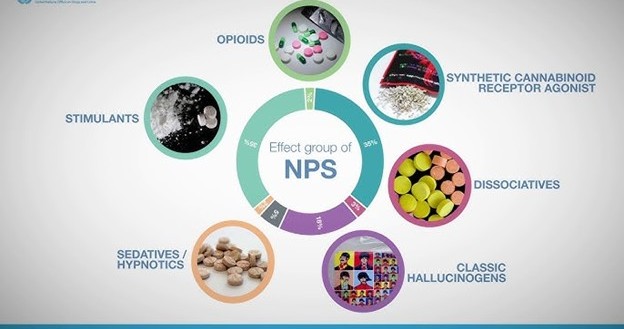
New Psychoactive Substances (NPS) are synthetic or semi-synthetic compounds created to replicate the effects of regulated drugs such as opioids, stimulants, or hallucinogens. In online drug markets, these substances are often chemically altered to circumvent drug regulations and law-enforcement measures. Minor modifications in their chemical structure enable manufacturers to produce substances that are not currently classified as illegal, complicating regulation and detection efforts.
From the perspective of forensic toxicology, NPS pose a significant obstacle since standard toxicology screening techniques frequently fail to identify them. Many hospitals and forensic laboratories depend on immunoassay-based screening tests, which are aimed at detecting known drugs and may overlook newly altered substances. Consequently, toxicologists are required to employ sophisticated analytical methods and consistently refresh spectral libraries and databases to recognize emerging drugs. This ongoing adaptation heightens the workload and technical requirements for forensic laboratories.
b) Unknown Drug Composition
Substances acquired from online marketplaces are often incorrectly labelled or inaccurately marketed. A product advertised as one drug may in reality consist of an entirely different substance, a combination of several drugs, or hazardous impurities. For instance, heroin or cocaine available for purchase online might be tainted with fentanyl or its derivatives, thereby greatly heightening the likelihood of a lethal overdose.
This ambiguity surrounding drug composition poses challenges for toxicological analysis and its interpretation. Toxicologists cannot depend solely on the nomenclature or descriptions provided by users or investigators. Instead, they are required to conduct thorough and confirmatory examinations to ascertain the genuine chemical makeup of the substance found in biological specimens. Techniques such as GC-MS, LC-MS/MS, and high-resolution mass spectrometry (HRMS) are vital for the accurate identification of unknown substances. In the absence of such sophisticated testing, the actual source of toxicity or mortality may go unnoticed.
c) Low Lethal Doses
Numerous substances available on online platforms, particularly synthetic opioids like fentanyl and its derivatives, possess extreme potency and can be fatal even at microgram or nanogram levels. A minor alteration in dosage may lead to respiratory distress, coma, or immediate death. Consequently, both the use of these drugs and their forensic analysis pose significant dangers and technical difficulties.
From a toxicological perspective, identifying such ultra-low quantities necessitates the use of highly sensitive analytical techniques along with stringent laboratory protocols. Conventional screening assessments may lack the sensitivity required to detect these compounds, particularly in postmortem examinations where drug concentrations might be influenced by postmortem redistribution or degeneration. Forensic toxicologists are required to employ sophisticated instrumentation, meticulous calibration, and thoroughly validated methodologies to guarantee precise detection and measurement. The precise identification of these low-dose substances is essential for elucidating the cause of death and for effective public health monitoring.
Specimens Used in Online Drug-Related Cases
Forensic toxicologists analyze multiple biological samples:
SNO. Specimen Important
1. Blood Indicates recent drug use
2. Urine Shows drug metabolites
3. Vitreous humor Stable postmortem sample
4. Liver & tissues Detect stored drugs
5. Hair Reveals long-term drug use
Analytical Techniques Used
Advanced Instrumentation in Modern Forensic Toxicology:
The swift development of online drug markets has led to the emergence of a diverse range of new, synthetic, and extremely potent substances that traditional screening techniques are unable to detect reliably. In order to tackle these challenges, contemporary forensic toxicology relies significantly on sophisticated analytical instruments that offer high levels of sensitivity, specificity, and precision.
1. Gas Chromatography–Mass Spectrometry (GC-MS)
GC-MS is regarded as the premier method in forensic toxicology for the detection of drugs and toxins.
• It categorizes chemical substances according to their volatility and thermal stability.
• The mass spectrometer generates a distinct spectral fingerprint for every compound.
GC-MS is notably dependable for identifying:
• Abused substances.
• Organic toxins.
• Volatile and semi-volatile substances.
Nonetheless, the presence of numerous contemporary synthetic drugs that are thermally unstable or non-volatile restricts the application of GC-MS, thereby requiring the use of alternative methods.
2. Liquid Chromatography–Tandem Mass Spectrometry (LC-MS/MS)
LC-MS/MS has emerged as a fundamental technique in forensic toxicology owing to its adaptability and sensitivity.
• It is capable of analyzing non-volatile, polar, and thermally sensitive compounds.
• Tandem mass spectrometry enhances selectivity and precision in quantification.
It proves to be particularly effective in identifying:
• Synthetic opioids (such as fentanyl analogues)
• New psychoactive substances (NPS)
• Drug metabolites present in very minute concentrations
LC-MS/MS is especially important in postmortem toxicology, where drug concentrations can be exceptionally low.
3. High-Resolution Mass Spectrometry (HRMS)
HRMS signifies a significant progress in the field of toxicological analysis.
• It offers precise mass measurements with exceptional accuracy.
• It facilitates the identification of unknown and previously unreported substances.
• It can differentiate between compounds that possess closely related chemical structures.
HRMS is crucial for:
• Identifying emerging designer drugs.
• Conducting retrospective data analyses upon the later identification of new drugs.
• Examining unexplained cases of intoxication and fatalities.
4. Non-Targeted Screening Methods
The significance of non-targeted screening continues to grow in the context of online drug markets.
• It does not depend on predetermined drug inventories.
• It facilitates the identification of novel or unforeseen substances.
• It incorporates High-Resolution Mass Spectrometry (HRMS) alongside sophisticated software and databases.
This methodology is essential when:
• Pharmaceuticals are inaccurately labeled.
• New synthetic substances emerge unexpectedly.
• Adverse effects are evident, yet conventional testing yields negative results.
5.Importance in Online Drug Market Investigations
Sophisticated instrumentation empowers forensic toxicologists to:
• Recognize newly developed and synthetic substances.
• Identify drugs found in microgram or nanogram levels.
• Examine intricate poly-drug overdoses.
• Aid in precise determinations of the cause of death.
• Offer supporting evidence for legal and regulatory measures
In the absence of these tools, numerous fatalities and criminal cases associated with online drug markets would likely remain unaccounted for or inaccurately categorized.
Interpretation of Toxicology Findings
The interpretation of results has become progressively intricate owing to the following factors:
• Concurrent drug toxicity.
• Interactions between drugs.
• Redistribution of substances after death.
• Absence of defined lethal dosage information for novel substance.
Toxicologists are required to integrate toxicological information with findings from autopsies and the historical context of the case.
Role in Death Investigations
Forensic toxicology serves to:
• Verify instances of overdose fatalities.
• Distinguish between accidental poisoning and homicide.
• Pinpoint patterns related to drug origins.
• Reinforce public health advisories
Internet-based drug markets are significantly associated with abrupt and unaccounted-for fatalities.
Legal and Ethical Implications
Forensic toxicology serves to:
• Verify instances of overdose fatalities.
• Distinguish between accidental poisoning and homicide.
• Pinpoint patterns related to drug origins.
• Reinforce public health advisories
Internet-based drug markets are significantly associated with abrupt and unaccounted-for fatalities.
Future Directions
• Advancement of real-time pharmaceutical monitoring systems.
• International data exchange among forensic laboratories.
• AI-enhanced drug identification.
• Enhanced legislation to regulate online drug trafficking
Conclusion
The swift growth of online drug markets has significantly transformed the domain of forensic toxicology, presenting challenges that were largely non-existent in conventional drug investigations. The incessant emergence of new psychoactive substances, synthetic opioids, and extremely potent designer drugs has complicated the processes of detection and identification. These substances frequently surface more swiftly than legislation and laboratory screening techniques can adapt, positioning forensic toxicologists at the vanguard of a continually shifting drug environment.
Moreover, toxicologists now face intricate overdose situations involving a variety of drugs, unidentified adulterants, and unpredictable drug interactions. The interpretation of toxicological results has become increasingly challenging due to elements such as postmortem redistribution, the absence of established toxic or lethal concentration data for novel substances, and the variability in individual tolerance levels. Consequently, toxicological conclusions must be meticulously aligned with autopsy findings, scene evidence, and case history to accurately ascertain the cause and manner of death.
In order to effectively tackle these challenges, sophisticated analytical technologies such as high-resolution mass spectrometry and non-targeted screening techniques are crucial. Nonetheless, reliance solely on technology is inadequate. Ongoing research, consistent updating of drug databases, and focused training are vital for keeping pace with newly emerging substances. Additionally, international cooperation and data exchange among forensic laboratories, law enforcement agencies, and public health institutions are essential, given that online drug markets function across international boundaries.
Ultimately, forensic toxicology is instrumental not only in the realm of criminal justice but also in public health monitoring and the formulation of drug policies. By pinpointing emerging drug patterns and delivering accurate toxicological data, forensic toxicologists support early warning systems, preventive measures, and well-informed regulatory decisions. In the contemporary landscape of online drug distribution, the field must continue to adapt, ensuring that science stays ahead in safeguarding both legal integrity and public welfare.
Recent Posts
Archives
Categories
Recent Posts
Popular Tags
Automated fingerprint identification system (2)
Ballistics (2)
Business due diligence (2)
Call Log Analysis (1)
Case Study (2)
Computer forensics (2)
Computer vision AI (2)
Court-Admissible Evidence (2)
Crime Scene Documentation (2)
Crime scene investigation (12)
CrimeSceneInvestigation (2)
CriminalInvestigation (2)
cybercrime investigation (2)
deepfake detection (2)
Digital evidence recovery (2)
digital forensics (4)
DNA Evidence (2)
DNA Fingerprinting (2)
DNA Profiling (4)
Expert Witness Services (2)
forensic ballistic (2)
Forensic Case Review (2)
Forensic DNA Analysis (7)
Forensic Document Examination (2)
Forensic evidence analysis (10)
Forensic Examination (2)
Forensic fingerprint analysis (2)
forensic handwriting analysis (2)
Forensic investigation (10)
Forensic Photography (3)
forensic science (7)
ForensicScience (6)
Forensic Video Examination (2)
Forgery Detection (2)
handwriting analysis (5)
MicroscopicEvidence (2)
Mobile Evidence Extraction (1)
Network forensics (2)
Online Crime Investigation (1)
Photo Forensic Analysis (2)
Questioned Document Examination (2)
Risk assessment services (2)
signature verification (4)
TikTok Ban India (1)
video forensics (2)