
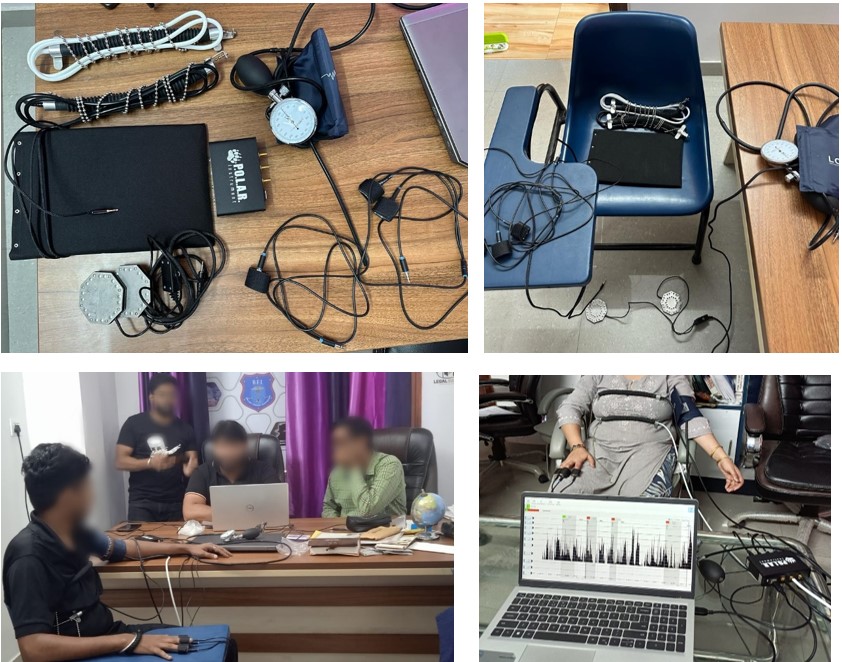
Lie Detector Test & Polygraph Examination Services in India
When a person’s statement becomes a central issue in an investigation, relying only on verbal claims may leave important questions unresolved. In such circumstances, a professionally conducted Lie Detector Test, also known as a Polygraph Test or Polygraph Examination, may be considered as an investigative assessment tool. Brilliant Forensic Investigation (BFI) provides structured forensic polygraph services for cases in which a properly designed examination may assist in evaluating responses to specific investigative questions.
BFI approaches polygraph testing as a scientific and controlled forensic procedure rather than as a simple machine-based method for finding out whether someone is telling the truth. A polygraph records changes in physiological activity while an examinee answers a carefully formulated series of questions. These physiological signals can include respiratory activity, cardiovascular activity and electrodermal activity. The recorded patterns are then analyzed in the context of the questions asked, the examination format, the test conditions and the information obtained during the pre-test interview.
A professional Lie Detector Test in India therefore requires substantially more than attaching sensors and asking questions. The quality of the examination depends on how the issue is defined, how the questions are formulated, how the subject is prepared, how the physiological data are acquired, how the charts are analyzed and how the final opinion is reported.
BFI provides Polygraph Test Services in India with an emphasis on controlled procedures, informed participation, carefully developed questions, technical documentation and transparent explanation of limitations. The objective is to produce a professionally documented examination that can contribute to an investigation without overstating what the science can establish.
What Is a Lie Detector Test?
The expression “lie detector test” is commonly used to describe a polygraph examination. Scientifically, however, a polygraph does not directly measure a substance or biological signal called a “lie.” Instead, it records physiological responses while a person answers questions under controlled examination conditions.
During a polygraph examination, sensors continuously record physiological activity. Depending on the instrumentation and examination protocol, this may include changes associated with respiration, cardiovascular activity and skin conductance. The examiner then evaluates patterns in the recorded physiological data in relation to the questions presented during the test.
This distinction is important. Physiological arousal can occur for many reasons. A person may experience anxiety, fear, embarrassment, stress, anger, uncertainty or other emotional reactions while answering a question. Therefore, a physiological reaction should not automatically be interpreted as proof that a person has lied.
BFI uses the term “Lie Detector Test” because it is widely understood by the public and is an important search term for people seeking the service. From a forensic perspective, however, the more accurate description is polygraph examination or psychophysiological detection-of-deception examination, with conclusions interpreted according to the test method and the available evidence.
What Is a Polygraph Examination?
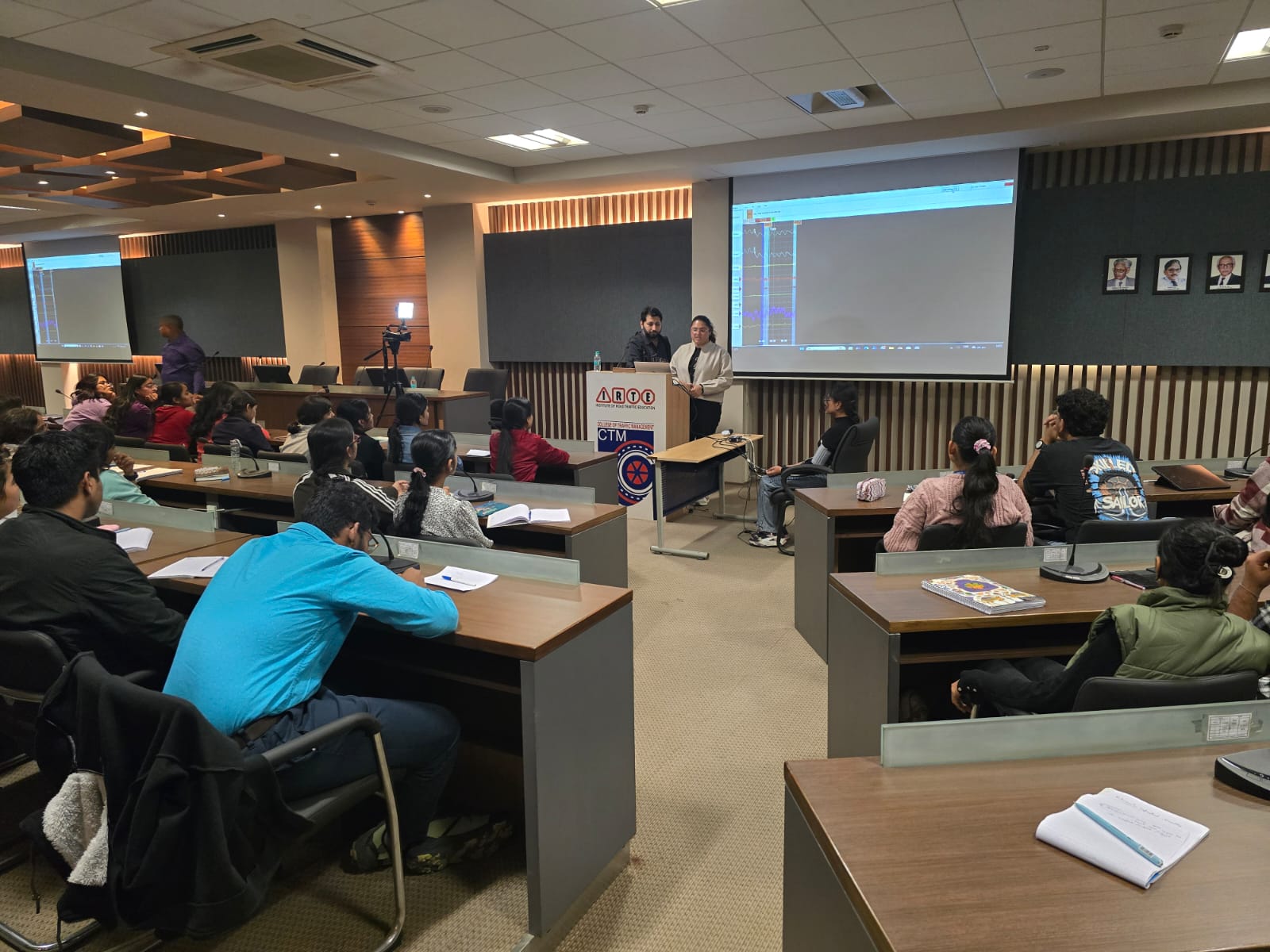
A polygraph examination is a structured investigative procedure involving an examiner, an examinee, a defined issue, carefully formulated questions and physiological recording equipment.
The examination normally begins before the sensors are connected. The examiner first establishes the purpose of the test, discusses the underlying issue, explains the procedure and reviews the proposed questions. This pre-test stage is essential because poorly defined questions, ambiguity or misunderstanding can affect the quality of the examination.
During the formal testing stage, the examinee answers a sequence of questions while the instrument records physiological activity continuously. The examiner subsequently evaluates the recorded data according to the examination technique being used.
BFI treats the entire process as the examination. The instrument is one part of the procedure; the interview, question formulation, test administration, analysis and reporting are equally important.
How Does a Lie Detector Test Work?
The physiological basis of polygraph examination involves observing measurable changes in the body’s autonomic responses during questioning. The equipment can record respiration through respiratory sensors, cardiovascular activity through an appropriate cardiovascular channel and electrodermal activity through skin-contact sensors. Professional standards also emphasize continuous recording and adequate signal quality.
When a person answers a question that has particular psychological significance, the body may show changes in one or more of these physiological channels. The examiner evaluates the pattern rather than relying on a single response.
The important point is that the physiological response is interpreted comparatively and contextually. The existence of a strong reaction does not independently establish deception. The examiner must consider the question being asked, the comparison condition, the sequence of questions, the overall chart pattern and other relevant examination factors.
BFI therefore avoids presenting polygraph testing as a magical method that can read a person’s thoughts. Instead, BFI treats it as a specialized psychophysiological examination in which physiological recordings are interpreted according to a defined forensic protocol.
What Does a Polygraph Machine Measure?
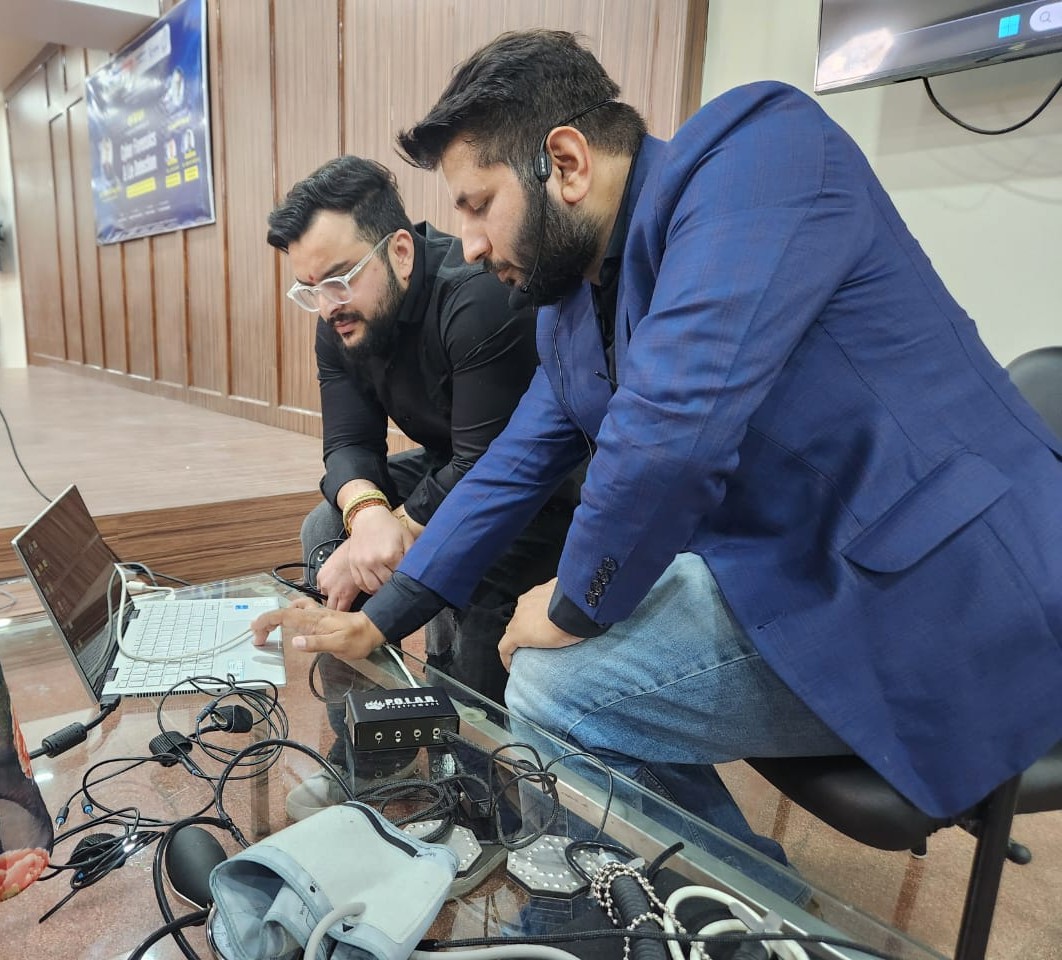
A modern polygraph instrument is designed to record several physiological channels at the same time. Respiratory sensors monitor breathing patterns, while cardiovascular recording provides information about changes associated with pulse and blood pressure. Electrodermal recording measures changes in the electrical conductance of the skin. Professional standards specify continuous physiological recording and describe the use of separate respiratory and electrodermal channels as part of appropriate instrumentation.
These signals are displayed and stored as chart data for subsequent analysis. The examiner does not simply look for one dramatic spike. Instead, the responses are assessed in relation to the questions and to the broader pattern appearing throughout the examination.
BFI can also consider movement and other factors that may affect chart quality. Physical movement, interruptions, coughing, discomfort, environmental distractions and other events can influence the physiological recordings and therefore need to be considered during interpretation.
Why the Pre-Test Interview Is So Important
The pre-test interview is one of the most important stages of a professionally conducted polygraph examination. Before formal physiological recording begins, BFI’s examiner discusses the relevant issue with the examinee and ensures that the purpose of the examination and the proposed questions are understood.
The pre-test stage helps define the actual issue being examined. It can also identify ambiguities, misunderstandings or irrelevant areas that should not be included in the formal question set.
Professional standards also emphasize that test questions should be reviewed with the examinee before physiological responses are recorded and that the examiner should conduct the examination neutrally.
This means that BFI does not treat question formulation as a minor administrative step. The questions are central to the examination, and poorly worded questions can create unnecessary ambiguity or reduce the usefulness of the resulting data.
Scientific Question Formulation for Polygraph Testing
The quality of a polygraph examination depends substantially on the quality of the questions. A forensic question should be clear, specific and capable of being answered in a defined manner.
BFI develops questions around the specific issue to be examined instead of relying on vague questions such as “Are you telling the truth?” Broad questions of this nature can introduce ambiguity because they may involve multiple events, dates, meanings or assumptions.
A better forensic question usually isolates a particular issue. The wording should allow the examinee to understand precisely what conduct or fact is being addressed. It should also enable the examiner to interpret the resulting physiological patterns in relation to a clearly defined issue.
Before testing, BFI reviews the proposed questions with the examinee so that the person understands what each question means. This is consistent with professional standards requiring review of test questions before physiological recording begins.
Relevant Questions in a Polygraph Examination
Relevant questions address the specific issue that forms the subject of the examination. The wording is developed around the factual question that the examination is intended to assess.
For example, an examination concerning missing property might focus on whether the examinee personally removed the property, whether the examinee knowingly concealed it or whether the examinee participated in a particular act. The precise wording would depend on the facts and the defined investigative question.
BFI avoids combining unrelated allegations into one question because a complex question can make interpretation more difficult. A properly scoped examination should have a clear relationship between the issue being investigated and the questions actually administered.
Comparison Questions and Physiological Response Patterns
Certain polygraph techniques use comparison questions to provide a framework against which responses to relevant questions can be interpreted. The scientific logic behind these approaches is comparative rather than dependent on a simple “truth signal” or “lie signal.”
The examiner considers how the examinee responds across different categories of questions and assesses the pattern obtained during the examination.
The National Academies’ scientific review explains that polygraph interpretation relies on inferences from physiological responses and that the physiological measurements do not have a one-to-one relationship with deception. Responses associated with deception can also arise from other psychological states.
BFI therefore interprets chart patterns cautiously and avoids claiming that a physiological change alone proves that the examinee has lied.
Concealed Information and Recognition-Based Polygraph Examination
In appropriate cases, a polygraph examination may be designed around information that should be known only to someone with relevant knowledge of an event. This type of approach is different from simply asking whether a person committed an act.
A recognition-based examination can present alternatives involving particular details, while the physiological responses associated with those alternatives are analyzed. Its usefulness depends heavily on the underlying investigative circumstances. The relevant information must be sufficiently specific, significant and protected from unnecessary exposure.
BFI considers this approach only where the case facts make it technically appropriate. If the information has already been widely disclosed or could reasonably be known to an innocent person, a recognition-based examination may have limited value.
What Happens During a Polygraph Test?
Once the pre-test interview and question review have been completed, the examinee is seated comfortably and the polygraph sensors are positioned. The examiner checks signal quality and ensures that the instrumentation is operating correctly before formal questioning begins.
The examination then proceeds according to the selected test format. Questions are presented in a structured sequence while physiological signals are continuously recorded. The examiner observes the quality of the data and may repeat the relevant test sequence when required by the examination protocol.
Throughout the examination, BFI maintains a neutral professional environment. The purpose is not to intimidate the examinee but to obtain interpretable physiological data under controlled conditions. Professional standards require informed consent and a neutral examination approach.
What Happens After the Polygraph Test?
After formal testing, the examiner may conduct a post-test discussion where appropriate. This stage can be used to clarify examination circumstances, address questions concerning the procedure and consider any factors that may be relevant to interpretation.
The chart data are then analyzed according to the applicable scoring and interpretation approach.
BFI does not base the final report simply on what the examiner “felt” during the session. The examination data, question structure, test conditions and relevant technical considerations are documented so that the basis of the opinion can be explained.
Polygraph Chart Analysis
Polygraph chart analysis involves evaluating the recorded physiological responses associated with the questions administered during the examination.
The examiner considers response patterns across the available physiological channels and assesses their relationship to the test structure. Depending on the methodology, the interpretation may involve standardized scoring or decision rules.
Professional standards describe recognized reporting categories for deception and recognition examinations and emphasize validated testing techniques.
BFI reports the outcome using terminology appropriate to the methodology and explains that the result is a forensic opinion based on physiological response patterns rather than a direct measurement of truth itself.
Can a Polygraph Detect Lies With 100% Accuracy?
No professional forensic service should guarantee that a polygraph can determine truth or deception with absolute certainty.
The scientific literature has repeatedly identified significant limitations in the physiological detection of deception. The physiological reactions measured during a polygraph are not uniquely produced by lying. Anxiety, fear, stress, uncertainty and other psychological states can influence the same physiological channels. The National Academies concluded that there is little scientific basis for expecting extremely high accuracy from polygraph testing and also noted that accuracy can vary substantially depending on the testing situation.
BFI therefore does not advertise a guaranteed percentage or promise a predetermined result. The purpose of a professional polygraph examination is to conduct a structured assessment and report the resulting findings together with the limitations that affect interpretation.
Why Polygraph Results Can Be Inconclusive
An inconclusive result does not necessarily mean that the examinee lied or told the truth. It may simply mean that the physiological data did not produce a sufficiently clear pattern for the examiner to reach a reliable classification under the selected examination method.
Several factors can influence chart quality and interpretation. These may include excessive movement, poor sensor contact, unusual physiological responses, significant anxiety, misunderstanding of questions, unsuitable question construction, interruptions or other conditions that affect the examination.
BFI treats an inconclusive outcome as a legitimate forensic result rather than forcing the examination into a binary conclusion.
This is an important distinction for lawyers and investigators because a responsible expert should be prepared to report uncertainty when the evidence does not justify a stronger opinion.
Factors That May Affect Polygraph Results
Physiological responses vary from person to person, and the same individual may respond differently under different circumstances. Emotional state, physical discomfort, fatigue, anxiety and other circumstances can influence the data collected during testing.
The environment also matters. Excessive distractions, interruptions, poor signal quality or unsuitable testing conditions can reduce the usefulness of an examination.
The National Academies has noted that physiological responses vary across individuals and social contexts and that these variations can complicate attempts to infer deception from physiological data.
BFI therefore considers the circumstances surrounding the examination rather than treating the chart as an isolated source of certainty.
Voluntary Consent for Polygraph Testing in India
Consent is an essential consideration in polygraph examinations in India, particularly in criminal-investigation contexts.
The Supreme Court of India has held that individuals cannot be compelled to undergo polygraph examination. The constitutional concerns involve protection against self-incrimination as well as personal liberty and mental privacy.
More recently, in June 2026, the Chhattisgarh High Court again emphasized that polygraph and similar investigative techniques cannot be imposed through coercion and that voluntary, informed and unequivocal consent, together with applicable legal safeguards, is required in the criminal-investigation circumstances before that court.
BFI therefore treats voluntary participation as a fundamental requirement and does not promote coercive polygraph testing.
Polygraph Test and the Right to Legal Assistance
Where a polygraph examination is connected with a criminal investigation, legal safeguards may be particularly important. A person should understand the nature and purpose of the examination before deciding whether to participate.
The applicable safeguards can depend on the circumstances of the matter, the legal proceeding and the authority under which the examination is proposed. Recent Indian judicial treatment has reiterated the importance of informed consent and access to legal assistance in criminal investigative settings.
BFI can coordinate its forensic process with the legal requirements applicable to the matter, but a lawyer should determine the legal strategy and advise the examinee on the consequences of participating.
Polygraph Test for Criminal Investigations
In criminal investigations, polygraph testing may be considered when investigators or legal representatives need an additional investigative tool for a clearly defined issue.
A criminal case may involve conflicting statements from different individuals, disputed accounts of an event, uncertainty regarding the involvement of a particular person or questions surrounding knowledge of a specific fact. A properly scoped voluntary examination may provide additional information for investigators to consider alongside other evidence.
BFI emphasizes that the polygraph should not replace physical evidence, digital evidence, witness evidence, documentary records or conventional investigation. It is one component of a broader evidence-assessment process.
The strongest investigative strategy is usually one in which physiological assessment is considered together with independently verifiable evidence.
Polygraph Testing for Corporate Investigations
Organizations may sometimes consider polygraph examinations in connection with internal matters involving suspected theft, fraud, information disclosure, inventory loss or other misconduct.
A corporate polygraph examination should be approached differently from a casual “truth test.” The purpose of the examination should be clearly defined, the participating employee should understand the procedure and consent should be genuinely voluntary.
BFI can assist with professionally structured examinations where the circumstances make such testing appropriate. The results should be interpreted alongside documentary records, financial evidence, digital evidence, access information and other investigative findings.
A corporate decision should not be based solely on a physiological response.
Lie Detector Test for Matrimonial and Personal Disputes
People sometimes seek a Lie Detector Test in matrimonial, relationship or personal disputes where statements are strongly contested.
BFI can examine whether a polygraph service is technically suitable for the question presented, but it is important to understand that personal disputes can involve significant emotional pressure. Emotional intensity itself can affect physiological responses.
For that reason, a polygraph examination should not be represented as an automatic method for determining every allegation in a relationship dispute. The usefulness of the examination depends heavily on whether the question can be framed clearly and whether the participant can voluntarily and meaningfully engage in the procedure.
Where the matter is likely to reach court, legal advice should be obtained regarding the role and evidentiary significance of any proposed test.
Lie Detector Test for Insurance Investigations
Insurance investigations can sometimes involve disputed accounts of theft, accident circumstances, property loss or other events.
A polygraph examination may be considered as one investigative component when a specific factual issue can be framed appropriately and the person voluntarily agrees to participate.
BFI’s role is to conduct the examination and report the findings. The ultimate determination of a claim should remain based on the complete body of evidence rather than on a polygraph result alone.
Lie Detector Test for Fraud and Financial Disputes
Fraud investigations can involve several categories of evidence, including financial records, transactions, emails, digital devices, surveillance footage, documents and witness statements.
In a suitable matter, polygraph testing may be considered when a clearly defined factual issue remains disputed. BFI can formulate questions around the specific issue and conduct the examination under controlled conditions.
A polygraph result can never substitute for the actual documentary or digital evidence that establishes what happened. Its role is supplementary and investigative.
Lie Detector Test for Employee Investigations
Employee-related polygraph examinations require particular care because there may be an imbalance of power between an organization and an individual.
BFI emphasizes informed and voluntary participation and recommends that organizations consider applicable employment policies, contractual requirements and legal obligations before proposing testing.
Questions should be limited to legitimate investigative issues and should not unnecessarily intrude into unrelated aspects of a person’s private life.
The resulting opinion should also be treated appropriately as an expert investigative assessment rather than as an automatic basis for disciplinary conclusions.
Lie Detector Test for Background and Security-Related Assessments
Polygraph testing may sometimes be proposed for screening or security-related purposes. However, screening examinations are scientifically different from narrowly focused examinations concerning a single specific incident.
The National Academies noted that screening situations involve greater ambiguity than specific-incident testing and that performance can differ depending on the application.
BFI therefore assesses screening requests carefully and avoids presenting a screening polygraph as an infallible assessment of a person’s complete history or character.
A person’s broader background should be evaluated through appropriate documentary, digital, identity and verification methods rather than through polygraph testing alone.
Lie Detector Test for Theft Investigations
In a theft investigation, the examination should focus on a clearly defined issue rather than a broad question such as whether the person is generally honest.
BFI may develop questions around a specific alleged act, such as whether a person removed particular property, handled specific funds or participated in a defined event.
This focused approach is important because a broad question can combine different issues and make the resulting physiological response more difficult to interpret.
Lie Detector Test for Missing Property Investigations
Missing-property matters may involve employees, contractors, family members, security personnel or other individuals who had access to the relevant location.
Where voluntary polygraph testing is being considered, BFI can first review the factual circumstances and determine whether a sufficiently specific issue exists for examination.
The polygraph should then be integrated with access records, surveillance footage, inventory records, communication records and any other relevant evidence.
Lie Detector Test for Sexual-Offence-Related Investigations
Polygraph examinations involving sensitive allegations require especially careful handling.
The dignity, privacy and voluntary participation of the person being examined must be respected. A polygraph should never be used as a substitute for proper investigation or forensic evidence.
Where such a matter is connected with criminal proceedings, the applicable constitutional and procedural safeguards become particularly important. Indian constitutional jurisprudence has expressly rejected compulsory administration of polygraph and similar techniques.
BFI approaches sensitive examinations with strict confidentiality and case-specific safeguards.
BFI's Pre-Test Assessment
Before a polygraph examination is finalized, BFI can assess the case question, available background material, proposed examination purpose and expected outcome.
This assessment is intended to determine whether the matter can be translated into clear forensic questions.
Where the underlying allegation is too broad or ambiguous, BFI may recommend narrowing the scope before the examination proceeds. A narrowly defined forensic question generally provides a stronger basis for structured testing than an expansive question involving several unrelated allegations.
BFI's Pre-Test BFI Polygraph Examination Procedure
Case Consultation
The process begins with a confidential discussion regarding the reason for the examination and the specific issue that needs to be assessed.
Pre-Test Interview
The examiner discusses the matter with the examinee, explains the procedure and identifies relevant information required for question formulation.
Informed Consent
The examinee is informed about the examination and its nature before testing proceeds. Professional standards require informed consent before testing.
Question Review
The examiner reviews the proposed questions with the examinee before physiological data are recorded.
Instrument Preparation
The polygraph equipment is set up and the physiological channels are checked for adequate signal quality.
Formal Examination
The agreed questions are presented in the selected test format while the physiological responses are recorded continuously.
Chart Analysis
The recorded data are examined according to the applicable analytical method.
Interpretation
The examiner evaluates the physiological patterns in relation to the examination questions and test structure.
Report Preparation
The findings, methodology and relevant limitations are documented in a professional forensic report.
What Does a BFI Polygraph Report Usually Explain?
The report can explain what was examined, why the examination was conducted, how consent was obtained, how the questions were developed, what instrumentation was used, how the testing was administered and how the recorded data were analyzed.
The report can also distinguish between the raw physiological observations and the examiner’s interpretation.
This distinction is important because a chart response is an observation, while the interpretation of that response is an expert opinion. BFI keeps these concepts separate so that the reader can understand exactly what the examination establishes and what remains subject to interpretation.
Polygraph Testing and Forensic Ethics
The credibility of a polygraph examination depends not only on instrumentation and analytical technique but also on professional conduct.
BFI emphasizes voluntary participation, informed consent, neutral administration, careful question formulation, confidentiality and transparent reporting.
The examiner should not decide the result before the examination begins. Professional standards require the examiner to remain neutral and to use validated evidence-based testing techniques.
This is important because the objective of a forensic examiner is to evaluate evidence rather than confirm a client’s preferred outcome.
Difference Between a Professional Polygraph Test and a Casual Lie Test
A casual “lie test” may involve asking a person questions while watching their behavior or attaching a basic device and interpreting visible reactions.
A professional polygraph examination is fundamentally different. It involves defined questions, structured testing, physiological recording, examination protocols and expert interpretation.
BFI’s service is designed as a forensic examination rather than a demonstration or entertainment activity.
The final opinion is based on the complete examination process rather than on a single observable reaction.
How Long Does a Polygraph Test Take?
A complete polygraph examination generally involves more time than the actual period during which questions are being administered.
The pre-test interview, question review, consent process, instrumentation, formal testing, chart analysis and reporting all form part of the overall service.
The exact duration depends on the complexity of the matter, the number of issues involved, the examination methodology and whether additional consultation or reporting is required.
BFI determines the expected duration after understanding the scope of the case.
What Should a Person Do Before a Polygraph Examination?
The examinee should be informed about the purpose and procedure of the examination before agreeing to participate.
Adequate rest, understanding the questions, avoiding unnecessary confusion about the examination and communicating relevant circumstances to the examiner can help maintain appropriate test conditions.
The important requirement is not to attempt to manipulate the examination. Professional testing depends on obtaining interpretable physiological data under controlled conditions.
BFI can explain the examination procedure and preparation requirements before the scheduled appointment.f
Who Can Contact BFI for a Polygraph Examination?
BFI’s polygraph services may be relevant to individuals, legal professionals, authorized investigators, organizations, insurers and other parties seeking a professionally conducted examination for a legitimate purpose.
The important consideration is not simply who requests the test but whether the examination itself is appropriate, legally permissible in the circumstances and based on a question that can be meaningfully examined.
BFI reviews the purpose and circumstances before proceeding so that the service remains focused on genuine forensic requirements.
Questions Clients Should Ask Before Booking a Lie Detector Test
Before scheduling a polygraph examination, a client should understand what exact question the test is intended to address, whether participation is voluntary, how the questions will be formulated, what the physiological data measure, what the possible outcomes mean and what limitations apply to the final opinion.
Clients should also understand that a polygraph result is not a guarantee of a particular legal outcome.
BFI provides pre-test consultation so that clients can make an informed decision about whether a polygraph examination is suitable for their matter.
What Makes BFI's Polygraph Service Different?
Brilliant Forensic Investigation approaches polygraph testing as a specialized forensic examination rather than a promotional “instant truth” service.
BFI emphasizes careful case assessment, scientifically structured question formulation, informed participation, controlled testing conditions, physiological data recording, analytical review and transparent reporting.
The service is designed to provide an expert assessment without overstating the certainty of the technique.
Where the evidence is insufficient for a strong conclusion, BFI can document that limitation. Where the test is not appropriate for the particular issue, BFI can explain why a different investigative approach may be required.
Important Scientific Disclaimer About Lie Detector Testing
A polygraph is not a direct biological detector of lying. It records physiological responses associated with questioning, and these responses can be influenced by multiple psychological and situational factors.
Scientific reviews have therefore cautioned against assuming extremely high or perfect accuracy and have emphasized that the relationship between physiological response and deception is not one-to-one.
BFI presents polygraph findings within these scientific limitations. No examination should be interpreted as more certain than the underlying evidence permits.
Important Legal Disclaimer for Polygraph Testing in India
Polygraph examination in India is subject to important constitutional and procedural considerations. Compulsory testing is not permissible in criminal-investigation circumstances merely because an investigating authority wishes to obtain it. Indian constitutional jurisprudence requires voluntary participation and safeguards, while more recent judicial decisions have reiterated the need for free and informed consent in relevant criminal-investigation settings.
The admissibility and legal weight of any polygraph-related material depend on the specific facts and procedural circumstances of the case. BFI therefore does not guarantee courtroom admissibility or claim that a polygraph result will determine the outcome of litigation or criminal proceedings.
Why Choose BFI for Polygraph Test in Delhi?
🔸 Certified & Experienced Examiners
BFI examiners are trained in international methodologies similar to those used in the United States and global investigative agencies.
🔸 Advanced Digital Polygraph System
We use high-precision equipment to measure even minute changes in respiration and skin conductivity.
🔸 Confidential & Ethical Testing
All tests follow legal guidelines and strict confidentiality policies.
🔸 Court-Ready Reports
Our polygraph reports are professionally drafted, easy to understand, and widely relied upon in legal and investigative environments.
🔸 Suitable for Individuals, Corporates & Law Firms
Flexible services tailored to unique cases.
Contact BFI for Lie Detector Test and Polygraph Examination Services in India
When important facts are disputed, a professionally designed forensic examination can provide an additional investigative perspective.
Brilliant Forensic Investigation (BFI) provides Lie Detector Test Services, Polygraph Test Services and Forensic Polygraph Examination Services in India with a focus on scientific methodology, voluntary participation, structured questioning, professional examination procedures and transparent reporting.
BFI can assess whether your case presents a suitable question for polygraph examination, explain the examination process, discuss the applicable limitations and arrange the forensic examination according to the requirements of the matter.
Whether the concern involves a criminal investigation, fraud inquiry, corporate dispute, insurance matter, matrimonial dispute or another legitimate investigative issue, BFI approaches the examination as a professional forensic service rather than an entertainment-style truth test.
Speak With BFI About Your Case
Confidential Consultation | Scientific Polygraph Examination | Structured Questioning | Physiological Data Analysis | Forensic Reporting

📞 Contact Us: 9990292279
🌐 Visit Our Website: https://forensicexpertinvestigation.com/
✉️ Email: ceo.bfi@gmail.com
Frequently Asked Questions About Lie Detector Tests
A lie detector test is the commonly used name for a polygraph examination. The examination records physiological responses while a person answers structured questions and the resulting data are interpreted according to a defined testing methodology.
A polygraph test is a controlled forensic examination involving physiological recording during structured questioning. The resulting patterns are analyzed in relation to the examination questions and procedure.
A polygraph does not directly measure a “lie.” It records physiological responses that may be associated with the psychological processes occurring during questioning. Because physiological responses can have multiple causes, interpretation requires caution.
A polygraph can record physiological channels involving respiration, cardiovascular activity and electrodermal activity. Professional standards require appropriate continuous recording and adequate signal quality.
No. A responsible forensic service should never guarantee perfect accuracy. Scientific evidence identifies important limitations and recognizes that performance can vary by testing method, population and circumstances.
Polygraph testing is subject to legal and constitutional safeguards. In criminal-investigation contexts, an individual cannot be compelled to undergo the examination, and voluntary, informed participation is essential.
The legal treatment of polygraph-related material is fact-specific, and the result should not be represented as automatically admissible or conclusive. Legal advice should be obtained for the particular proceeding.
A complete examination can take substantially longer than the actual questioning because it includes pre-test consultation, consent, question review, instrumentation, testing and analysis.
Professional practice requires the questions to be reviewed with the examinee before physiological recording begins.
The examiner explains the procedure, discusses the issue, identifies the examination questions, clarifies terminology and ensures that the participant understands what will happen during testing.
Share Page
Top 20 Lie Detector Testing Polygraph Services keywords to reach us in India
Lie Detector Test Services in India
Polygraph Test Services in India
Lie Detector Test in India
Professional Polygraph Testing Services in India
Forensic Polygraph Examination Services in India
Lie Detection Expert in India
Polygraph Test Expert in India
Lie Detection Services in India
Private Lie Detector Test in India
Forensic Lie Detection Services in India
Polygraph Examination Services in India
Lie Detector Testing Experts in India
Scientific Lie Detection Services in India
Polygraph Consultation Services in India
Lie Detector Test for Investigation in India
Professional Lie Detection Expert Services
Forensic Polygraph Testing in India
Polygraph Test Consultation in India
Lie Detector Test Appointment in India
Confidential Polygraph Testing Services in India
Lie Detector Polygraph Test Services in Delhi Localities
Lie Detector Polygraph Test Services Centres in Delhi | Lie Detector Polygraph Test Services Centres in Karol Bagh | Lie Detector Polygraph Test Services Centres in Laxmi Nagar | Lie Detector Polygraph Test Services Centres in Rohini | Lie Detector Polygraph Test Services Centres in Dwarka | Lie Detector Polygraph Test Services Centres in Connaught Place | Lie Detector Polygraph Test Services Centres in Chandni Chowk | Lie Detector Polygraph Test Services Centres in Uttam Nagar | Lie Detector Polygraph Test Services Centres in Chawri Bazar | Lie Detector Polygraph Test Services Centres in Janakpuri | Lie Detector Polygraph Test Services Centres in Pitampura | Lie Detector Polygraph Test Services Centres in Rajouri Garden | Lie Detector Polygraph Test Services Centres in Nehru Place | Lie Detector Polygraph Test Services Centres in Lajpat Nagar | Lie Detector Polygraph Test Services Centres in New Delhi | Lie Detector Polygraph Test Services Centres in Shahdara
Lie Detector Polygraph Test Services centres in major cities
Lie Detector Polygraph Test Services Centres in Andhra Pradesh | Lie Detector Polygraph Test Services Centres in Amaravati | Lie Detector Polygraph Test Services Centres in Visakhapatnam | Lie Detector Polygraph Test Services Centres in Vijayawada | Lie Detector Polygraph Test Services Centres in Tirupati | Lie Detector Polygraph Test Services Centres in Arunachal Pradesh | Lie Detector Polygraph Test Services Centres in Itanagar | Lie Detector Polygraph Test Services Centres in | Lie Detector Polygraph Test Services Centres in Naharlagun | Lie Detector Polygraph Test Services Centres in Itanagar | Lie Detector Polygraph Test Services Centres in Assam | Lie Detector Polygraph Test Services Centres in Dispur | Lie Detector Polygraph Test Services Centres in Guwahati | Lie Detector Polygraph Test Services Centres in Jorhat | Lie Detector Polygraph Test Services Centres in Dibrugarh | Lie Detector Polygraph Test Services Centres in Bihar | Lie Detector Polygraph Test Services Centres in Patna | Lie Detector Polygraph Test Services Centres in Gaya | Lie Detector Polygraph Test Services Centres in Muzaffarpur | Lie Detector Polygraph Test Services Centres in Bhagalpur | Lie Detector Polygraph Test Services Centres in Chhattisgarh | Lie Detector Polygraph Test Services Centres in Raipur | Lie Detector Polygraph Test Services Centres in Bilaspur | Lie Detector Polygraph Test Services Centres in Durg | Lie Detector Polygraph Test Services Centres in Goa | Lie Detector Polygraph Test Services Centres in Panaji | Lie Detector Polygraph Test Services Centres in Margao | Lie Detector Polygraph Test Services Centres in Vasco da Gama | Lie Detector Polygraph Test Services Centres in Gujarat Gandhinagar | Lie Detector Polygraph Test Services Centres in Ahmedabad | Lie Detector Polygraph Test Services Centres in Surat | Lie Detector Polygraph Test Services Centres in Rajkot | Lie Detector Polygraph Test Services Centres in Haryana | Lie Detector Polygraph Test Services Centres in Chandigarh | Lie Detector Polygraph Test Services Centres in Faridabad | Lie Detector Polygraph Test Services Centres in Hisar | Lie Detector Polygraph Test Services Centres in Panipat | Lie Detector Polygraph Test Services Centres in Himachal Pradesh | Lie Detector Polygraph Test Services Centres in Shimla | Lie Detector Polygraph Test Services Centres in Dharamshala | Lie Detector Polygraph Test Services Centres in Mandi | Lie Detector Polygraph Test Services Centres in Kullu | Lie Detector Polygraph Test Services Centres in Jharkhand | Lie Detector Polygraph Test Services Centres in Ranchi | Lie Detector Polygraph Test Services Centres in Jamshedpur | Lie Detector Polygraph Test Services Centres in Dhanbad | Lie Detector Polygraph Test Services Centres in Karnataka | Lie Detector Polygraph Test Services Centres in Bengaluru | Lie Detector Polygraph Test Services Centres in Mysuru | Lie Detector Polygraph Test Services Centres in Hubli | Lie Detector Polygraph Test Services Centres in Mangaluru | Lie Detector Polygraph Test Services Centres in Kerala | Lie Detector Polygraph Test Services Centres in Thiruvananthapuram | Lie Detector Polygraph Test Services Centres in Kochi | Lie Detector Polygraph Test Services Centres in Kozhikode | Lie Detector Polygraph Test Services Centres in Thrissur | Lie Detector Polygraph Test Services Centres in Madhya Pradesh | Lie Detector Polygraph Test Services Centres in Bhopal | Lie Detector Polygraph Test Services Centres in Indore | Lie Detector Polygraph Test Services Centres in Jabalpur | Lie Detector Polygraph Test Services Centres in Gwalior | Lie Detector Polygraph Test Services Centres in Maharashtra | Lie Detector Polygraph Test Services Centres in Mumbai | Lie Detector Polygraph Test Services Centres in Pune | Lie Detector Polygraph Test Services Centres in Nagpur | Lie Detector Polygraph Test Services Centres in Nashik | Lie Detector Polygraph Test Services Centres in Manipur | Lie Detector Polygraph Test Services Centres in Imphal | Lie Detector Polygraph Test Services Centres in Kakching | Lie Detector Polygraph Test Services Centres in Meghalaya | Lie Detector Polygraph Test Services Centres in Shillong | Lie Detector Polygraph Test Services Centres in Guwahati | Lie Detector Polygraph Test Services Centres in Cherrapunji | Lie Detector Polygraph Test Services Centres in Mizoram | Lie Detector Polygraph Test Services Centres in Aizawl | Lie Detector Polygraph Test Services Centres in Lunglei | Lie Detector Polygraph Test Services Centres in Saiha | Lie Detector Polygraph Test Services Centres in Nagaland | Lie Detector Polygraph Test Services Centres in Kohima | Lie Detector Polygraph Test Services Centres in Dimapur | Lie Detector Polygraph Test Services Centres in Mokokchung | Lie Detector Polygraph Test Services Centres in Odisha | Lie Detector Polygraph Test Services Centres in Bhubaneswar | Lie Detector Polygraph Test Services Centres in Cuttack | Lie Detector Polygraph Test Services Centres in Puri | Lie Detector Polygraph Test Services Centres in Punjab | Lie Detector Polygraph Test Services Centres in Chandigarh | Lie Detector Polygraph Test Services Centres in Ludhiana | Lie Detector Polygraph Test Services Centres in Jalandhar | Lie Detector Polygraph Test Services Centres in Amritsar | Lie Detector Polygraph Test Services Centres in Rajasthan | Lie Detector Polygraph Test Services Centres in Jaipur | Lie Detector Polygraph Test Services Centres in Jodhpur | Lie Detector Polygraph Test Services Centres in Udaipur | Lie Detector Polygraph Test Services Centres in Kota | Lie Detector Polygraph Test Services Centres in Sikkim | Lie Detector Polygraph Test Services Centres in Gangtok | Lie Detector Polygraph Test Services Centres in Geyathang | Lie Detector Polygraph Test Services Centres in Tamil Nadu | Lie Detector Polygraph Test Services Centres in Chennai | Lie Detector Polygraph Test Services Centres in Coimbatore | Lie Detector Polygraph Test Services Centres in Madurai | Lie Detector Polygraph Test Services Centres in Tiruchirappalli | Lie Detector Polygraph Test Services Centres in Telangana | Lie Detector Polygraph Test Services Centres in Hyderabad | Lie Detector Polygraph Test Services Centres in Warangal | Lie Detector Polygraph Test Services Centres in Nizamabad | Lie Detector Polygraph Test Services Centres in Khammam | Lie Detector Polygraph Test Services Centres in Tripura | Lie Detector Polygraph Test Services Centres in Agartala | Lie Detector Polygraph Test Services Centres in Kailasahar | Lie Detector Polygraph Test Services Centres in Udaipur | Lie Detector Polygraph Test Services Centres in Uttar Pradesh | Lie Detector Polygraph Test Services Centres in Lucknow Kanpur | Lie Detector Polygraph Test Services Centres in Ghaziabad | Lie Detector Polygraph Test Services Centres in Varanasi | Lie Detector Polygraph Test Services Centres in Uttarakhand | Lie Detector Polygraph Test Services Centres in Dehradun | Lie Detector Polygraph Test Services Centres in Haridwar | Lie Detector Polygraph Test Services Centres in Rudraprayag | Lie Detector Polygraph Test Services Centres in West Bengal | Lie Detector Polygraph Test Services Centres in Kolkata | Lie Detector Polygraph Test Services Centres in Howrah | Lie Detector Polygraph Test Services Centres in Haldia | Lie Detector Polygraph Test Services Centres in Ladakh | Lie Detector Polygraph Test Services Centres in Leh | Lie Detector Polygraph Test Services Centres in Jammu | Lie Detector Polygraph Test Services Centres in Kashmir | Lie Detector Polygraph Test Services Centres in Srinagar | Lie Detector Polygraph Test Services Centres in Puducherry | Lie Detector Polygraph Test Services Centres in Lakshadweep | Lie Detector Polygraph Test Services Centres in Kavaratti | Lie Detector Polygraph Test Services Centres in Andaman and Nicobar | Lie Detector Polygraph Test Services Centres in Port Blair | Lie Detector Polygraph Test Services Centres in Dadra | Lie Detector Polygraph Test Services Centres in Nagar Haveli | Lie Detector Polygraph Test Services Centres in Daman | Lie Detector Polygraph Test Services Centres in Diu | Lie Detector Polygraph Test Services Centres in Chandigarh | Lie Detector Polygraph Test Services Centres in Delhi