
-
ceo.bfi@gmail.com
Send Email
-
2C, C-6/A Block, Janakpuri, Delhi India 110058
Visit Our Office
99902-92279
Confidentiality Guaranteed
99902-92279
Confidentiality Guaranteed
Audio Examination in India

Audio Examination in India | Brilliant Forensic Investigation (BFI)
Audio recordings can contain important information in criminal investigations, civil disputes, employment matters, commercial disagreements and other legal or personal matters. A voice recording, telephone conversation, CCTV audio file, voice message or digital audio clip may need careful examination when questions arise about its authenticity, clarity, source, continuity or recorded content. Brilliant Forensic Investigation (BFI) provides audio examination and forensic audio analysis support for suitable requirements across India.
BFI’s audio examination services focus on the technical assessment of recorded sound and the questions that may arise from digital or analogue audio evidence. Depending on the assignment, the examination may involve audio authenticity assessment, detection of possible editing or discontinuities, voice recording analysis, speech intelligibility enhancement, noise reduction, waveform examination, spectrographic analysis and review of audio-related reports. The exact scope depends on the original material, its condition, the question being investigated and the examination methods appropriate to the case.
Audio evidence may be recorded through mobile phones, digital voice recorders, CCTV systems, computers, telephone systems, surveillance equipment and other electronic devices. Recordings may also be shared through messaging applications, email or storage platforms. During transmission or conversion, audio files may be compressed, converted or altered in ways that affect their technical characteristics. For this reason, the original or earliest available recording is important whenever an examination is being considered.
BFI can discuss audio examination requirements involving disputed conversations, suspected audio editing, unclear speech, voice recordings, call recordings, background sounds and digital audio evidence. Whether you are searching for audio examination services in India, forensic audio analysis, audio authentication, voice recording verification or audio enhancement services, BFI can help clarify the appropriate examination scope.
What Is Forensic Audio Examination?
Forensic audio examination is the technical assessment of sound recordings for a defined investigative or legal purpose. It may involve examining the characteristics of a recording, assessing whether the file contains signs of possible editing, studying waveform and frequency information, improving speech intelligibility or comparing relevant portions of audio material.
The examination begins with understanding the question that needs to be answered. A client may want to know whether a recording appears to contain discontinuities, whether a particular section is difficult to understand, whether two recordings have technical similarities or whether an audio file has characteristics consistent with the way it is alleged to have been created. Different questions require different examination methods, and no single test can answer every type of audio-related allegation.
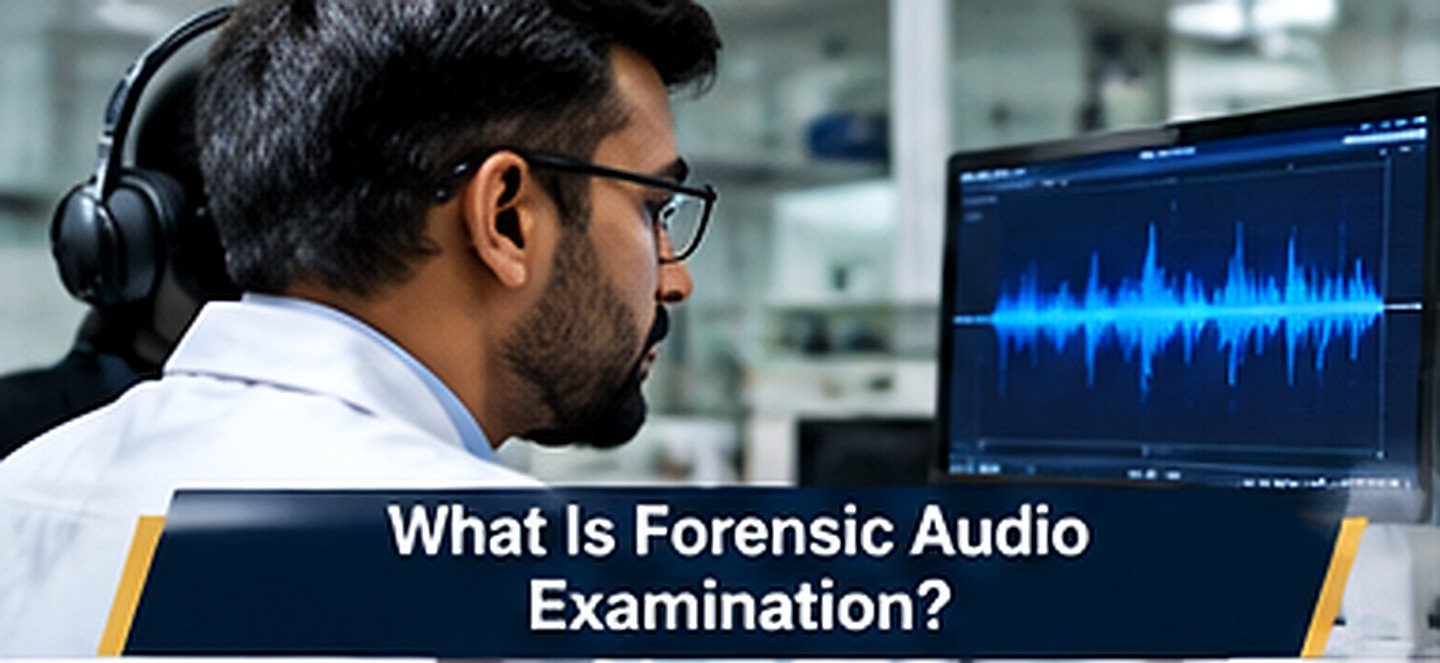
Forensic audio analysis may include listening assessments, waveform review, spectrogram examination, file property assessment, channel analysis and carefully documented processing. The methods selected depend on the recording format, sound quality, available original material and the purpose of the examination.
BFI approaches each audio-related assignment according to the evidence supplied and the specific question raised. The purpose is to explain what can reasonably be assessed from the available recording and identify limitations that may affect the interpretation. An audio examination should not claim more than the recording and the examination method can support.
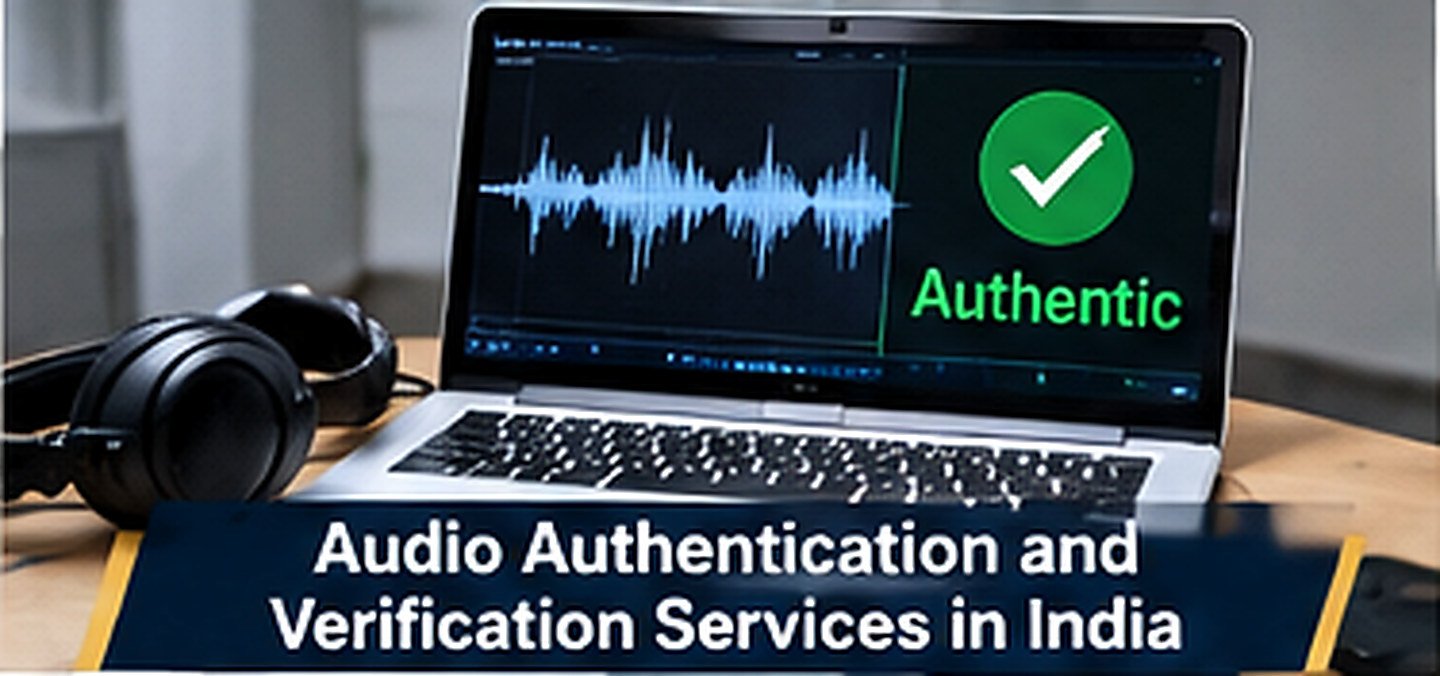
Audio authentication is not a universal test that can simply declare every recording genuine or fake. An examiner needs to understand what is being claimed about the recording and what particular manipulation or alteration is alleged. A recording may have been compressed, converted, shortened or transferred without necessarily being deceptively edited. Likewise, the absence of an obvious discontinuity does not prove that a recording has never been altered.
The availability of the original recording is important. A file received through a messaging platform or converted into another format may contain technical changes caused by normal processing. These changes must be distinguished from possible signs of deliberate editing wherever the evidence permits. BFI can discuss the relevant material and clarify what type of authenticity assessment may be appropriate.
Audio Authentication and Verification Services in India
Audio authentication is an examination intended to assess whether a recording is consistent with the manner in which it is alleged to have been produced. It may be requested when a party disputes a conversation recording, alleges that a clip has been edited or questions whether the supplied audio represents the original recording.
BFI can discuss audio authentication and verification requirements for suitable assignments involving digital or analogue recordings. Depending on the question, the examination may consider waveform characteristics, changes in background noise, signal continuity, abrupt transitions, channel behaviour, compression characteristics and other technical features that may be relevant to a specific allegation.
Audio Tampering Detection and Recording Manipulation Analysis
Audio tampering analysis may be required when a recording is suspected of containing inserted, removed, rearranged or modified portions. The concern may involve an edited conversation, an incomplete voice recording, a disputed statement or an audio clip that has been presented without its full context.
BFI can discuss examination of suspected audio manipulation for suitable cases. Depending on the allegation and the quality of the supplied file, the review may consider abrupt changes in signal characteristics, waveform discontinuities, differences in background ambience, unusual transitions, channel inconsistencies and other technical observations.
An apparent discontinuity is not automatically proof of intentional tampering. Recording devices may pause, restart, change gain levels or produce interruptions because of technical faults, battery conditions, software behaviour or environmental factors. Similarly, compression and format conversion can introduce artefacts that should not be confused with deliberate manipulation.
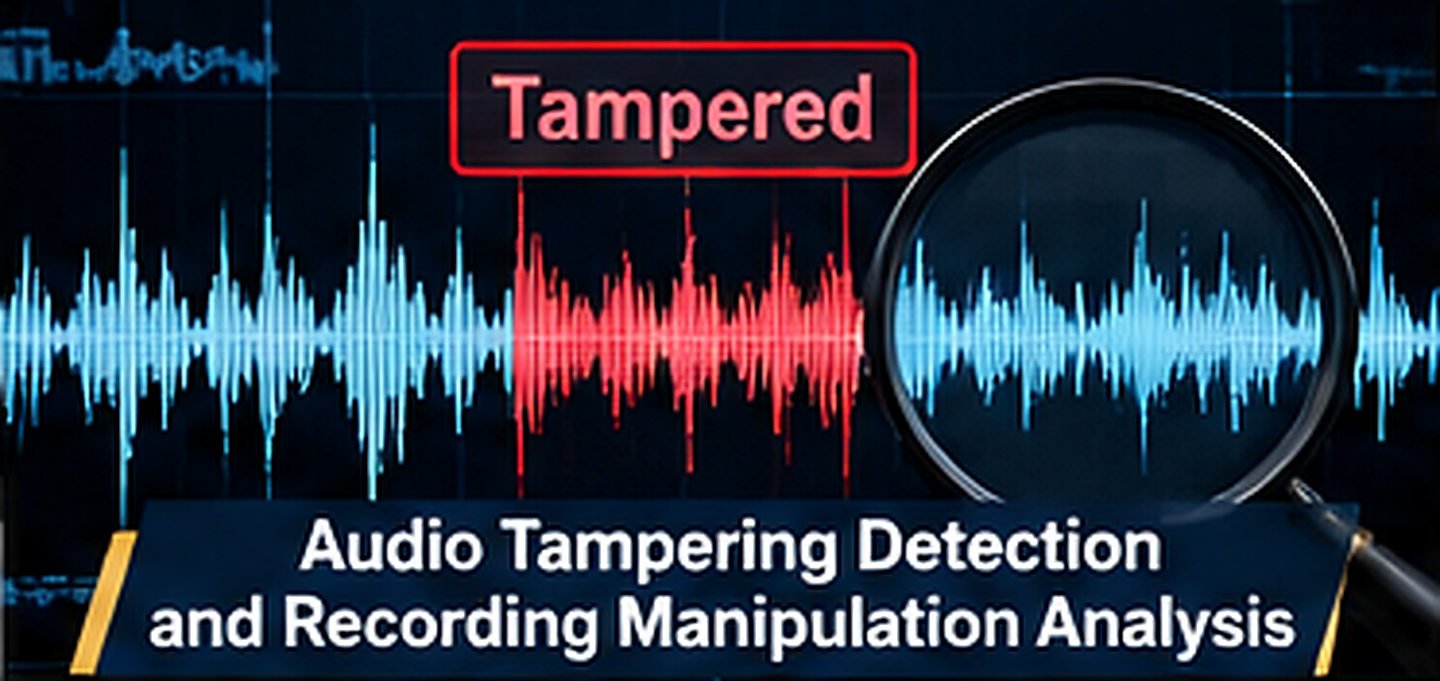
The examination should therefore focus on a clearly identified question and consider the recording’s technical history wherever that information is available. The original file, recording device information and any earlier-generation copies may help provide important context.
BFI can discuss audio tampering detection and explain the limitations of the available recording. The conclusion should be restricted to the observations that can be supported by the evidence and should not be presented as a guaranteed determination of who edited a file or why it was changed
Voice comparison is a specialized task and should be performed only where the examiner has appropriate training and the material is suitable. Similarity in accent, pitch or general speaking style alone does not establish that two recordings contain the same speaker. The conclusion must account for both the similarities and the limitations of the available material.
BFI can discuss the nature of the voice evidence and whether the supplied recordings may be suitable for further assessment. No speaker identity or identification result should be guaranteed before the material has been examined.
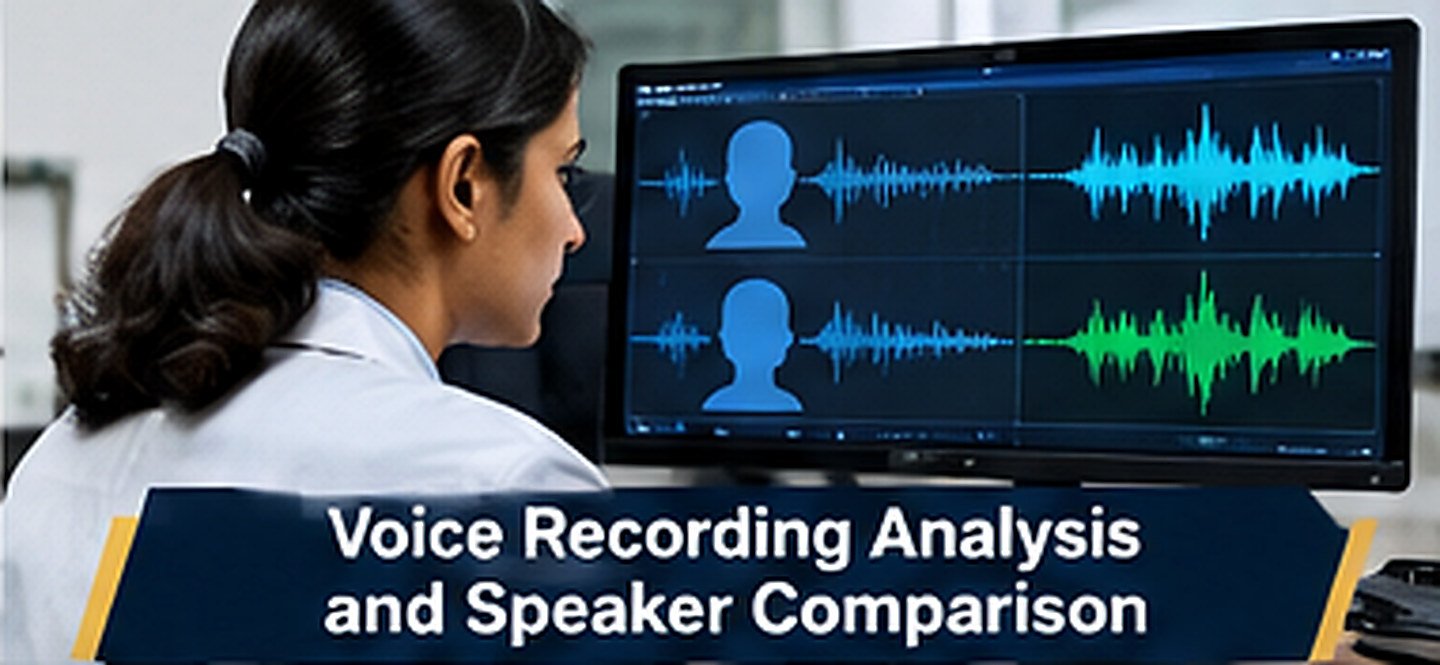
Voice Recording Analysis and Speaker Comparison
Voice recordings may be relevant when a conversation, statement or recorded message is disputed. A client may need to understand whether two recordings contain potentially comparable speech, whether a particular voice segment is suitable for further examination or what limitations affect a proposed speaker comparison.
BFI can discuss voice recording analysis and speaker comparison requirements for suitable matters. Depending on the assignment, relevant considerations may include recording quality, speech duration, background noise, microphone characteristics, language, speaking style, channel conditions and the availability of suitable reference recordings.
A person’s voice can vary with emotion, health, fatigue, speaking speed, distance from the microphone, recording equipment and surrounding noise. These factors can affect how a voice sounds in different recordings. A short or poor-quality clip may not contain enough speech information for a meaningful comparison.
Voice Identification and Voice Sample Comparison
Voice identification questions may arise in cases involving disputed calls, threatening messages, recorded conversations, alleged verbal agreements or other matters where the identity of a speaker is relevant. The technical suitability of the recordings is an important first consideration.
A voice sample used for comparison should contain sufficient speech and should be reasonably suitable for comparison with the questioned recording. Differences in microphone type, recording environment, distance, compression, language and speaking conditions can affect the quality of the comparison. A clean reference recording may not be directly comparable with a noisy telephone recording without careful consideration of these differences.
BFI can discuss the requirements for voice sample comparison and the limitations that may arise from the available audio. The review may consider whether the questioned and reference recordings contain adequate speech, whether the recordings have been heavily processed and whether the conditions create significant technical differences.
The identity of a speaker should not be inferred from a single voice characteristic or an informal listening impression. A reliable assessment requires a suitable methodology, adequate material and a properly qualified examiner. Where the supplied recording is too short, noisy or distorted, the appropriate conclusion may be that the available evidence is insufficient for a meaningful comparison.
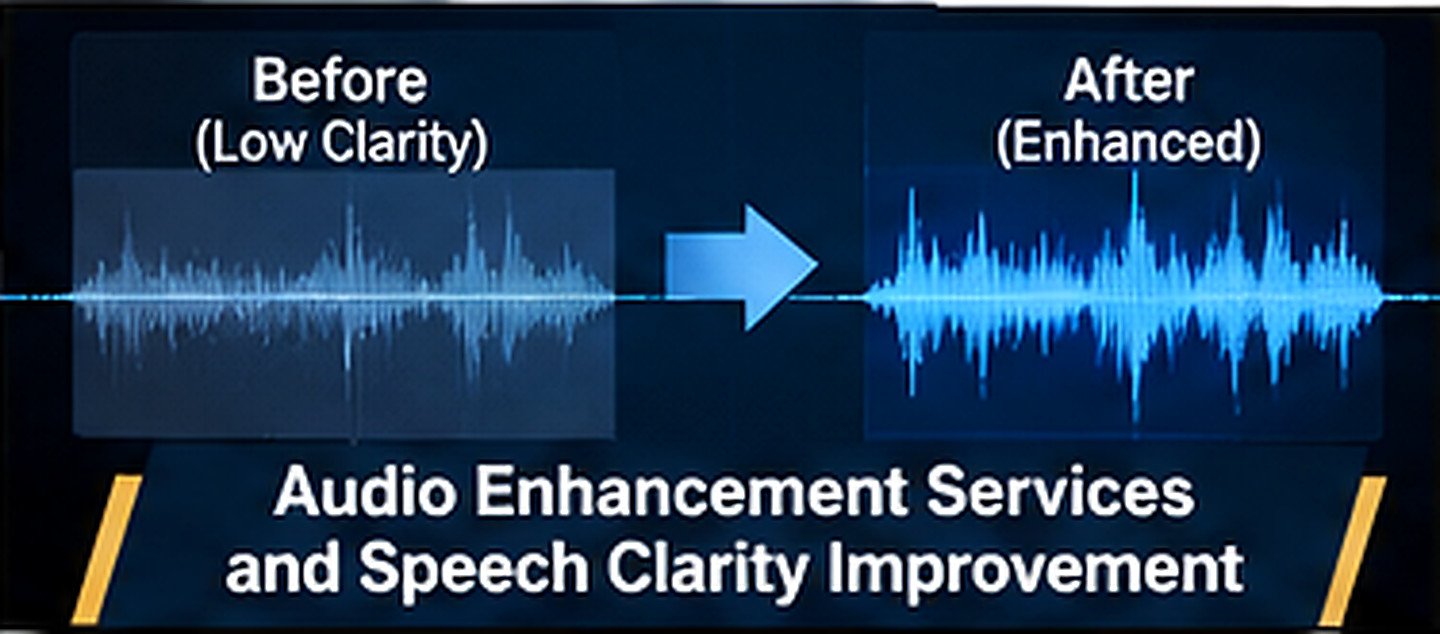
A forensic enhancement process should preserve the original and use a separate working copy. The processed output should be distinguishable from the unprocessed recording, and the processing steps should be documented where required. It may also be useful to retain more than one processing version when different approaches produce different listening results.
BFI can discuss the recording quality and the intended purpose of enhancement before defining the work. The goal is to improve intelligibility where technically possible without presenting an enhanced version as an untouched original.
Audio Enhancement Services and Speech Clarity Improvement
Audio enhancement is the process of applying suitable signal-processing methods to improve the intelligibility of speech or reduce unwanted sound that interferes with the target audio. It may be required when a recording contains background noise, low volume, hum, hiss, reverberation or other conditions that make listening difficult.
BFI can discuss audio enhancement services for suitable recordings. Depending on the nature of the sound, the work may involve careful noise reduction, filtering, level adjustment, channel assessment and other processing intended to improve the audibility of relevant speech or sound events.
Enhancement must be approached cautiously because aggressive processing can remove or distort useful speech information. A recording may contain overlapping voices, environmental noise or sound components that cannot be separated reliably. If the original recording does not contain sufficient information, processing cannot recreate words or sounds that were never captured.
Background Noise Removal and Audio Noise Reduction
Background noise can make a recording difficult to understand, particularly when speech is captured in public places, vehicles, offices, outdoor environments or rooms containing electronic equipment. Noise may include traffic, fans, air-conditioning, electrical hum, wind, handling sounds, crowd activity or other environmental sources.
BFI can discuss background noise reduction for suitable audio files. The appropriate approach depends on the type of noise, its frequency characteristics, whether it remains constant or changes over time and how much it overlaps with the speech of interest.
Noise reduction is not the same as removing every unwanted sound. Some background components may overlap with the frequencies and timing of speech. Removing too much noise can also remove speech detail or introduce artificial processing artefacts. A careful approach should compare the processed result with the original and avoid overstating what has become intelligible.
Where a recording contains several speakers or overlapping sound sources, separate processing may be needed for different portions. In some cases, the available audio may not support a meaningful improvement. BFI can assess the nature of the recording and explain whether noise reduction is likely to be useful.
Enhancement may help make some speech more audible, but it cannot guarantee that every word will become understandable. The result depends on the original signal, recording conditions and the amount of useful speech information captured.
BFI can discuss the specific unclear portions and the intended purpose of the examination. Any transcript or listening aid should make uncertainty clear and should not replace the original recording.
Unclear Voice Recording Analysis and Speech Intelligibility
Unclear voice recordings may contain low-volume speech, distant speakers, reverberation, overlapping conversations, distortion or background sounds that interfere with listening. Such recordings may arise from mobile phones, CCTV systems, voice recorders, telephone conversations or other recording devices.
BFI can discuss speech intelligibility assessment for suitable recordings. The examination may consider the quality of the source file, the sections that require attention, the characteristics of the background noise and the extent to which the recorded speech can reasonably be understood.
Speech intelligibility should be assessed carefully, particularly when the recording may be used in a dispute or legal proceeding. A word that sounds plausible in the context of a conversation should not automatically be treated as clearly audible. Uncertain words, masked speech and unintelligible sections should be distinguished rather than filled in through guesswork.
Telephone Call Recording and Mobile Audio Examination
Telephone recordings and mobile audio files may be relevant to personal disputes, business disagreements, alleged threats, disputed conversations and other investigative matters. These recordings may be stored in native device formats, exported through applications or shared as compressed files.
BFI can discuss telephone call recording examination and mobile audio analysis for suitable assignments. Depending on the available material, the work may involve reviewing the audio file, assessing its technical characteristics, identifying possible recording interruptions, examining the clarity of speech or considering a specific allegation about the supplied recording.
A file shared through an application may have been converted or compressed. The version received by the examiner may therefore differ technically from the earliest available recording. Where possible, the original file should be preserved along with relevant device and transfer information.
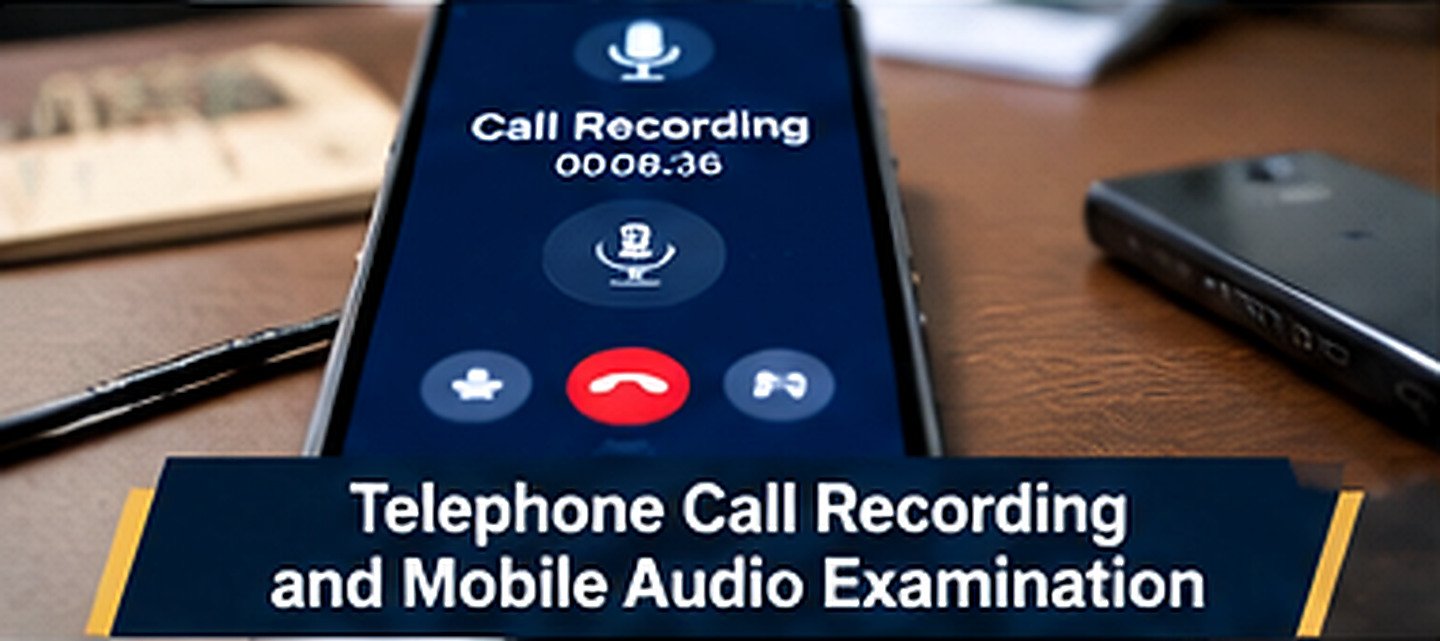
The fact that a call recording contains a person’s voice does not by itself establish the identity of the speaker, the completeness of the conversation or the circumstances in which the recording was created. These questions require separate assessment based on the available material.
BFI can discuss the nature of the call recording, its source and the question that needs to be examined. The scope may differ depending on whether the requirement concerns audio clarity, authenticity, speaker comparison or report interpretation.
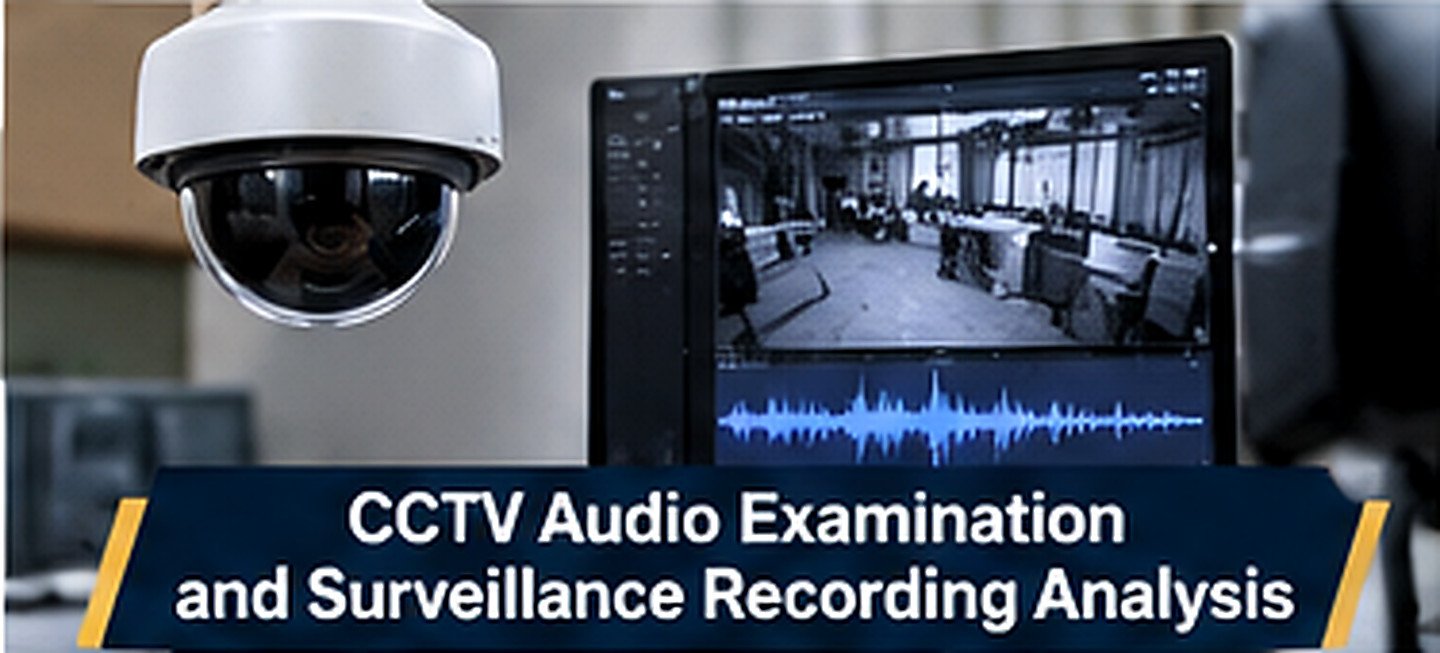
Where the recording contains both audio and video, the two components may require different examination methods. Synchronization and consistency questions should be assessed using suitable material and should not be assumed from a converted or edited copy.
BFI can discuss CCTV audio requirements and clarify whether the available recording is suitable for the requested analysis. The presence of a sound or voice in a recording does not automatically establish the identity or intention of the person responsible.
CCTV Audio Examination and Surveillance Recording Analysis
CCTV and surveillance systems may record sound along with video, although the audio quality and recording capability vary considerably between systems. A recording may contain conversations, background sounds, alarms, vehicle noise or other acoustic events that are relevant to an investigation.
BFI can discuss CCTV audio examination for suitable matters where an audio track is available and can be extracted or supplied in an appropriate format. The review may consider the recorded sound, channel characteristics, speech intelligibility, continuity and the relationship between the audio and the stated recording circumstances.
CCTV audio can be affected by microphone placement, distance, room acoustics, wind, electrical interference and the recording system’s compression settings. Some systems do not record sound at all, while others may store audio separately from the video stream. These factors should be established before an examination is defined.
Audio Waveform Analysis and Spectrogram Examination
Waveform analysis and spectrogram examination are technical methods used to study different characteristics of an audio recording. A waveform represents changes in signal amplitude over time, while a spectrogram displays frequency information across time. These visual representations can assist an examiner in studying signal patterns and identifying areas that may need closer attention.
BFI can discuss waveform and spectrographic analysis for suitable forensic audio assignments. Depending on the question, the review may consider signal interruptions, abrupt changes, frequency patterns, channel differences, background sound characteristics and other features relevant to the recording.
A waveform or spectrogram should not be interpreted as automatic proof of editing, speaker identity or authenticity. Similar visual patterns can arise from different recording conditions, and some manipulations may not be detectable from the available file. The visual data must be interpreted alongside listening assessments, file information and the specific allegation being examined.
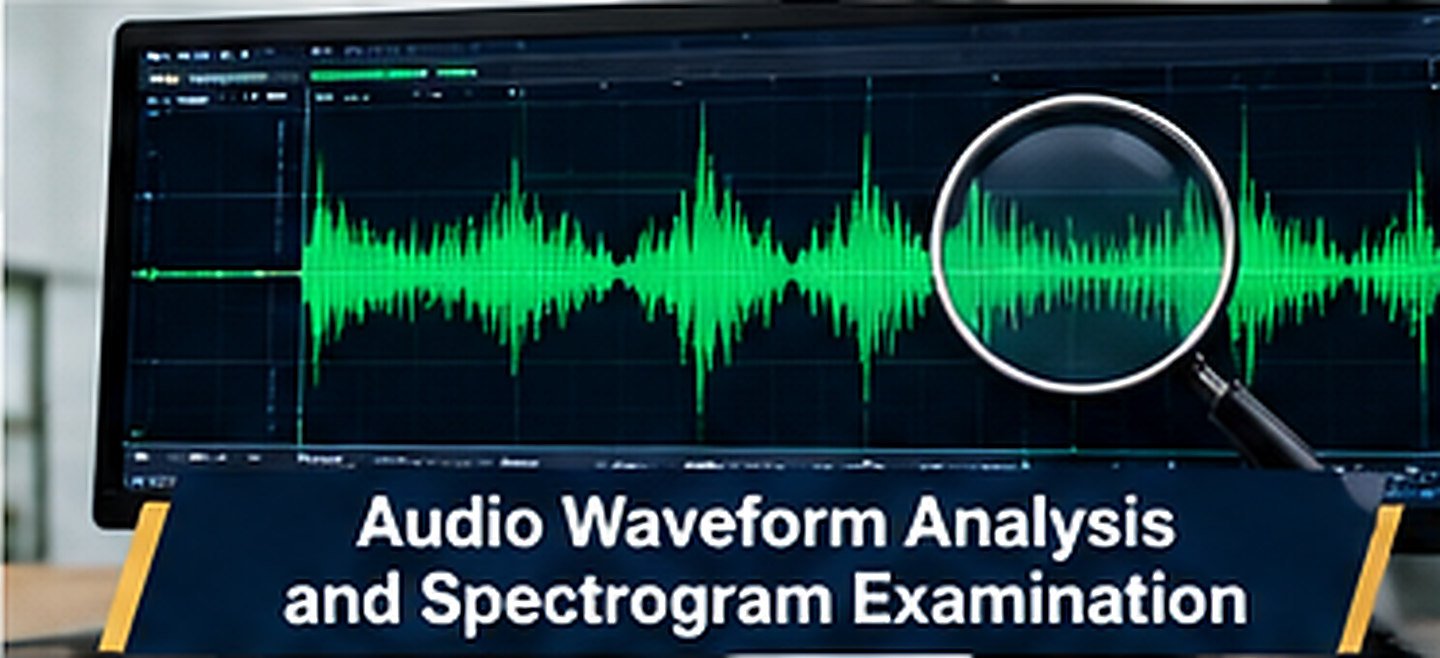
Where a recording has undergone compression, conversion or enhancement, those processes may affect the displayed characteristics. The examination should therefore document the source material and relevant processing history wherever possible.
BFI can discuss whether waveform analysis, spectrogram examination or another audio assessment is appropriate for the particular recording and question.
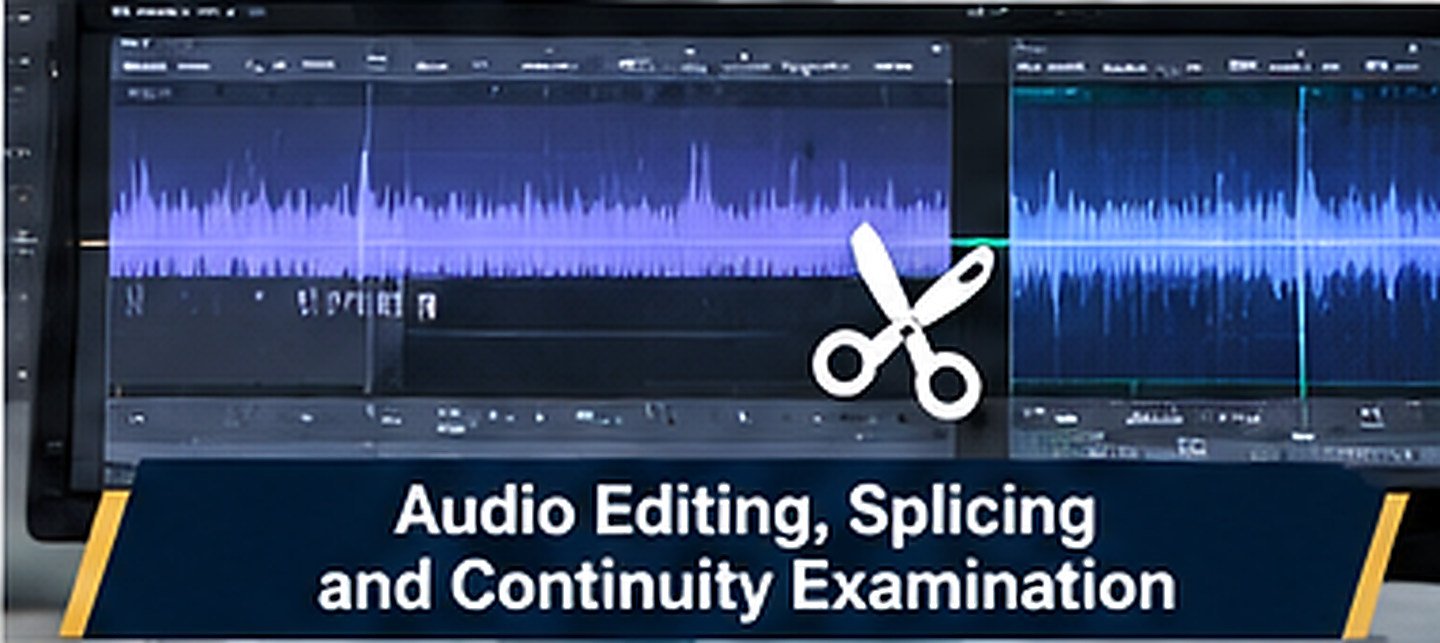
An examination may identify observations consistent with a possible interruption or change, but the meaning of those observations must be considered carefully. It may not be possible to determine exactly who made a change, when it occurred or why it was made from the audio file alone.
BFI can discuss the specific concern and clarify which examination methods may help assess the available recording.
Audio Editing, Splicing and Continuity Examination
An audio recording may be disputed because a party believes that portions have been removed, rearranged or joined together. The concern may relate to an interrupted conversation, an alleged omission, a sudden change in background sound or an audio file that appears to contain separate recording segments.
BFI can discuss audio continuity and editing-related examination for suitable assignments. Depending on the available material, the review may consider transitions, signal behaviour, background ambience, changes in noise patterns and other technical observations that may be relevant to the allegation.
Not every interruption or abrupt transition indicates deliberate splicing. A recording device may stop and restart, a call may disconnect, a file may be converted or a recording application may create separate segments. The context and recording history are therefore important.
Audio File Metadata and Digital Recording Properties
Digital audio files may contain technical information relating to format, encoding, sampling rate, bit depth, channel configuration and other file properties. Depending on the recording system and file format, additional metadata may also be available.
BFI can discuss the examination of audio file properties and relevant digital recording information for suitable cases. The review may help identify the format of a supplied recording, whether it appears to have undergone conversion and which technical limitations may affect further analysis.
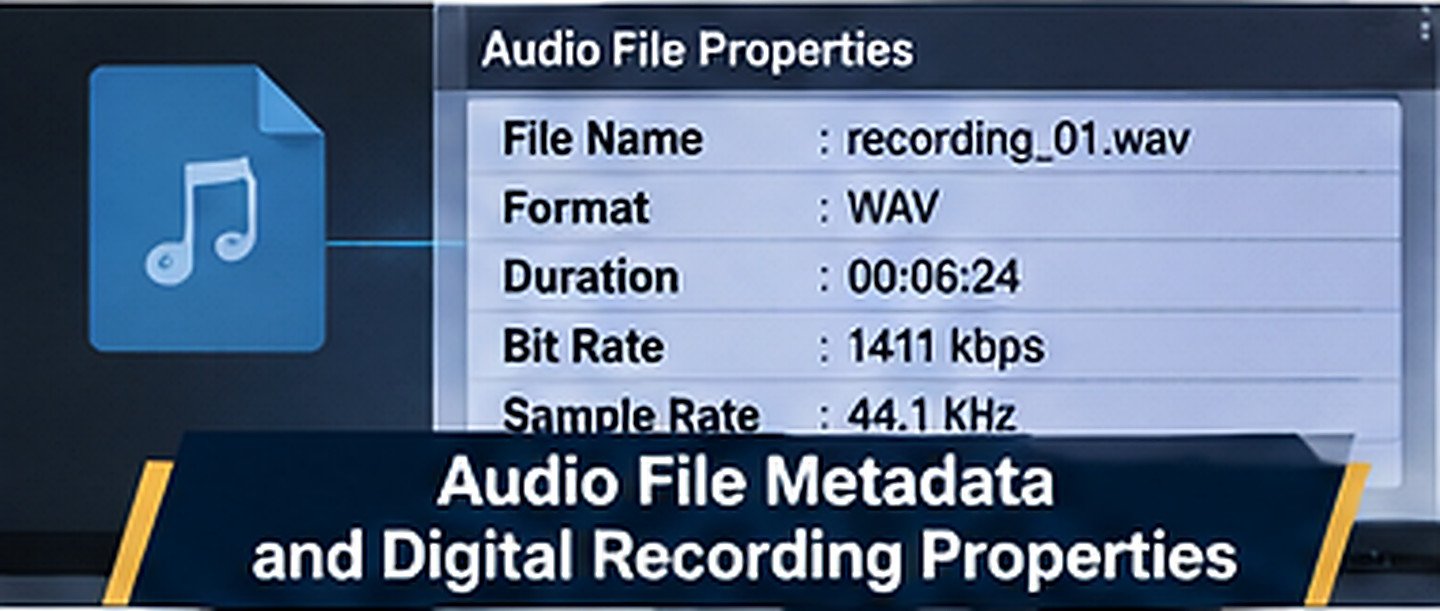
Metadata must be interpreted cautiously. Some file properties may change during ordinary transfer, editing, export or compression. File creation or modification timestamps may reflect the device, application or file-handling process rather than the precise time when the sound was originally recorded.
A metadata review alone cannot establish the full history of a recording or prove that a file is authentic. Where possible, the original recording device, native file and supporting information should be preserved for a more complete assessment.
BFI can discuss the available audio file and explain what its technical properties may reveal and what they cannot establish.
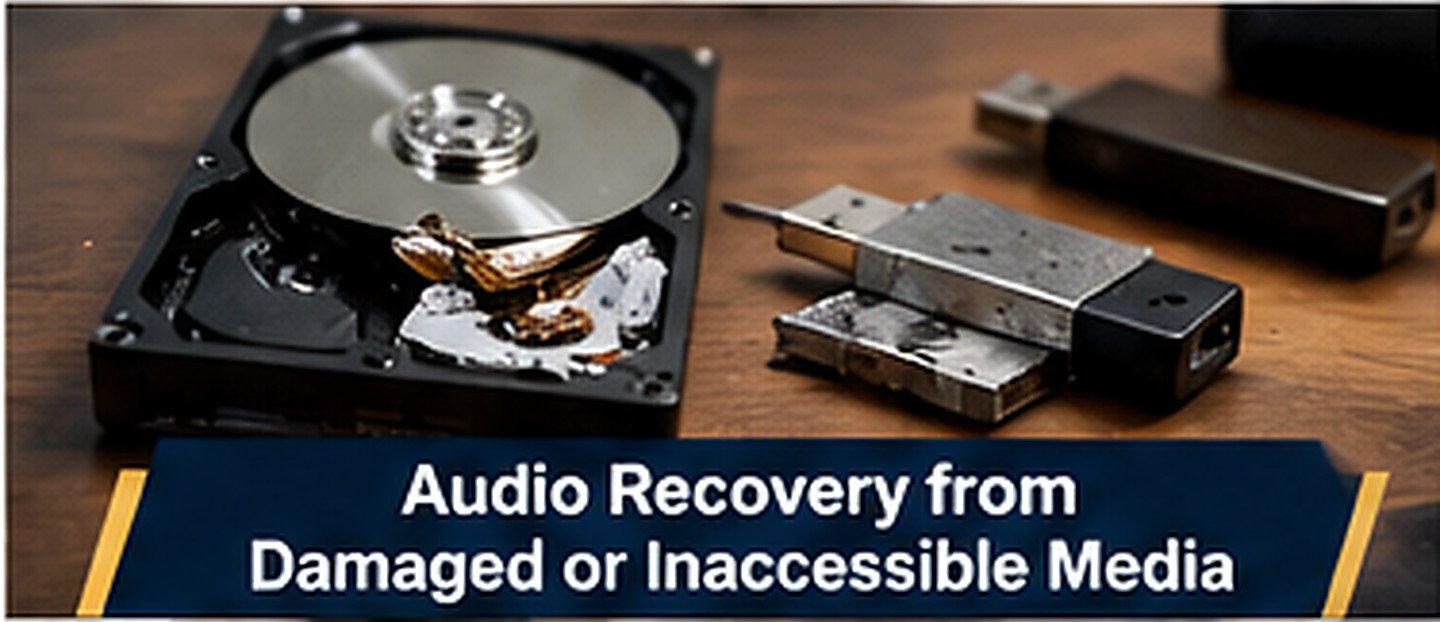
Where a device or storage medium is physically damaged, specialist recovery methods may be required. The feasibility, risks and likely limitations should be discussed before any intervention is attempted.
BFI can discuss the nature of the problem and the available material to clarify whether the requirement is audio recovery, file-format access, forensic examination or another type of digital investigation.
Audio Recovery from Damaged or Inaccessible Media
Audio recordings may become difficult to access because of damaged storage media, corrupted files, unsupported formats, incomplete transfers or device-related problems. Recovery requirements depend on the type of media, the condition of the storage and whether the audio data remains available.
BFI can discuss suitable audio recovery and digital media examination requirements where the source material and authorization permit. The first consideration is to avoid actions that may overwrite, modify or further damage the available data. Repeated attempts to open or repair a damaged file may sometimes reduce the chance of recovering the original information.
A recovered file may not contain all of the original recording. Parts of the data may be missing, damaged or unreadable. Even when a file becomes playable, its technical condition and completeness may require separate assessment before it is relied upon as evidence.
Audio Transcription and Recorded Conversation Documentation
Audio transcription involves converting recorded speech into written text. It may be required for recorded interviews, telephone conversations, meetings, statements or other audio material that needs to be reviewed in written form.
BFI can discuss transcription requirements for suitable recordings, depending on the audio quality, language, number of speakers and purpose of the transcript. Where speech is unclear, overlapping or masked by noise, the uncertain portions should be identified rather than completed through assumption.
A transcript is not a substitute for the original recording. The audio should remain available for independent listening and comparison, particularly where the words may be disputed or the transcript may be used in a legal matter.
Transcription and forensic audio examination are related but distinct activities. A transcription may document audible speech, while an authenticity examination may address technical questions about the recording itself. A transcript alone cannot establish that a recording is complete, genuine or unaltered.
BFI can discuss the required output and clarify whether the assignment involves transcription, speech intelligibility assessment, audio authentication or a combination of suitable services.
Voice comparison should not be treated as a simple matching exercise based on accent, pitch or casual listening. It requires an appropriate examination method and a suitably qualified practitioner. Any conclusion must reflect the limitations of the evidence.
BFI can discuss the material and the specific question involved before confirming whether a voice comparison assignment may be appropriate.
Voice Comparison in Disputed Conversations and Legal Matters
Disputed voice recordings may arise in cases involving alleged threats, verbal agreements, recorded instructions, telephone conversations, business disputes and other matters where the identity of a speaker is relevant. The suitability of the recording must be assessed before a comparison is considered.
BFI can discuss voice comparison requirements for suitable legal and investigative matters. The assessment may consider the duration of the questioned speech, the availability of reference samples, the recording conditions, background noise, language and other factors that can affect comparison.
A short voice clip may contain too little speech for a meaningful examination. A recording made over a telephone may have different frequency characteristics from a recording made using a nearby microphone. These differences can affect the comparison and must be taken into account.
Audio Evidence Examination for Court Cases in India
Audio recordings may be relied upon in legal disputes, criminal proceedings, civil matters and other judicial contexts. Questions may arise about the origin of a recording, whether it has been altered, the clarity of the speech, the identity of a speaker or the way in which the evidence was preserved.
The Bharatiya Sakshya Adhiniyam, 2023 addresses electronic and digital records, including provisions concerning the admissibility of electronic records and the conditions specified under Section 63. The legal treatment of a particular recording depends on the facts, the applicable provisions, the manner of production and the relevant procedural requirements. An audio examination by itself does not guarantee admissibility or determine the weight a court will give the evidence.
BFI can discuss forensic audio examination requirements for suitable legal matters, including authenticity-related questions, recording clarity, technical report interpretation and the limitations of audio evidence. The exact work should be defined according to the question raised and the material available.
Where a recording is intended for legal proceedings, the original or earliest available file should be preserved. Relevant information about the device, collection, transfer, storage and handling should also be retained where possible. Any processing or conversion should be documented so that the original can be distinguished from working copies and enhanced outputs.
BFI’s role should be clearly described in the agreed scope. Legal advice, admissibility decisions and courtroom outcomes remain matters for the appropriate legal professionals and the court.
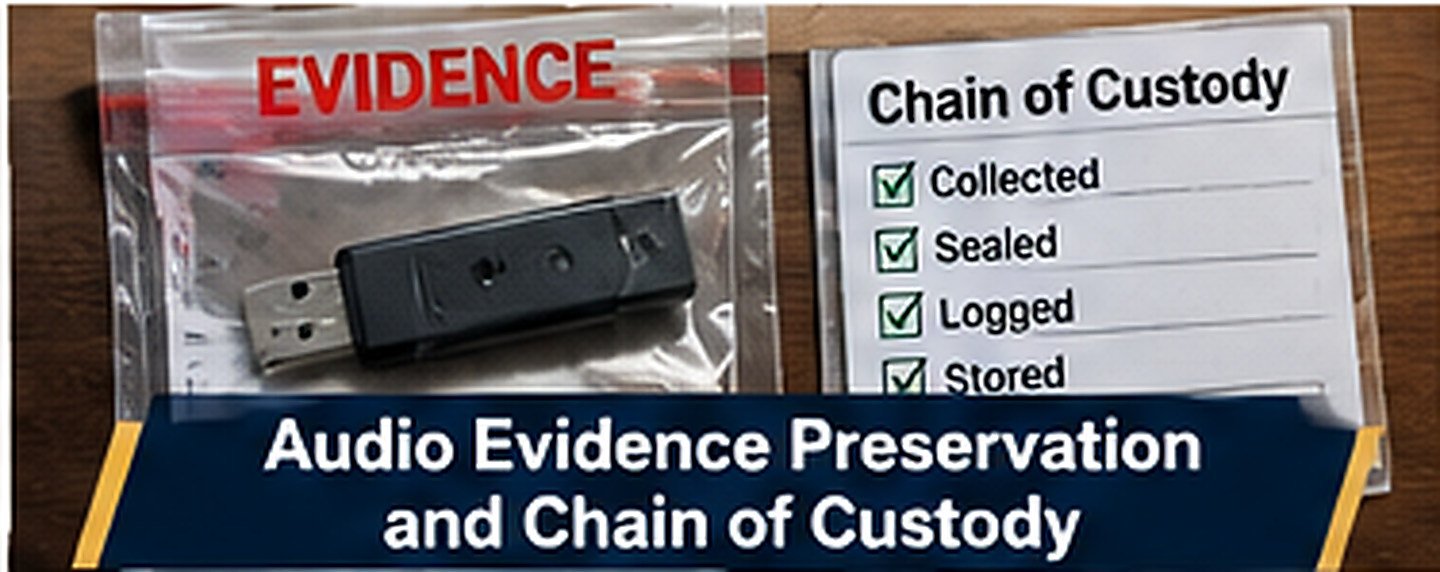
For an assignment involving physical media, the condition of the item and the manner in which it was received may also be relevant. Packaging, labels, device details and available collection records can help explain the history of the evidence.
A documented chain of custody may support transparency about who handled the evidence and when. However, the legal significance of the documentation depends on the circumstances and applicable requirements. BFI can discuss the available records and identify information that may be important for the agreed examination.
Audio Evidence Preservation and Chain of Custody
Preserving audio evidence is important because the way a recording is handled can affect its technical condition and the ability to explain its history. A file may be copied, transferred, compressed, renamed or converted during ordinary use. These actions can complicate later examination if the original and the working versions are not clearly distinguished.
BFI recommends preserving the original or earliest available recording and avoiding unnecessary editing, trimming, noise reduction or format conversion before an examination. Where a digital file is supplied, the source device and original file should be retained whenever possible. Copies should be created carefully, and relevant transfer information should be recorded.
Original Audio Recording vs Edited or Converted Audio File
The original recording is generally preferable for forensic examination because it may preserve information that can be lost or changed during later processing. A file shared through a messaging application, exported from an editing program or converted into another format may not retain every characteristic of the earliest recording.
An edited or converted file may still be suitable for some forms of listening assessment, but its limitations should be understood. Compression may affect frequency information, conversion may change sampling characteristics and trimming may remove context that could be relevant to the examination.
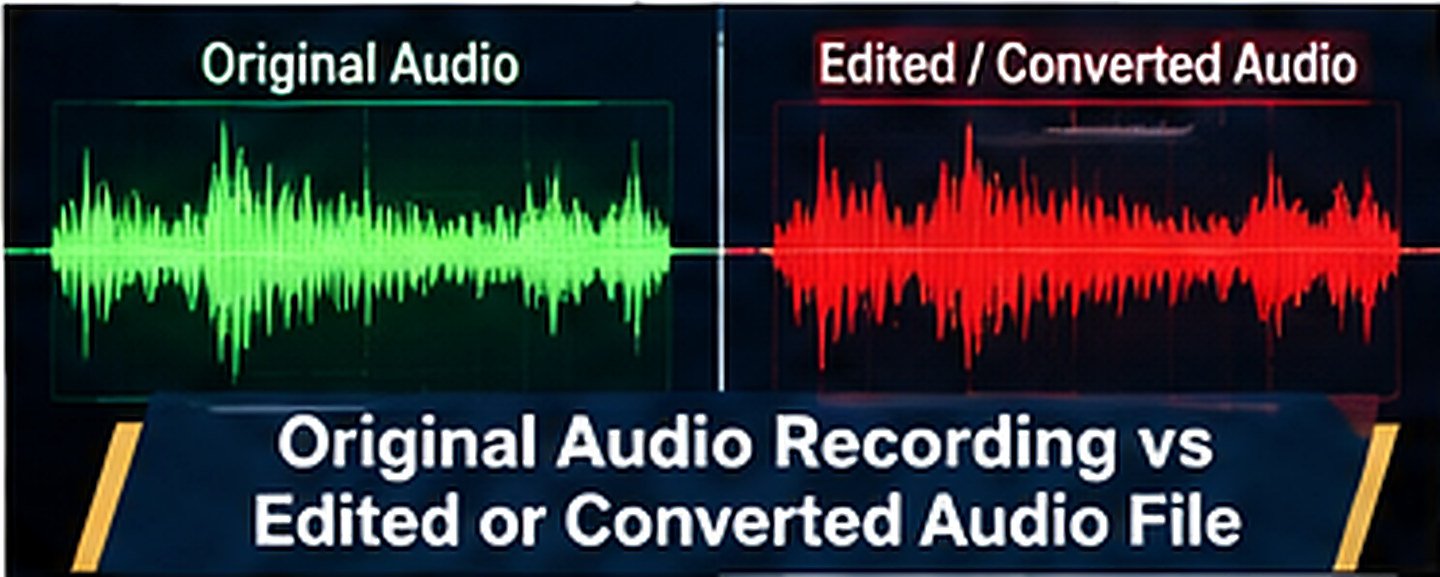
BFI can discuss the differences between an original recording, a working copy and a processed audio file. Where multiple versions are available, the relationship between them may need to be established before the examination question can be addressed.
Clients should preserve all available versions rather than deleting earlier files after creating an enhanced or shortened copy. The original should remain unchanged, and any processed output should be identified separately.
The context of a recording matters. A conversation may contain only part of an interaction, and the absence of a particular statement from a supplied clip does not establish that it was never made. Similarly, an audible statement does not independently prove the surrounding circumstances or the intention of the speaker.
BFI can help clarify what the supplied recording may be able to establish and which limitations should be considered. Any conclusions should remain within the scope of the technical examination and should not be presented as a determination of guilt, liability or legal responsibility.
Audio Examination for Criminal Investigations and Commercial Disputes
Audio recordings may be relevant to investigations involving alleged threats, harassment, disputed instructions, suspected fraud, workplace disputes, financial disagreements and other matters where recorded speech or sound is important. The technical examination should focus on the specific question rather than assume that the recording proves the allegation.
BFI can discuss forensic audio requirements for suitable criminal, civil and commercial matters. Depending on the case, the work may involve authenticity assessment, voice recording review, noise reduction, speech intelligibility, continuity analysis or examination of an existing audio report.
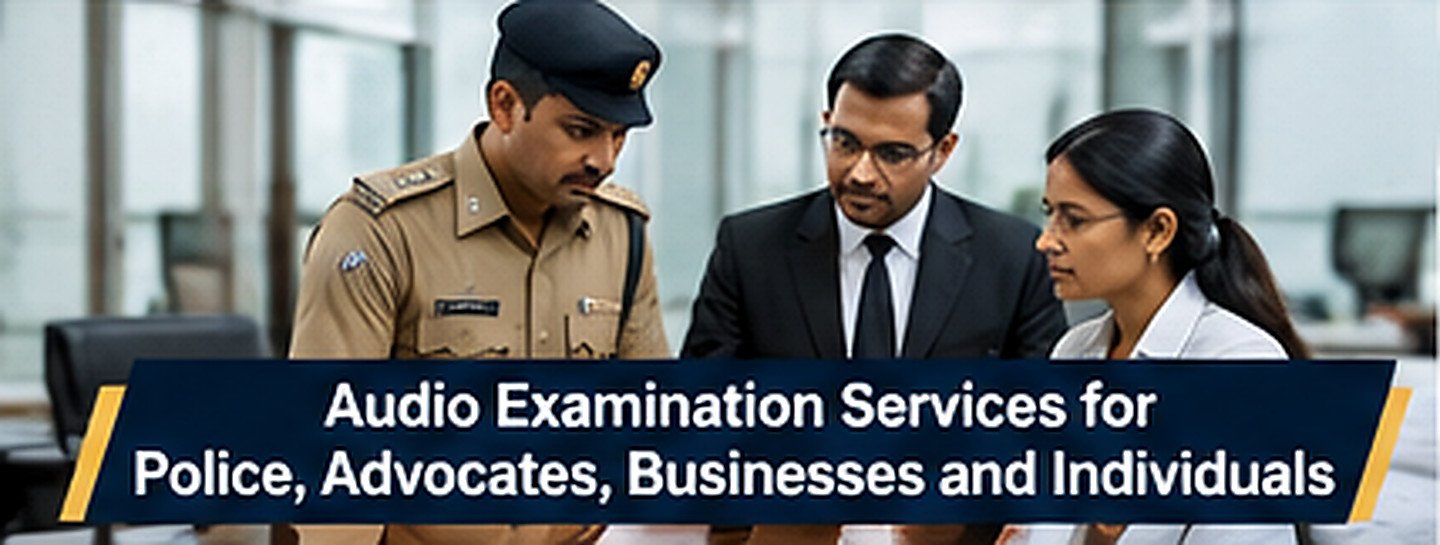
Audio Examination Services for Police, Advocates, Businesses and Individuals
Different clients may require audio examination for different reasons. Advocates may need technical clarification of an audio report, businesses may need to investigate a disputed recording, individuals may have concerns about an alleged conversation and investigators may need to understand whether a recording is suitable for further examination.
BFI can discuss audio examination requirements for suitable professional, business, investigative and personal matters. The initial discussion should establish the source of the recording, the question being raised, the material available and the intended use of the examination.
Where the request involves evidence connected with an official investigation, the relevant authority’s directions and applicable procedures should be followed. A private consultation should not be represented as an official government laboratory examination or as an authorized police investigation unless that is actually the case.
The scope of the assignment should be clear before work begins. This helps ensure that the examination addresses the client’s actual question and that the limitations of the available recording are understood.
A report review does not automatically establish that the original examination was correct or incorrect. It helps identify questions that may require explanation and clarifies what can be assessed from the documents and audio material supplied.
BFI can discuss the report and the specific technical concerns before confirming the scope of a review. Any formal expert opinion or courtroom assistance should be confirmed separately according to the actual qualifications, assignment and applicable requirements.
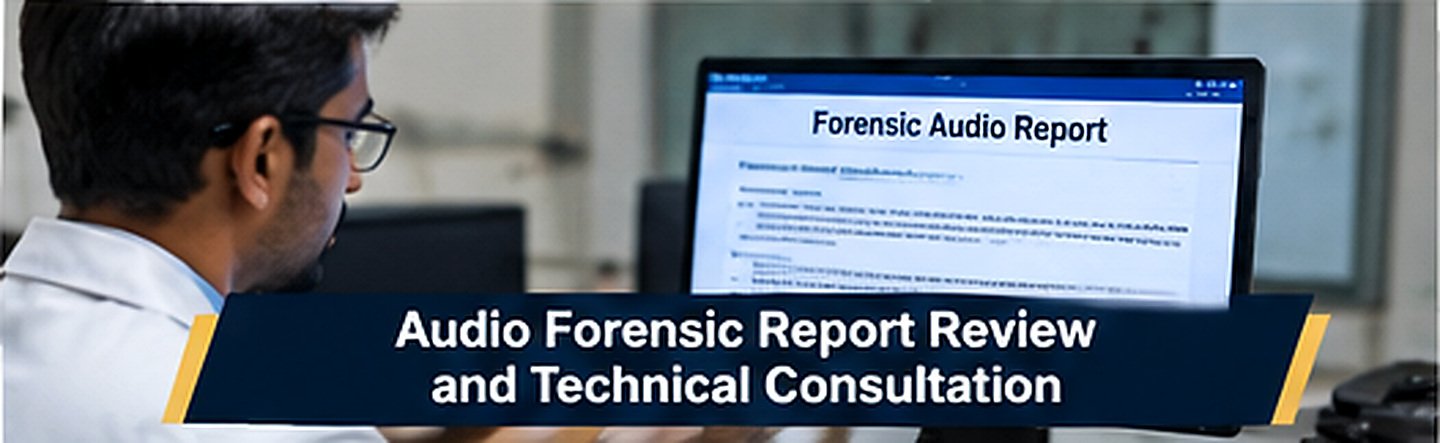
Audio Forensic Report Review and Technical Consultation
An existing audio forensic report may contain technical terms, examination observations and conclusions that require clarification. A client may need to understand whether the report addresses the allegation raised, what material was examined and what limitations were acknowledged.
BFI can discuss technical review and consultation for suitable audio-related reports. Depending on the assignment, the review may consider the description of the exhibits, the examination question, the methods described, the reported observations and the relationship between the findings and the conclusion.
A report should distinguish between what was directly observed, what was inferred and what remains uncertain. If the original recording was unavailable, or if only a compressed copy was examined, that limitation may affect the strength of the assessment.
Audio Examination Services Across India
An existing audio forensic report may contain technical terms, examination observations and conclusions that require clarification. A client may need to understand whether the report addresses the allegation raised, what material was examined and what limitations were acknowledged.
BFI can discuss technical review and consultation for suitable audio-related reports. Depending on the assignment, the review may consider the description of the exhibits, the examination question, the methods described, the reported observations and the relationship between the findings and the conclusion.
A report should distinguish between what was directly observed, what was inferred and what remains uncertain. If the original recording was unavailable, or if only a compressed copy was examined, that limitation may affect the strength of the assessment.

A report review does not automatically establish that the original examination was correct or incorrect. It helps identify questions that may require explanation and clarifies what can be assessed from the documents and audio material supplied.
BFI can discuss the report and the specific technical concerns before confirming the scope of a review. Any formal expert opinion or courtroom assistance should be confirmed separately according to the actual qualifications, assignment and applicable requirements.
Why Choose Brilliant Forensic Investigation for Audio Examination Services?
Audio evidence can be technically complex. A recording that sounds clear to one listener may contain limitations that matter to a forensic question, while a noisy recording may still preserve some useful information. The examination therefore needs to be based on the recording itself, the allegation being considered and the methods appropriate to the material.
Brilliant Forensic Investigation (BFI) provides audio examination and forensic audio analysis support for suitable investigative and legal requirements. The service areas may include audio authentication consultation, suspected editing assessment, voice recording analysis, speech enhancement, noise reduction, waveform examination and review of audio-related technical reports.
BFI emphasizes the importance of preserving original recordings, distinguishing source material from processed copies and explaining the limitations of the available evidence. The scope should be clear about what was examined, which methods were relevant and what conclusions can reasonably be drawn.
No audio examination can guarantee that every alteration will be detected, every word will become intelligible or every speaker will be identified. A recording may be too short, distorted, compressed or incomplete for the requested conclusion. BFI can discuss these limitations and clarify whether the proposed examination is appropriate.
Frequently Asked Questions (FAQs)
-
What are audio examination services?
Audio examination services involve the technical assessment of recorded sound for a defined investigative or legal purpose. Depending on the assignment, the work may include audio authenticity assessment, voice recording analysis, waveform examination, spectrographic analysis, noise reduction and speech intelligibility review.
-
Does BFI provide audio examination services in India?
BFI can discuss forensic audio examination requirements for suitable assignments across India. The scope depends on the recording, the specific question, the material available and whether physical or digital examination is appropriate.
-
What is forensic audio analysis?
Forensic audio analysis is the examination of sound recordings using suitable listening and technical methods. It may involve studying recording characteristics, possible discontinuities, frequency information, speech clarity and other features relevant to a defined question.
-
Can an audio recording be checked for editing or tampering?
A suitable recording can be examined for technical observations that may be relevant to an allegation of editing or manipulation. However, no single test can establish every possible form of alteration, and the conclusion depends on the original material, the allegation and the available technical information.
-
Can background noise be removed from an audio recording?
Some types of background noise may be reduced through appropriate audio processing. The improvement depends on the original recording and the relationship between the noise and the speech. Processing cannot guarantee that every word will become clear or restore sound information that was never captured.

Contact BFI for Audio Examination Services in India
If you are looking for Audio Examination Services in India, forensic audio analysis, audio authentication, voice recording verification, audio enhancement or technical review of digital audio evidence, contact Brilliant Forensic Investigation (BFI) to discuss your requirement.
The initial discussion can establish the type of recording, its source, the specific question to be examined, whether the original file is available and how the findings may be used. BFI can then clarify whether the matter is suitable for audio authentication consultation, voice recording analysis, speech enhancement, waveform examination or another audio-related service.
Preserve the original recording and avoid unnecessary editing, conversion or enhancement before seeking an examination. This can help retain important information and reduce avoidable limitations.

📞 Contact Us: 9990292279
🌐 Visit Our Website: https://forensicexpertinvestigation.com/
✉️ Email: ceo.bfi@gmail.com
Audio Forensic Analysis Expert Services in India
Audio Forensic Analysis Expert Services in Andaman and Nicobar Islands (union territory)-Port Blair | Audio Forensic Analysis Expert Services in Andhra Pradesh – Adoni, Amaravati, Anantapur, Chandragiri, Chittoor, Dowlaiswaram, Eluru, Guntur, Kadapa, Kakinada, Kurnool, Machilipatnam, Nagarjunakoṇḍa, Rajahmundry, Srikakulam, Tirupati, Vijayawada, Visakhapatnam, Vizianagaram, Yemmiganur | Audio Forensic Analysis Expert Services in Arunachal Pradesh – Itanagar | Audio Forensic Analysis Expert Services in Assam – Dhuburi, Dibrugarh, Dispur, Guwahati, Jorhat, Nagaon, Sivasagar, Silchar, Tezpur, Tinsukia | Audio Forensic Analysis Expert Services in Bihar – Ara, Barauni, Begusarai, Bettiah, Bhagalpur, Bihar Sharif, Bodh Gaya, Buxar, Chapra, Darbhanga, Dehri, Dinapur Nizamat, Gaya, Hajipur, Jamalpur, Katihar, Madhubani, Motihari, Munger, Muzaffarpur, Patna, Purnia, Pusa, Saharsa, Samastipur, Sasaram, Sitamarhi, Siwan | Audio Forensic Analysis Expert Services in Chandigarh (union territory) – Chandigarh | Audio Forensic Analysis Expert Services in Chhattisgarh – Ambikapur, Bhilai, Bilaspur, Dhamtari, Durg, Jagdalpur, Raipur, Rajnandgaon | Audio Forensic Analysis Expert Services in Dadra and Nagar Haveli and Daman and Diu (union territory) – Daman, Diu, Silvassa | Audio Forensic Analysis Expert Services in Delhi (national capital territory) – Delhi, New Delhi |Audio Forensic Analysis Expert Services in Goa – Madgaon, Panaji | Forensic Crime Scene Investigation – Services in Gujarat – Ahmadabad, Amreli, Bharuch, Bhavnagar, Bhuj, Dwarka, Gandhinagar, Godhra, Jamnagar, Junagadh, Kandla, Khambhat, Kheda, Mahesana, Morbi, Nadiad, Navsari, Okha, Palanpur, Patan, Porbandar, Rajkot, Surat, Surendranagar, Valsad, Veraval | Audio Forensic Analysis Expert Services in Haryana – Ambala, Bhiwani, Chandigarh, Faridabad, Firozpur Jhirka, Gurugram, Hansi, Hisar, Jind, Kaithal, Karnal, Kurukshetra, Panipat, Pehowa, Rewari, Rohtak, Sirsa, Sonipat | Audio Forensic Analysis Expert Services in Himachal Pradesh – Bilaspur, Chamba, Dalhousie, Dharmshala, Hamirpur, Kangra, Kullu, Mandi, Nahan, Shimla, Una | Audio Forensic Analysis Expert Services in Jammu and Kashmir (union territory) – Anantnag, Baramula, Doda, Gulmarg, Jammu, Kathua, Punch, Rajouri, Srinagar, Udhampur | Audio Forensic Analysis Expert Services in Jharkhand – Bokaro, Chaibasa, Deoghar, Dhanbad, Dumka, Giridih, Hazaribag, Jamshedpur, Jharia, Rajmahal, Ranchi, Saraikela | Audio Forensic Analysis Expert Services in Karnataka – Badami, Ballari, Bengaluru, Belagavi, Bhadravati, Bidar, Chikkamagaluru, Chitradurga, Davangere, Halebid, Hassan, Hubballi-Dharwad, Kalaburagi, Kolar, Madikeri, Mandya, Mangaluru, Mysuru, Raichur, Shivamogga, Shravanabelagola, Shrirangapattana, Tumakuru, Vijayapura | Audio Forensic Analysis Expert Services in Kerala – Alappuzha, Vatakara, Idukki, Kannur, Kochi, Kollam, Kottayam, Kozhikode, Mattancheri, Palakkad, Thalassery, Thiruvananthapuram, Thrissur | Audio Forensic Analysis Expert Services in Ladakh (union territory) – Kargil, Leh | Audio Forensic Analysis Expert Services in Madhya Pradesh – Balaghat, Barwani, Betul, Bharhut, Bhind, Bhojpur, Bhopal, Burhanpur, Chhatarpur, Chhindwara, Damoh, Datia, Dewas, Dhar, Dr. Ambedkar Nagar (Mhow), Guna, Gwalior, Hoshangabad, Indore, Itarsi, Jabalpur, Jhabua, Khajuraho, Khandwa, Khargone, Maheshwar, Mandla, Mandsaur, Morena, Murwara, Narsimhapur, Narsinghgarh, Narwar, Neemuch, Nowgong, Orchha, Panna, Raisen, Rajgarh, Ratlam, Rewa, Sagar, Sarangpur, Satna, Sehore, Seoni, Shahdol, Shajapur, Sheopur, Shivpuri, Ujjain, Vidisha | Audio Forensic Analysis Expert Services in Maharashtra – Ahmadnagar, Akola, Amravati, Aurangabad, Bhandara, Bhusawal, Bid, Buldhana, Chandrapur, Daulatabad, Dhule, Jalgaon, Kalyan, Karli, Kolhapur, Mahabaleshwar, Malegaon, Matheran, Mumbai, Nagpur, Nanded, Nashik, Osmanabad, Pandharpur, Parbhani, Pune, Ratnagiri, Sangli, Satara, Sevagram, Solapur, Thane, Ulhasnagar, Vasai-Virar, Wardha, Yavatmal |Audio Forensic Analysis Expert Services in Manipur – Imphal | Audio Forensic Analysis Expert Services in Meghalaya – Cherrapunji, Shillong | Audio Forensic Analysis Expert Services in Mizoram – Aizawl, Lunglei | Audio Forensic Analysis Expert Services in Nagaland – Kohima, Mon, Phek, Wokha, Zunheboto | Audio Forensic Analysis Expert Services in Odisha – Balangir, Baleshwar, Baripada, Bhubaneshwar, Brahmapur, Cuttack, Dhenkanal, Kendujhar, Konark, Koraput, Paradip, Phulabani, Puri, Sambalpur, Udayagiri | Audio Forensic Analysis Expert Services in Puducherry (union territory) – Karaikal, Mahe, Puducherry, Yanam | Audio Forensic Analysis Expert Services in Punjab – Amritsar, Batala, Chandigarh, Faridkot, Firozpur, Gurdaspur, Hoshiarpur, Jalandhar, Kapurthala, Ludhiana, Nabha, Patiala, Rupnagar, Sangrur | Audio Forensic Analysis Expert Services in Rajasthan – Abu, Ajmer, Alwar, Amer, Barmer, Beawar, Bharatpur, Bhilwara, Bikaner, Bundi, Chittaurgarh, Churu, Dhaulpur, Dungarpur, Ganganagar, Hanumangarh, Jaipur, Jaisalmer, Jalor, Jhalawar, Jhunjhunu, Jodhpur, Kishangarh, Kota, Merta, Nagaur, Nathdwara, Pali, Phalodi, Pushkar, Sawai Madhopur, Shahpura, Sikar, Sirohi, Tonk, Udaipur | Audio Forensic Analysis Expert Services in Sikkim – Gangtok, Gyalshing, Lachung, Mangan | Audio Forensic Analysis Expert Services in Tamil Nadu – Arcot, Chengalpattu, Chennai, Chidambaram, Coimbatore, Cuddalore, Dharmapuri, Dindigul, Erode, Kanchipuram, Kanniyakumari, Kodaikanal, Kumbakonam, Madurai, Mamallapuram, Nagappattinam, Nagercoil, Palayamkottai, Pudukkottai, Rajapalayam, Ramanathapuram, Salem, Thanjavur, Tiruchchirappalli, Tirunelveli, Tiruppur, Thoothukudi, Udhagamandalam, Vellore | Audio Forensic Analysis Expert Services in Telangana – Hyderabad, Karimnagar, Khammam, Mahbubnagar, Nizamabad, Sangareddi, Warangal | Audio Forensic Analysis Expert Services in Tripura – Agartala | Audio Forensic Analysis Expert Services in Uttar Pradesh – Agra, Aligarh, Amroha, Ayodhya, Azamgarh, Bahraich, Ballia, Banda, Bara Banki, Bareilly, Basti, Bijnor, Bithur, Budaun, Bulandshahr, Deoria, Etah, Etawah, Faizabad, Farrukhabad-cum-Fatehgarh, Fatehpur, Fatehpur Sikri, Ghaziabad, Ghazipur, Gonda, Gorakhpur, Hamirpur, Hardoi, Hathras, Jalaun, Jaunpur, Jhansi, Kannauj, Kanpur, Lakhimpur, Lalitpur, Lucknow, Mainpuri, Mathura, Meerut, Mirzapur-Vindhyachal, Moradabad, Muzaffarnagar, Partapgarh, Pilibhit, Prayagraj, Rae Bareli, Rampur, Saharanpur, Sambhal, Shahjahanpur, Sitapur, Sultanpur, Tehri, Varanasi | Audio Forensic Analysis Expert Services in Uttarakhand – Almora, Dehra Dun, Haridwar, Mussoorie, Nainital, Pithoragarh | Audio Forensic Analysis Expert Services in West Bengal – Alipore, Alipur Duar, Asansol, Baharampur, Bally, Balurghat, Bankura, Baranagar, Barasat, Barrackpore, Basirhat, Bhatpara, Bishnupur, Budge Budge, Burdwan, Chandernagore, Darjeeling, Diamond Harbour, Dum Dum, Durgapur, Halisahar, Haora, Hugli, Ingraj Bazar, Jalpaiguri, Kalimpong, Kamarhati, Kanchrapara, Kharagpur, Cooch Behar, Kolkata, Krishnanagar, Malda, Midnapore, Murshidabad, Nabadwip, Palashi, Panihati, Purulia, Raiganj, Santipur, Shantiniketan, Shrirampur, Siliguri, Siuri, Tamluk, Titagarh.
Audio Forensic Analysis Expert Services In Various Major Cities
Delhi | Mumbai | Bengaluru | Hyderabad | Chennai | Kolkata | Pune | Ahmedabad | Jaipur | Surat | Lucknow | Kanpur | Nagpur | Indore | Bhopal | Patna | Vadodara | Ghaziabad | Ludhiana | Agra | Nashik | Faridabad | Meerut | Rajkot | Varanasi | Srinagar | Amritsar | Prayagraj | Ranchi | Coimbatore | Jabalpur | Gwalior | Vijayawada | Madurai | Raipur | Kota | Chandigarh | Guwahati | Thiruvananthapuram | Kochi | Bhubaneswar | Dehradun | Visakhapatnam | Tiruchirappalli | Mysuru | Salem | Vellore | Tiruppur | Noida | Gurugram | Faridabad | Thane | Navi Mumbai | Vasai-Virar | Aurangabad | Solapur | Kolhapur | Amravati | Nashik | Nagpur | Nanded | Sangli | Satara | Jalgaon | Akola | Ahmednagar | Latur | Dhule | Bhilai | Durg | Bilaspur | Korba | Jagdalpur | Ambikapur | Shimla | Dharamshala | Solan | Mandi | Kullu | Manali | Jammu | Srinagar | Anantnag | Rajouri | Udhampur | Leh | Kargil | Panaji | Madgaon | Ahmedabad | Rajkot | Vadodara | Surat | Bhavnagar | Jamnagar | Gandhinagar | Junagadh | Anand | Bharuch | Valsad | Bhuj | Gandhinagar | Ambala | Hisar | Panipat | Karnal | Rohtak | Sonipat | Kurukshetra | Gurugram | Faridabad | Shimla | Mandi | Solan | Una | Bilaspur | Hamirpur | Ranchi | Jamshedpur | Dhanbad | Bokaro | Deoghar | Hazaribagh | Bengaluru | Mysuru | Mangaluru | Hubballi | Belagavi | Ballari | Shivamogga | Tumakuru | Kalaburagi | Davangere | Kochi | Thiruvananthapuram | Kozhikode | Kollam | Thrissur | Kottayam | Kannur | Alappuzha | Bhopal | Indore | Jabalpur | Gwalior | Ujjain | Sagar | Rewa | Satna | Ratlam | Guna | Dewas | Chhindwara | Khandwa | Khargone | Mumbai | Pune | Nagpur | Nashik | Thane | Aurangabad | Navi Mumbai | Kolhapur | Solapur | Amravati | Nanded | Sangli | Satara | Imphal | Shillong | Aizawl | Kohima | Bhubaneswar | Cuttack | Rourkela | Puri | Sambalpur | Puducherry | Amritsar | Ludhiana | Jalandhar | Patiala | Bathinda | Chandigarh | Jaipur | Jodhpur | Udaipur | Kota | Ajmer | Bikaner | Alwar | Bharatpur | Sikar | Sri Ganganagar | Gangtok | Chennai | Coimbatore | Madurai | Tiruchirappalli | Salem | Tiruppur | Erode | Vellore | Thanjavur | Tirunelveli | Hyderabad | Warangal | Nizamabad | Karimnagar | Khammam | Agartala | Agra | Lucknow | Kanpur | Varanasi | Prayagraj | Ghaziabad | Meerut | Noida | Bareilly | Aligarh | Moradabad | Gorakhpur | Mathura | Saharanpur | Jhansi | Firozabad | Muzaffarnagar | Ayodhya | Dehradun | Haridwar | Nainital | Haldwani | Rishikesh | Mussoorie | Almora | Kolkata | Howrah | Durgapur | Asansol | Siliguri | Darjeeling | Kharagpur | Malda | Jalpaiguri | Port Blair | Itanagar | Guwahati | Dibrugarh | Silchar | Jorhat | Patna | Gaya | Muzaffarpur | Bhagalpur | Purnia | Darbhanga | Ara | Begusarai | Hajipur | Motihari | Aurangabad | Chandigarh | Daman | Diu | Silvassa | Kargil | Leh | Karaikal | Mahe | Yanam