Send Email
Visit Our Office
Confidentiality Guaranteed
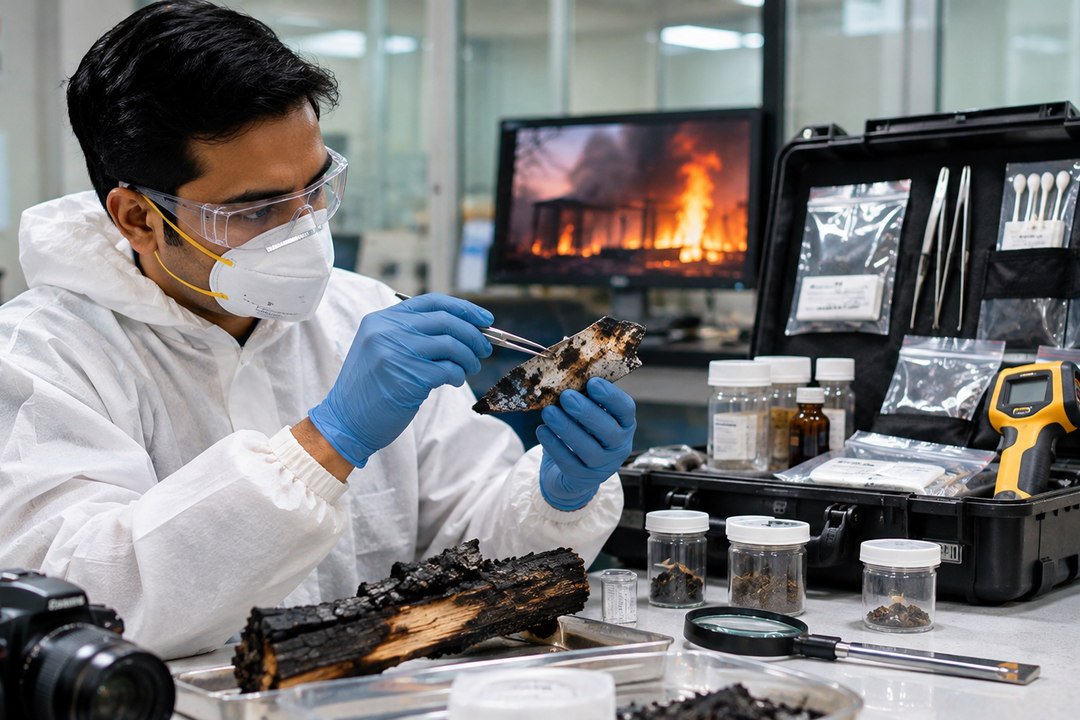
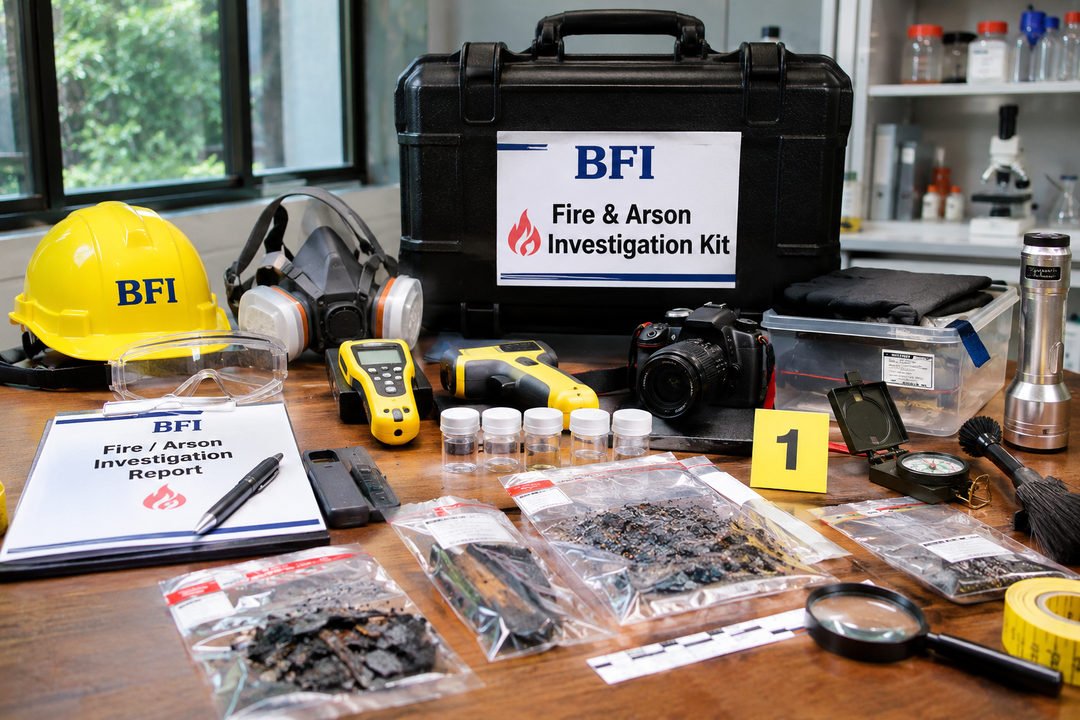
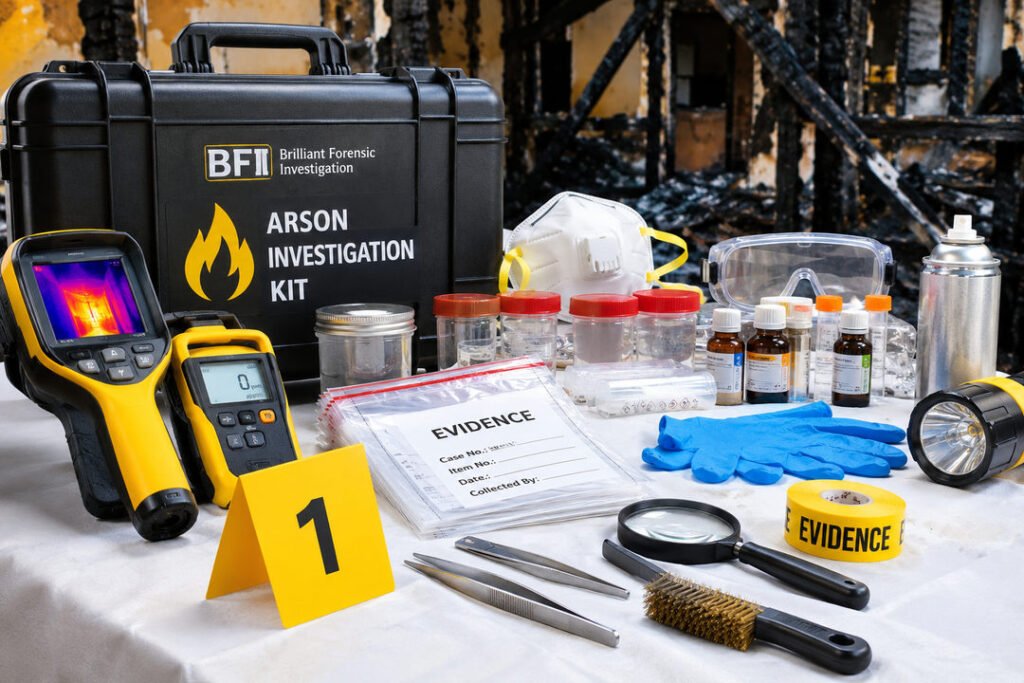
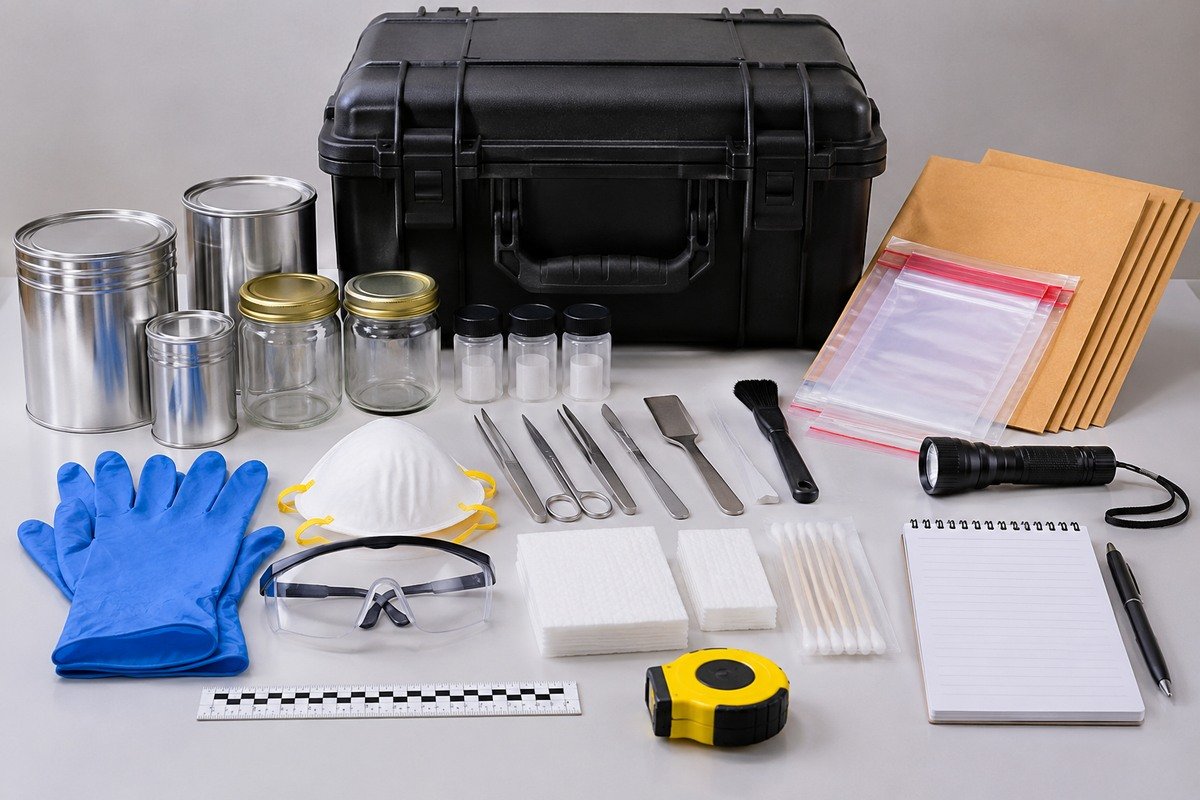
The Arson Investigation Kit is a compact, ready-to-use kit containing essential tools and supplies for collecting fire-scene evidence. It is designed to help investigators properly sample fire debris and potential accelerants, preserve evidence integrity, and follow chain-of-custody procedures. The kit complements BFI’s investigative services by providing investigators with the correct materials for on-scene evidence collection.
The kit components ensure safe and effective evidence collection according to forensic best practices. (Actual kit contents may vary; confirm items against the supplied inventory.)
Airtight Metal Evidence Cans or Glass Jars – Suitable for collecting fire debris and any volatile liquid residues. These containers seal tightly to prevent loss of ignitable vapors. (Heat-sealable bags designed for fire debris can also be used.)
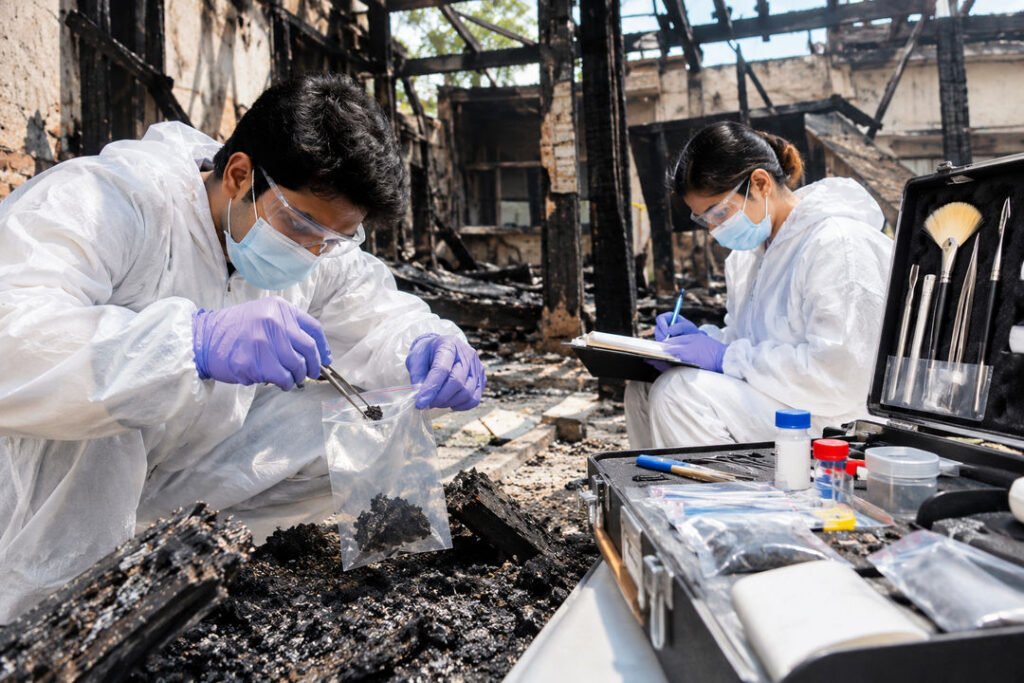
Clean Sampling Tools – Includes stainless-steel forceps, spatulas, scoops, scoops/trowels and scrapers. Use these tools to pick up charred materials, carpet samples, wood pieces or other debris without hand contact.
Sterile Swabs and Absorbent Pads – For collecting liquid samples or wiping up stains. Swabs can soak up small amounts of liquid accelerant or soak up sample from surfaces for lab testing.
Evidence Bags, Envelopes and Sealed Heat-Bags – For non-liquid items like burned clothing, upholstery, paper or insulation. These are typically made of evidence-grade material (nylon/polyester) and can be sealed. (Note: Avoid porous packaging; use airtight containers for any fire residue.)
Disposable Gloves and Masks – Multiple pairs of clean, lint-free gloves (e.g. nitrile) and disposable masks. Change gloves between samples to prevent cross-contamination. Face masks help protect against soot and fumes.
Markers, Labels and Tags – Permanent marker and pre-printed evidence labels/tags. Use them to identify each sample container with case number, item number, location and date. Also includes tamper-evident seals or evidence tape to secure lids.
Chain-of-Custody Forms / Evidence Log Sheets – Standardized field forms or log sheets to record sample details: what was collected, where, by whom and when. This maintains the documentation required for forensic evidence.
Measuring Scale or Tape – A ruler or tape measure (metric) to document sizes or mark evidence in photographs. This helps record the dimensions of debris and scorch patterns.
Blank/Control Samples – Clean, unused gauze or wipes that can serve as negative controls during analysis. (For example, a piece of cloth from outside the fire area to compare background compounds.)
Protective Carrying Case – A durable, padded case or box that holds all kit components. This protects the tools and evidence containers from damage during transport.
Sledge – mallet *1
Hammerhead hatchet *1
Shovel *1
Plastic container *02
Brush dust remover *1
LED recharging light *1
Magnifying glass *1
Cadaver spoon *1
paper envelope *05
Safety goggles *1
Disposable safety suits *1
Wire cutter pliers *1
Scraper/putty knife *1
Screwdriver set *1
ABFO Scale *1
Small all-purpose hack saw *1
Cadaver straightener *1
Black electrical tape *1
Swiss knife *1
Heavy duty rubber gloves *02
shoe cover *10
Headcover *10
Face mask *10
zip lock bag *05
Blade trowel *1
Wood chisel *1
Metal tray, heavy-duty carrying case *1
claw hammer *01
compass *01
adjustable wrench *01
Regular pliers *1
heavy duty masonry Chisel *1
Ensure Safety: Before sampling, wear gloves, mask and any other necessary PPE (as recommended by NFPA and safety protocols).
Document the Scene: Take photographs of the fire scene and note item locations. Fill in the evidence log forms with case details.
Collect Samples Separately: Use clean tools and new gloves for each sample to avoid mixing. Place each sample in its own container (cans/jars for debris, bags for lighter materials). Overfill containers (max ⅔ full) can compromise sealing.
Label and Seal: Immediately label each container clearly with a unique identifier, then seal it with evidence tape. Complete chain-of-custody forms and attach to the evidence.
Prevent Contamination: Avoid touching container openings or lids from the inside. Do not store tools or labels inside evidence cans. If using a reusable case, ensure samples are secured and won’t leak or cross-contaminate.
Transport to Lab: Store samples in a cool, dry place and deliver them promptly to the forensic laboratory for ignitable liquid analysis or other testing. Inform the lab of any special handling needs (e.g. freeze soil samples).
Following these steps helps ensure the evidence remains uncontaminated and analyzable. The kit does not itself detect accelerants; it provides the means to gather and preserve samples for laboratory analysis.
Brilliant Forensic Investigation provides this kit to support professionals investigating fires. By using the proper containers, tools, labels and procedures, the kit ensures that evidence samples are collected systematically and securely. This organized approach reduces contamination risk and strengthens the credibility of the evidence in legal proceedings.
To learn more about using the kit or to purchase it for your team, contact Brilliant Forensic Investigation. We can also arrange training on fire-scene evidence collection and chain-of-custody practices.
Stay prepared for fire investigations – with BFI’s Arson Investigation Kit and expert consultation.