
-
ceo.bfi@gmail.com
Send Email
-
2C, C-6/A Block, Janakpuri, Delhi India 110058
Visit Our Office
99902-92279
Confidentiality Guaranteed
99902-92279
Confidentiality Guaranteed
Video Forensic Services in India
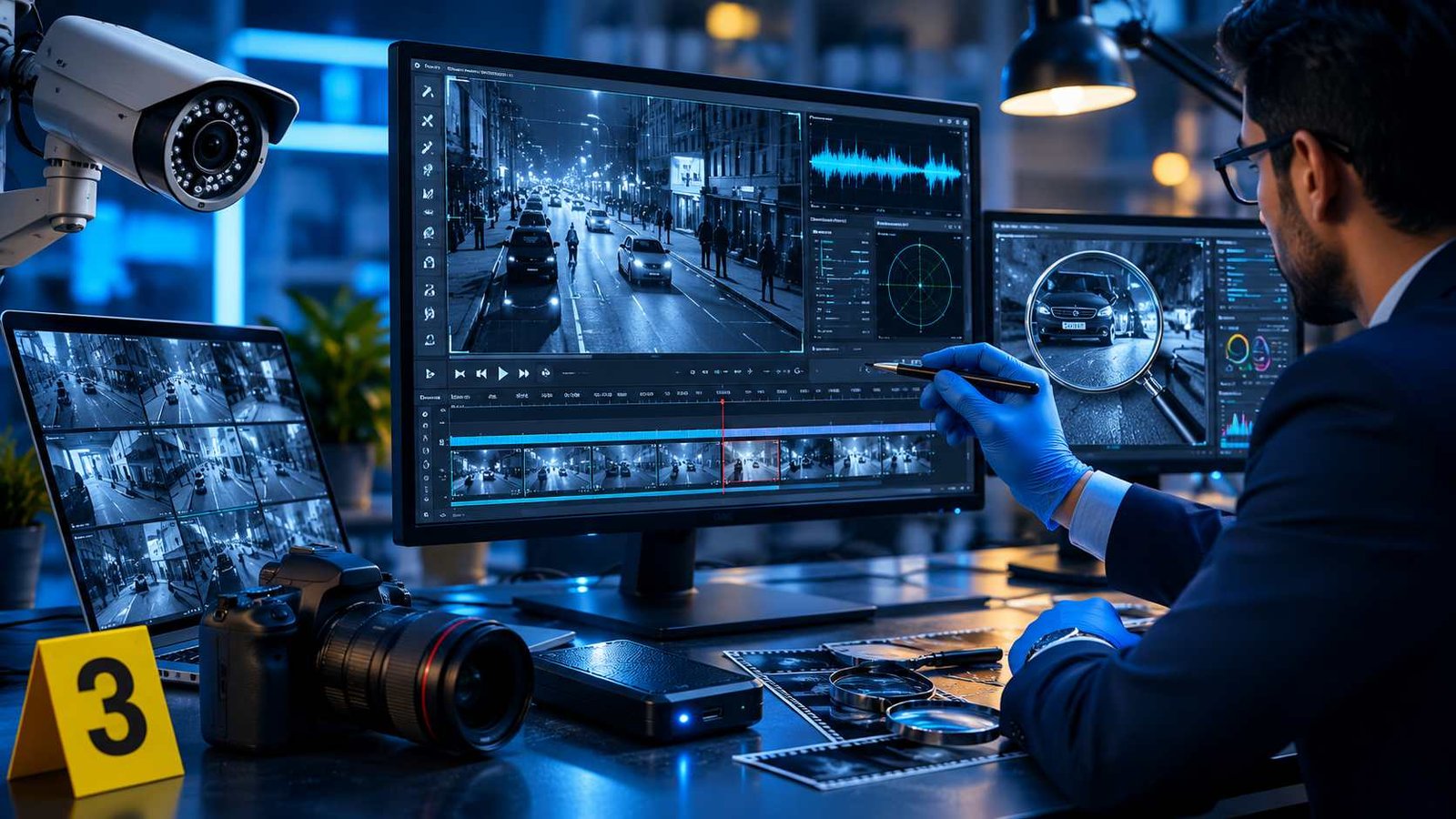
Forensic Video Analysis Expert Services in India
Digital video has become an important source of evidence in modern investigations. CCTV cameras, mobile phones, dashcams, surveillance systems, digital cameras, body-worn recording devices and other imaging systems can capture events that may later become central to a criminal investigation, civil dispute, insurance matter, corporate inquiry, accident investigation or court proceeding. At the same time, digital video evidence can be technically complex. A recording may contain compression, motion blur, low illumination, limited resolution, frame-rate limitations, timestamp discrepancies, re-encoding, format conversion or other characteristics that affect how the footage should be interpreted.
Brilliant Forensic Investigation (BFI) provides professional Forensic Video Analysis Expert Services in India for the scientific examination, clarification, comparison, authentication and interpretation of digital video evidence. BFI approaches every video examination as an evidence-based forensic assignment rather than simply treating it as ordinary video editing or image enhancement. The objective is to determine what information is actually present in the recording, what can be clarified through appropriate processing, what technical characteristics can be established, and what conclusions can reasonably be supported by the available evidence.
Forensic video examination can involve the technical study of the video file itself as well as detailed examination of the visual information contained within individual frames and sequences. Depending on the requirements of a case, BFI may examine image quality, file characteristics, frame sequences, timestamps, recording continuity, visible subjects, vehicles, objects, scene characteristics, movement patterns and relationships between multiple recordings. Where authenticity or alteration is in question, the examination may also consider whether the supplied video is technically consistent with the manner in which it is represented.
BFI provides Forensic Video Analysis Services across India, supporting lawyers, investigators, corporate organizations, insurance professionals, private clients and other authorized stakeholders who require professional examination of video evidence.
What Is Forensic Video Analysis?
Forensic video analysis is the scientific examination and interpretation of video recordings for investigative or legal purposes. It combines principles of digital evidence examination, imaging science, computer-based analysis and visual interpretation to identify information that may be relevant to a specific case.
A forensic video examiner does not simply watch a recording and describe what appears on the screen. The examination may require understanding how the recording was created, how the file was stored, how it was exported, whether it has been converted or re-encoded, whether its sequence is continuous, and how image characteristics affect the visibility of a person, vehicle, object or event.
BFI’s Forensic Video Analysis Expert Services in India are designed around this broader forensic approach. A video may be examined because an incident needs to be reconstructed, because a person’s appearance requires comparison, because a vehicle needs to be examined, because a timestamp is disputed, because footage from several cameras must be correlated, or because questions have arisen concerning possible editing or manipulation.
Video forensic examination can therefore involve two interconnected areas. The first concerns the technical characteristics and integrity of the digital recording. The second concerns the visual information contained in the recording. In a well-designed forensic examination, these two aspects are considered together so that visual interpretation is not separated from the technical circumstances of the evidence.
BFI follows a case-specific methodology so that the examination is directed towards the actual forensic question instead of applying the same processing to every video file.
Why Forensic Video Analysis Is Important
The apparent clarity of a video can be misleading. A recording that looks clear during ordinary playback may contain technical limitations that become significant when a specific evidentiary question is raised. Conversely, footage that appears poor in quality may still contain useful information when examined carefully frame by frame and processed using appropriate forensic techniques.
For example, an investigation may depend on understanding the sequence of a vehicle entering and leaving a property. In another matter, the important question may concern whether an individual remained inside a particular location during a specified period. In an accident investigation, the relevant issue may involve vehicle movement immediately before and after an impact. In a dispute concerning a digital recording, the principal question may instead be whether the supplied file is consistent with its stated source and history.
BFI’s video analysis process is intended to identify these evidentiary questions at the beginning of the examination and then select appropriate methods for addressing them. This approach is important because a useful forensic result is not simply a visually improved video. It is a technically documented interpretation of information that can be supported by the evidence.
Professional forensic video examination also becomes increasingly important as video evidence is repeatedly copied, compressed, uploaded, downloaded, forwarded and converted. A file shared through a messaging application or social-media platform may not be identical to the original recording produced by the camera. A screen recording may capture the appearance of a video without preserving all of the original file characteristics. A converted video may have a different technical structure from the source file. BFI therefore considers source history and file provenance whenever those factors are relevant to the assignment.
BFI CCTV Forensic Video Analysis Services
CCTV footage frequently provides continuous or semi-continuous visual information about activity occurring within a premises or surrounding area. However, surveillance systems can differ significantly in how they record, compress, store and export footage. The recording may also contain multiple cameras, embedded timestamps, proprietary system information and varying levels of image quality.
BFI examines CCTV recordings in their available technical context and conducts a forensic review designed to answer the specific questions presented by the case. The examination may involve locating relevant time periods, assessing the visual quality of the footage, reviewing sequences before and after an incident, extracting important frames, analyzing movement and comparing information between cameras.
A CCTV investigation may also require examination of events that are not immediately obvious during ordinary playback. A person may appear briefly at the edge of the frame, an object may pass through a scene for only a few seconds, or a critical interaction may occur between two adjacent frames. Frame-by-frame analysis can therefore be an important component of the forensic process.
BFI can also examine relationships between different cameras. Where cameras cover connected areas, video from one camera may provide context for footage from another. A person’s movement may be visible first at an entrance, then in an internal corridor and later near an exit. BFI can analyze such sequences to help establish a coherent event timeline.
DVR and NVR Video Forensic Examination
Digital Video Recorders and Network Video Recorders are widely used in surveillance environments, but their recordings may contain technical structures that are different from ordinary consumer video files. Exported footage can vary according to the recording system, export procedure, selected camera channels, recording configuration and software used to generate the copy.
BFI performs forensic examination of available DVR and NVR evidence with attention to the source characteristics of the recording. The assessment may include the duration of the recording, frame characteristics, camera identification, timestamp information, sequence continuity, export characteristics and other technical details relevant to the case.
When a surveillance recording is being collected for a legal or investigative matter, preserving the earliest available source is particularly important. A native system export may retain information that is not present in a subsequently converted or screen-recorded copy. BFI therefore recommends preserving the original available recording and maintaining separate working copies for processing whenever the circumstances of the case allow.
Where multiple camera channels exist, BFI can review them in relation to one another and identify sequences that may be relevant to event reconstruction, subject movement, entry and exit activity or other investigative questions.
Forensic Video Enhancement and Video Clarification
Video enhancement is one of the most requested forensic video services, but it is frequently misunderstood. Enhancement does not mean creating new factual information. It involves processing the visual information that already exists in the recording so that relevant features can become more observable.
BFI may perform carefully selected enhancement procedures depending on the technical characteristics of the footage. These may include brightness and tonal adjustment, contrast enhancement, noise reduction, sharpening, stabilization, deinterlacing, frame extraction, multi-frame analysis and other appropriate image-processing methods.
The specific technique selected depends on the problem affecting the footage. A night-time recording may require tonal adjustment and noise management. A moving camera may require stabilization. Interlaced surveillance footage may require appropriate deinterlacing. A relevant subject that appears across several frames may benefit from multi-frame examination. A poorly visible area may require focused region-of-interest processing.
BFI maintains a distinction between the original recording and the enhanced output. This is essential because an enhanced image is a processed representation of the original evidence, not a replacement for it. The purpose of enhancement is to improve the visibility or interpretability of existing information while preserving transparency about what processing has been performed.
Can Blurry CCTV Footage Be Made Clearer?
Whether blurry CCTV footage can be improved depends primarily on the information captured by the original recording. If a face, license plate, object or other feature is represented with sufficient underlying visual information, appropriate processing may improve its visibility. If the relevant detail was never captured because of extreme blur, very low resolution, distance, obstruction, darkness or severe compression, no legitimate forensic technique can guarantee that the missing information can be reconstructed with certainty.
BFI evaluates the quality and limitations of the source material before drawing conclusions. This approach is especially important when clients are seeking identification from difficult footage. Image enhancement may make a face easier to observe without making the identity scientifically certain. Similarly, enlargement of a number plate region may make the plate area easier to inspect without guaranteeing recovery of characters that were not adequately recorded.
A professional forensic video report should therefore explain not only what became more visible after processing, but also the limitations that remain.
Frame-by-Frame Forensic Video Analysis
Important events can occur very quickly, and ordinary playback can cause critical visual information to be overlooked. BFI conducts frame-by-frame video analysis where the circumstances of a case require detailed examination of individual frames or short sequences.
Frame-by-frame analysis allows an examiner to inspect how a subject, vehicle, object or scene changes from one frame to the next. This can assist in understanding movement, contact, entry, exit, object transfer, sudden events, direction changes and other short-duration occurrences.
A sequence can also be examined for continuity. Depending on the nature of the file, the analysis may consider whether frames appear to progress consistently, whether there are unusual gaps or repetitions, and whether the sequence contains technical characteristics that require additional investigation.
Frame extraction can be particularly useful for forensic reporting because relevant moments can be presented as selected still images linked to their positions within the video sequence. This allows the reader of a report to understand how the examiner reached a particular observation.
Forensic Video Authentication Services in India
Video authentication involves examining whether a digital video is technically and contextually consistent with what it is claimed to represent. It is broader than checking whether a file plays correctly on a computer or whether the video appears visually normal.
BFI’s Video Authentication Services in India can involve examination of file structure, metadata, encoding characteristics, sequence continuity, visible content, timestamps, source information and other technically relevant features. The exact examination depends on the question being asked and the evidence available.
Authentication may become important when a party disputes the origin, integrity or history of a recording. For example, a video may be alleged to be an original CCTV recording while another party questions whether it was exported from the stated surveillance system. In another case, a recording may have circulated through several devices or platforms before reaching the investigator. The forensic examination then needs to consider not only the visual content but also the technical history that can reasonably be established.
BFI presents authentication findings carefully and distinguishes technical observations from broader assumptions about the circumstances in which a file was obtained.
Video Tampering and Manipulation Examination
Digital video can be altered in many different ways. Manipulation can include trimming, re-encoding, insertion or removal of material, changes to sequences, conversion between formats, addition of visual elements, audio manipulation or other forms of processing.
BFI conducts case-specific examination for indicators that may be relevant to suspected video manipulation. Depending on the evidence, this can include assessment of frame continuity, encoding characteristics, file structure, metadata, sequence behavior and visible inconsistencies.
The presence of an unusual technical feature does not automatically establish deliberate tampering. A video can be re-encoded simply because it was exported from one system and converted for playback on another. Metadata can also change during ordinary file handling. For this reason, BFI evaluates technical findings in context instead of treating a single anomaly as conclusive proof of manipulation.
This distinction is particularly important in legal cases where the difference between technical processing and intentional alteration may have significant consequences.
CCTV Timestamp and Timeline Verification
A timestamp displayed on a surveillance image can become an important part of an investigation, but the displayed time should not automatically be treated as an unquestionable representation of actual clock time.
BFI can examine visible timestamps together with file characteristics, recording sequences, available system information and other relevant evidence to assess the consistency of a video timeline. Where multiple cameras are available, their sequences may be compared to identify timing relationships and possible discrepancies.
Timeline analysis can be relevant in accident investigations, criminal cases, workplace incidents, access disputes, property matters and other situations where establishing the order or approximate timing of events is important.
BFI’s role is to document the available technical evidence and explain the basis and limitations of any timeline interpretation. Where the evidence does not permit exact determination of actual time, the report can state that limitation rather than treating an uncertain timestamp as a precise fact.
Multi-Camera Video Synchronization and Event Reconstruction
Many incidents are recorded from several camera locations rather than a single viewpoint. One camera may capture an approach, another may capture an interaction and a third may record the subsequent movement of a person or vehicle.
BFI can analyze multiple recordings together to reconstruct the sequence of an event. This may involve identifying common visual events, comparing timestamps, matching subjects or vehicles, examining overlapping views and determining how the recordings relate to one another.
Multi-camera reconstruction can be especially valuable when no individual camera captures the entire incident. By reviewing the available evidence collectively, BFI can develop a structured understanding of what is visible across the surveillance environment.
The resulting reconstruction remains dependent on the availability and quality of the recordings. Missing cameras, overwritten footage, unsynchronized systems and incomplete exports may limit what can be established. BFI clearly documents those limitations within the forensic analysis.
Person Identification and Video-Based Subject Comparison
Video recordings may contain important information about persons involved in an incident, but the feasibility of identification depends strongly on image quality and visibility.
BFI can examine visible characteristics such as clothing, footwear, accessories, body proportions, movement, posture and other observable features. Where facial imagery is sufficiently detailed and suitable for comparison, BFI can perform a structured forensic assessment of visible facial characteristics using the available reference material.
Video-based subject comparison must be distinguished from ordinary visual recognition. A resemblance between two images does not automatically establish identity. Camera angle, resolution, lighting, motion blur, compression, facial pose and occlusion can all influence the reliability of a comparison.
BFI therefore assesses whether the footage is suitable for the particular comparison requested and reports the findings with appropriate consideration of the quality and limitations of the evidence.
Forensic Facial Video Analysis
Facial imagery extracted from CCTV or digital video may require significant processing before a meaningful comparison can be attempted. BFI can analyze relevant facial regions, improve visibility where technically justified and examine observable characteristics across appropriate frames.
The quality of the source is central to the examination. A face captured at sufficient resolution with limited movement and reasonable illumination provides a different evidentiary basis from a face appearing for a fraction of a second at a distance.
BFI therefore does not equate image enhancement with automatic identification. The forensic question is whether the available visual information supports a meaningful comparison and, if so, what findings can be supported by the evidence.
Where the footage is insufficient for reliable comparison, BFI can document why the limitation exists.
Gait and Movement Pattern Examination
A person’s walking or movement pattern may sometimes provide additional information when facial detail is unavailable. BFI can examine movement characteristics when suitable footage permits such analysis.
The examination may consider the sequence and rhythm of walking, posture, stride characteristics, arm movement, body mechanics and other visible features across the available recording.
The reliability of gait-related interpretation depends on factors such as viewing angle, distance, walking speed, footwear, clothing, carrying conditions, camera position and video quality. Because these factors can significantly affect observed movement, BFI treats gait examination as a specialized, context-dependent analysis rather than as an infallible identification method.
Vehicle and License Plate Video Analysis
Vehicle identification is a significant component of forensic video analysis in accident investigations, theft investigations, property incidents, road-related disputes and other cases where a vehicle forms part of the evidence.
BFI can examine visible characteristics including body shape, color, markings, accessories, wheel configuration, damage, lighting characteristics and other distinctive features. Where the number-plate region has sufficient visual information, the footage may also be processed to improve its visibility.
The possibility of recovering a readable license plate depends on the original capture. Distance, shutter speed, motion blur, camera angle, low illumination, compression and the number of pixels representing the characters all affect the result.
BFI does not claim that enhancement can manufacture missing characters. Instead, the analysis seeks to determine whether the source recording contains sufficient information to support an observation or comparison.
Object Tracking and Scene Analysis
A video may contain important evidence that is not directly associated with a person’s identity. Bags, packages, tools, devices, vehicles, machinery and other objects may play a central role in an investigation.
BFI can examine the appearance and movement of relevant objects through video sequences. When multiple cameras are involved, the same object may be tracked between different locations where visual continuity permits.
Scene analysis can also involve examination of spatial relationships. The position of a person relative to a door, vehicle, object, entrance, staircase or other feature may help explain what can be observed in a particular sequence.
BFI documents observations based on the visual evidence rather than assuming facts that cannot be established from the recording.
Accident and Road Incident Video Analysis
Video recordings can be valuable in accident investigations because they may capture vehicle movement before, during and after an incident.
BFI can examine available footage to assess visible movement, direction of travel, vehicle positioning, interactions between road users, sequence of events and post-event movement. Relevant material may come from CCTV cameras, dashcams, mobile devices, commercial premises or other surveillance sources.
In a road incident involving multiple recordings, BFI may correlate video sequences to establish how the same event appears from different perspectives. The objective is to create a documented sequence from the available evidence while acknowledging perspective limitations and incomplete coverage.
Criminal Investigation Video Forensics
Video evidence may become relevant to investigations involving theft, robbery, assault, burglary, fraud, vandalism, trespass, property offences, suspicious activity, vehicle incidents and other forms of alleged wrongdoing.
BFI can review footage to identify relevant event periods, clarify important frames, assess person or vehicle characteristics, reconstruct movement and examine the consistency of the recording with the investigative question.
The forensic examination can be particularly useful when large quantities of CCTV footage exist and investigators need a technically structured analysis rather than a purely manual review.
Corporate Video Forensic Investigation
Organizations may require independent forensic analysis when surveillance footage is connected to internal incidents, unauthorized entry, theft, inventory discrepancies, workplace disputes, property damage, security events or other investigations.
BFI can examine corporate surveillance footage in the context of the specific question presented by the organization. This may include reviewing relevant time periods, analyzing person or vehicle movement, comparing multiple cameras, assessing footage quality and documenting technical findings.
Corporate video evidence can also become part of broader digital investigations. Where appropriate, BFI can coordinate video examination with the wider evidentiary context of a matter.
Social Media and Messaging-Application Video Forensics
Videos increasingly reach investigators through online platforms and messaging systems. A recording may be downloaded, forwarded, compressed, cropped or re-encoded before it is submitted for examination.
BFI can examine supplied digital video files for relevant technical and visual characteristics and can document limitations resulting from derivative copies.
Where the original source is unavailable, the report can distinguish between what can be established about the supplied file and what cannot be established about the original recording. This distinction is particularly important when authenticity, provenance or editing is disputed.
Screen Recording Forensic Examination
A screen recording captures what was displayed on a device rather than necessarily preserving all of the technical properties of the original video file.
BFI can examine screen-recorded material for visible timestamps, displayed sequences, playback interfaces, cropping, re-recording characteristics and other relevant features. However, the evidentiary scope may be narrower than that available from the original source file.
Whenever possible, BFI recommends preserving the earliest available version of the recording in addition to any screen recording or derivative copy.
Video Metadata Forensic Examination
Metadata can provide technical information about a file and its creation or processing history, although its availability and evidentiary value vary between file types and recording systems.
BFI can examine available metadata together with file structure, encoding characteristics and other technical information. Depending on the recording, metadata may provide information relating to duration, resolution, codec, software processing, device characteristics or other file properties.
Metadata is generally interpreted as part of a broader forensic examination rather than as a single decisive indicator of authenticity. Information can be changed or removed through ordinary transfer, conversion and editing processes, and BFI therefore considers metadata in its proper technical context.
Video File Corruption and Recovery Assessment
Digital video may become damaged because of storage failure, interrupted exports, incomplete transfers, file corruption or other technical problems.
BFI can assess corrupted or partially inaccessible video to determine whether usable information remains available. Depending on the condition of the file, the examination may involve structural assessment, recovery attempts, partial playback analysis and extraction of recoverable frames or sequences.
Recovery cannot always restore a complete recording. However, even a partially recoverable file may contain useful forensic information. BFI documents what was successfully recovered and distinguishes recovered material from the original unavailable data.
Deepfake and AI-Manipulated Video Forensic Examination
The development of generative artificial intelligence has created additional challenges for the evaluation of digital video evidence. Synthetic or AI-assisted manipulation may affect facial appearance, expressions, visual continuity, movement, scene content or other aspects of a recording.
BFI can assess suspicious video for technical and visual characteristics relevant to potential manipulation. The examination may consider frame-to-frame consistency, facial behavior, lighting relationships, edge transitions, temporal continuity, encoding characteristics, metadata and source history.
AI-based indicators should not automatically be treated as conclusive proof of manipulation. A reliable forensic assessment requires consideration of the actual recording, the available source material and the particular characteristics of the suspected alteration.
BFI therefore approaches potential deepfake examination as a broader forensic assessment rather than relying on a single automated indicator.
Forensic Video Analysis for Lawyers and Legal Professionals
Lawyers may require independent technical analysis of video evidence before presenting it in a legal matter. BFI can assist with examination of CCTV footage, disputed digital recordings, video enhancement, timeline analysis, technical review, comparison and forensic reporting.
BFI can also provide technical explanations concerning the difference between an original file and a processed copy, the implications of video compression, the significance of timestamps, and the limitations of identification from low-quality recordings.
Where appropriate and subject to the requirements of the particular proceeding, BFI’s technical findings can be used to support legal professionals in understanding the scientific aspects of digital video evidence.
Forensic Video Analysis for Investigators
Investigators may be required to review many hours of video from multiple sources. BFI can help organize and examine this material in a structured manner.
The examination can focus on relevant time periods, camera sequences, subject movement, vehicle activity, object movement and events surrounding a specific incident.
A technically structured review can also help investigators identify which portions of the footage deserve closer attention and which additional recordings may be important to obtain.
Forensic Video Analysis for Corporate Organizations
Corporate surveillance systems can produce extensive video evidence relating to security incidents, workplace disputes, unauthorized access, theft, property damage and other internal investigations.
BFI provides case-specific forensic examination designed to address the organization’s stated investigative question while maintaining professional handling of sensitive digital material.
Where a matter involves multiple video sources or a significant amount of footage, BFI can help establish a more organized evidentiary sequence and document relevant findings in a formal forensic format.
Why Choose BFI for Forensic Video Analysis?
Brilliant Forensic Investigation (BFI) approaches forensic video analysis as a scientific evidence examination rather than ordinary video editing. The focus is on understanding the source material, selecting technically appropriate methods, documenting what has been done and communicating the findings clearly.
BFI recognizes that different cases require different forms of analysis. Some matters require only technical clarification. Others require authentication, timeline assessment, multi-camera analysis, subject comparison or detailed event reconstruction.
A major part of BFI’s approach is the recognition of limitations. Reliable forensic work is not about forcing a conclusion from insufficient footage. It is about stating what the evidence supports and explaining when the evidence does not support a stronger conclusion.
This evidence-centered approach is particularly important where video evidence may later be scrutinized by legal professionals, investigators or a court.
BFI Forensic Video Analysis Report
A professional forensic report should allow the reader to understand the evidence, methodology and conclusions without having to repeat the entire examination independently.
A BFI forensic video report can describe the material examined, the purpose of the assignment, the technical characteristics of the recordings, the methods applied, the relevant observations, comparative findings where applicable and the limitations affecting interpretation.
Selected frames, video references and illustrative material can also be incorporated where useful for explaining the findings.
The report is designed to communicate technical evidence in a structured manner while preserving the distinction between the source recording and processed outputs.
How BFI Video Forensics Supports Digital Evidence Investigations
Video frequently forms one component of a larger digital evidence environment. A CCTV recording may need to be considered alongside mobile-phone evidence, digital documents, photographs, access records, emails or other electronic information.
BFI’s video examination can provide an important visual component within a broader forensic investigation by documenting the characteristics of the recording and extracting relevant information from the footage.
Where several categories of evidence are available, consistency between independent sources can become an important part of understanding a case. BFI therefore considers the context supplied with the video and identifies where additional source material may be relevant to the assigned forensic question.
Contact BFI for Forensic Video Analysis Expert Services in India
When video evidence becomes important to an investigation, ordinary playback may not be enough. Professional forensic analysis can help determine what the recording contains, what can be clarified, whether technical inconsistencies require investigation, how multiple sequences relate to one another and what findings can be supported by the evidence.
Brilliant Forensic Investigation (BFI) provides Forensic Video Analysis Expert Services in India for CCTV footage, digital video evidence, surveillance recordings, accident footage, disputed recordings, corporate investigations, insurance matters and legal proceedings.
BFI can assist with forensic video enhancement, CCTV examination, frame-by-frame analysis, authentication assessment, tampering examination, timeline analysis, person and vehicle examination, multi-camera reconstruction, deepfake video assessment and formal forensic reporting.

📞 Contact Us: 9990292279
🌐 Visit Our Website: https://forensicexpertinvestigation.com/
✉️ Email: ceo.bfi@gmail.com
Frequently Asked Questions (FAQs)
-
What is forensic video analysis?
Forensic video analysis is the scientific examination, comparison and interpretation of digital video for investigative or legal purposes. It can involve technical examination of the file, frame-by-frame analysis, image clarification, timeline analysis, comparison, authentication assessment and event reconstruction.
-
Can BFI analyze CCTV footage?
Yes. BFI provides forensic examination of CCTV footage originating from surveillance systems, including technical assessment, visual analysis, enhancement, frame examination, timeline review and multi-camera reconstruction where appropriate.
-
Can BFI improve blurry CCTV footage?
BFI can attempt appropriate forensic enhancement when the source contains sufficient underlying visual information. The result depends on the resolution, blur, compression, lighting, camera distance and other characteristics of the original recording.
-
Can BFI determine whether a video has been edited?
BFI can examine relevant technical and visual indicators associated with possible alteration or reprocessing. Any conclusion depends on the characteristics of the actual file and the available source information.
-
Can BFI authenticate a digital video?
BFI can conduct a forensic authentication-oriented examination involving the technical and contextual characteristics of the supplied recording. The scope of authentication depends on the evidence available and the question presented.
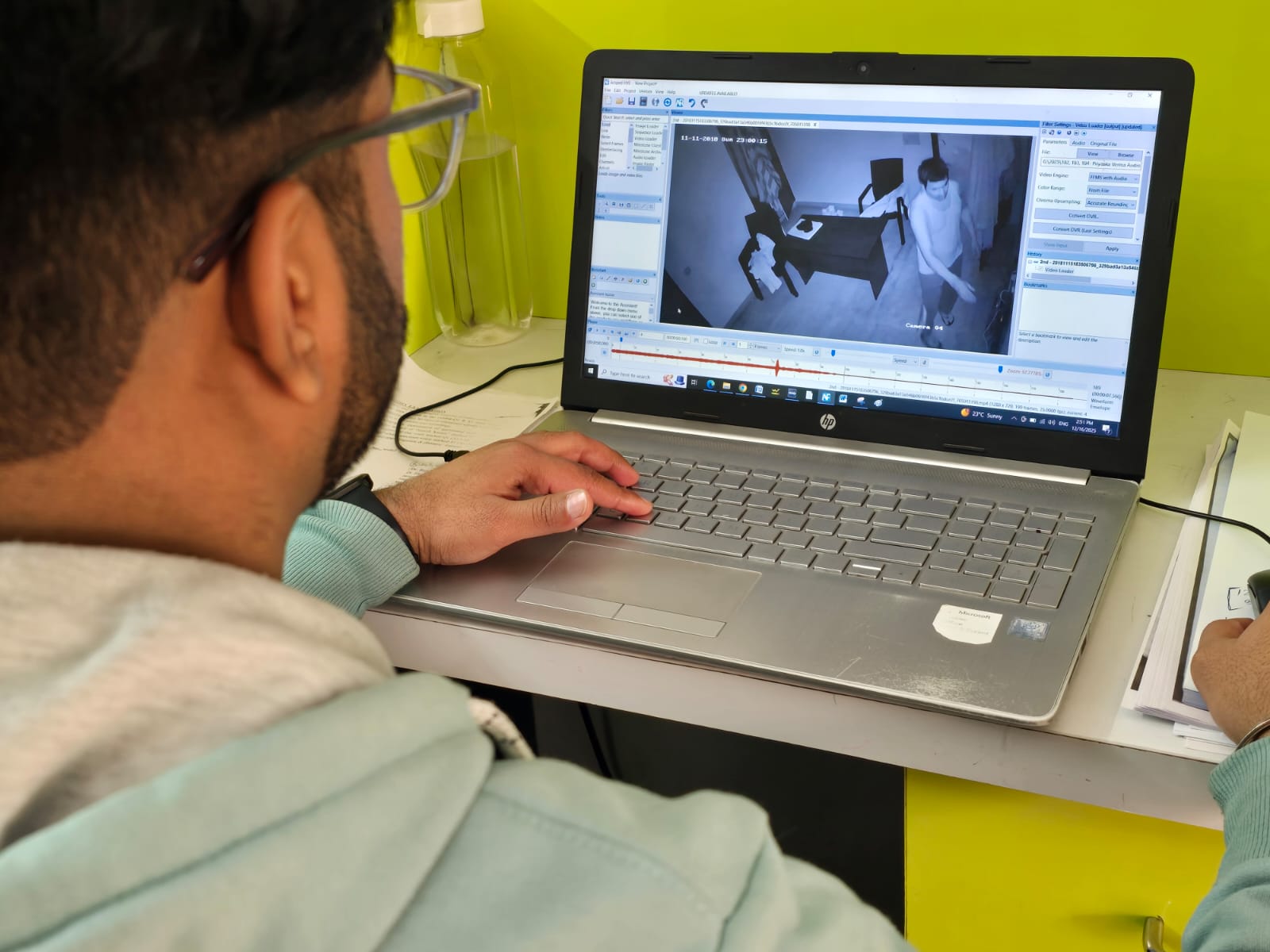
Video Analysis Expert Services in India
Video Analysis Expert Services in Andaman and Nicobar Islands (union territory)-Port Blair | Video Analysis Expert Services in Andhra Pradesh – Adoni, Amaravati, Anantapur, Chandragiri, Chittoor, Dowlaiswaram, Eluru, Guntur, Kadapa, Kakinada, Kurnool, Machilipatnam, Nagarjunakoṇḍa, Rajahmundry, Srikakulam, Tirupati, Vijayawada, Visakhapatnam, Vizianagaram, Yemmiganur | Video Analysis Expert Services in Arunachal Pradesh – Itanagar | Video Analysis Expert Services in Assam – Dhuburi, Dibrugarh, Dispur, Guwahati, Jorhat, Nagaon, Sivasagar, Silchar, Tezpur, Tinsukia | Video Analysis Expert Services in Bihar – Ara, Barauni, Begusarai, Bettiah, Bhagalpur, Bihar Sharif, Bodh Gaya, Buxar, Chapra, Darbhanga, Dehri, Dinapur Nizamat, Gaya, Hajipur, Jamalpur, Katihar, Madhubani, Motihari, Munger, Muzaffarpur, Patna, Purnia, Pusa, Saharsa, Samastipur, Sasaram, Sitamarhi, Siwan | Video Analysis Expert Services in Chandigarh (union territory) – Chandigarh | Video Analysis Expert Services in Chhattisgarh – Ambikapur, Bhilai, Bilaspur, Dhamtari, Durg, Jagdalpur, Raipur, Rajnandgaon | Video Analysis Expert Services in Dadra and Nagar Haveli and Daman and Diu (union territory) – Daman, Diu, Silvassa | Video Analysis Expert Services in Delhi (national capital territory) – Delhi, New Delhi |Video Analysis Expert Services in Goa – Madgaon, Panaji | Forensic Crime Scene Investigation – Services in Gujarat – Ahmadabad, Amreli, Bharuch, Bhavnagar, Bhuj, Dwarka, Gandhinagar, Godhra, Jamnagar, Junagadh, Kandla, Khambhat, Kheda, Mahesana, Morbi, Nadiad, Navsari, Okha, Palanpur, Patan, Porbandar, Rajkot, Surat, Surendranagar, Valsad, Veraval | Video Analysis Expert Services in Haryana – Ambala, Bhiwani, Chandigarh, Faridabad, Firozpur Jhirka, Gurugram, Hansi, Hisar, Jind, Kaithal, Karnal, Kurukshetra, Panipat, Pehowa, Rewari, Rohtak, Sirsa, Sonipat | Video Analysis Expert Services in Himachal Pradesh – Bilaspur, Chamba, Dalhousie, Dharmshala, Hamirpur, Kangra, Kullu, Mandi, Nahan, Shimla, Una | Video Analysis Expert Services in Jammu and Kashmir (union territory) – Anantnag, Baramula, Doda, Gulmarg, Jammu, Kathua, Punch, Rajouri, Srinagar, Udhampur | Video Analysis Expert Services in Jharkhand – Bokaro, Chaibasa, Deoghar, Dhanbad, Dumka, Giridih, Hazaribag, Jamshedpur, Jharia, Rajmahal, Ranchi, Saraikela | Video Analysis Expert Services in Karnataka – Badami, Ballari, Bengaluru, Belagavi, Bhadravati, Bidar, Chikkamagaluru, Chitradurga, Davangere, Halebid, Hassan, Hubballi-Dharwad, Kalaburagi, Kolar, Madikeri, Mandya, Mangaluru, Mysuru, Raichur, Shivamogga, Shravanabelagola, Shrirangapattana, Tumakuru, Vijayapura | Video Analysis Expert Services in Kerala – Alappuzha, Vatakara, Idukki, Kannur, Kochi, Kollam, Kottayam, Kozhikode, Mattancheri, Palakkad, Thalassery, Thiruvananthapuram, Thrissur | Video Analysis Expert Services in Ladakh (union territory) – Kargil, Leh | Video Analysis Expert Services in Madhya Pradesh – Balaghat, Barwani, Betul, Bharhut, Bhind, Bhojpur, Bhopal, Burhanpur, Chhatarpur, Chhindwara, Damoh, Datia, Dewas, Dhar, Dr. Ambedkar Nagar (Mhow), Guna, Gwalior, Hoshangabad, Indore, Itarsi, Jabalpur, Jhabua, Khajuraho, Khandwa, Khargone, Maheshwar, Mandla, Mandsaur, Morena, Murwara, Narsimhapur, Narsinghgarh, Narwar, Neemuch, Nowgong, Orchha, Panna, Raisen, Rajgarh, Ratlam, Rewa, Sagar, Sarangpur, Satna, Sehore, Seoni, Shahdol, Shajapur, Sheopur, Shivpuri, Ujjain, Vidisha | Video Analysis Expert Services in Maharashtra – Ahmadnagar, Akola, Amravati, Aurangabad, Bhandara, Bhusawal, Bid, Buldhana, Chandrapur, Daulatabad, Dhule, Jalgaon, Kalyan, Karli, Kolhapur, Mahabaleshwar, Malegaon, Matheran, Mumbai, Nagpur, Nanded, Nashik, Osmanabad, Pandharpur, Parbhani, Pune, Ratnagiri, Sangli, Satara, Sevagram, Solapur, Thane, Ulhasnagar, Vasai-Virar, Wardha, Yavatmal |Video Analysis Expert Services in Manipur – Imphal | Video Analysis Expert Services in Meghalaya – Cherrapunji, Shillong | Video Analysis Expert Services in Mizoram – Aizawl, Lunglei | Video Analysis Expert Services in Nagaland – Kohima, Mon, Phek, Wokha, Zunheboto | Video Analysis Expert Services in Odisha – Balangir, Baleshwar, Baripada, Bhubaneshwar, Brahmapur, Cuttack, Dhenkanal, Kendujhar, Konark, Koraput, Paradip, Phulabani, Puri, Sambalpur, Udayagiri | Video Analysis Expert Services in Puducherry (union territory) – Karaikal, Mahe, Puducherry, Yanam | Video Analysis Expert Services in Punjab – Amritsar, Batala, Chandigarh, Faridkot, Firozpur, Gurdaspur, Hoshiarpur, Jalandhar, Kapurthala, Ludhiana, Nabha, Patiala, Rupnagar, Sangrur | Video Analysis Expert Services in Rajasthan – Abu, Ajmer, Alwar, Amer, Barmer, Beawar, Bharatpur, Bhilwara, Bikaner, Bundi, Chittaurgarh, Churu, Dhaulpur, Dungarpur, Ganganagar, Hanumangarh, Jaipur, Jaisalmer, Jalor, Jhalawar, Jhunjhunu, Jodhpur, Kishangarh, Kota, Merta, Nagaur, Nathdwara, Pali, Phalodi, Pushkar, Sawai Madhopur, Shahpura, Sikar, Sirohi, Tonk, Udaipur | Video Analysis Expert Services in Sikkim – Gangtok, Gyalshing, Lachung, Mangan | Video Analysis Expert Services in Tamil Nadu – Arcot, Chengalpattu, Chennai, Chidambaram, Coimbatore, Cuddalore, Dharmapuri, Dindigul, Erode, Kanchipuram, Kanniyakumari, Kodaikanal, Kumbakonam, Madurai, Mamallapuram, Nagappattinam, Nagercoil, Palayamkottai, Pudukkottai, Rajapalayam, Ramanathapuram, Salem, Thanjavur, Tiruchchirappalli, Tirunelveli, Tiruppur, Thoothukudi, Udhagamandalam, Vellore | Video Analysis Expert Services in Telangana – Hyderabad, Karimnagar, Khammam, Mahbubnagar, Nizamabad, Sangareddi, Warangal | Video Analysis Expert Services in Tripura – Agartala | Video Analysis Expert Services in Uttar Pradesh – Agra, Aligarh, Amroha, Ayodhya, Azamgarh, Bahraich, Ballia, Banda, Bara Banki, Bareilly, Basti, Bijnor, Bithur, Budaun, Bulandshahr, Deoria, Etah, Etawah, Faizabad, Farrukhabad-cum-Fatehgarh, Fatehpur, Fatehpur Sikri, Ghaziabad, Ghazipur, Gonda, Gorakhpur, Hamirpur, Hardoi, Hathras, Jalaun, Jaunpur, Jhansi, Kannauj, Kanpur, Lakhimpur, Lalitpur, Lucknow, Mainpuri, Mathura, Meerut, Mirzapur-Vindhyachal, Moradabad, Muzaffarnagar, Partapgarh, Pilibhit, Prayagraj, Rae Bareli, Rampur, Saharanpur, Sambhal, Shahjahanpur, Sitapur, Sultanpur, Tehri, Varanasi | Video Analysis Expert Services in Uttarakhand – Almora, Dehra Dun, Haridwar, Mussoorie, Nainital, Pithoragarh | Video Analysis Expert Services in West Bengal – Alipore, Alipur Duar, Asansol, Baharampur, Bally, Balurghat, Bankura, Baranagar, Barasat, Barrackpore, Basirhat, Bhatpara, Bishnupur, Budge Budge, Burdwan, Chandernagore, Darjeeling, Diamond Harbour, Dum Dum, Durgapur, Halisahar, Haora, Hugli, Ingraj Bazar, Jalpaiguri, Kalimpong, Kamarhati, Kanchrapara, Kharagpur, Cooch Behar, Kolkata, Krishnanagar, Malda, Midnapore, Murshidabad, Nabadwip, Palashi, Panihati, Purulia, Raiganj, Santipur, Shantiniketan, Shrirampur, Siliguri, Siuri, Tamluk, Titagarh.
Video Analysis Expert services in Various Cities of India
Brilliant Forensic Investigation (BFI) provides forensic investigation and expert services across major cities and regions in India, including Mumbai, New Delhi, Bangalore, Hyderabad, Ahmedabad, Chennai, Kolkata, Surat, Pune, Jaipur, Lucknow, Kanpur, Nagpur, Indore, Thane, Bhopal, Visakhapatnam, Pimpri-Chinchwad, Patna, Vadodara, Ghaziabad, Ludhiana, Agra, Nashik, Meerut, Kalyan-Dombivali, Vasai-Virar, Varanasi, Srinagar, Aurangabad, Dhanbad, Amritsar, Navi Mumbai, Allahabad, Howrah, Ranchi, Gwalior, Coimbatore, Vijayawada, Jodhpur, Madurai, Raipur, Kota, Chandigarh, Guwahati, Solapur, Hubballi-Dharwad, Nellore, Bhavnagar, Dehradun, Durgapur, Asansol, Rourkela, Nanded, Kolhapur, Ajmer, Akola, Gulbarga, Mangalore, Erode, Belgaum, Ambattur, Tirunelveli, Malegaon, Gaya, Jalgaon, Udaipur, Maheshtala, Davanagere, Kozhikode, Kurnool, Rajpur-Sonarpur, Bhatpara, Rajahmundry, Bokaro, South Dumdum, Bellary, Patiala, Gopalpur, Agartala, Bhagalpur, Muzaffarnagar, Ahmednagar, Mathura, Kollam, Avadi, Kadapa, Kamarhati, Sambalpur, Bilaspur, Shahjahanpur, Satara, Bijapur, Rampur, Shivamogga, Chandrapur, Junagadh, Thrissur, Alwar, Bardhaman, Kulti, Kakinada, Nizamabad, Parbhani, Tumkur, Khammam, Ozhukarai, Bihar Sharif, Panipat, Darbhanga, Bally, Aizawl, Dewas, Ichalkaranji, Karnal, Bathinda, Jalna, Eluru, Kirari Suleman Nagar, Mehsana, Durg, Barasat, Purnia, Satna, Mau, Sonipat, Farrukhabad, Sagar, Imphal, Ratlam, Hapur, Begusarai, Gandhidham, Baranagar, Tiruvottiyur, Puducherry, Sikar, Thoothukudi, Rewa, Mirzapur, Raichur, Pali, Ramagundam, Haridwar, Thanjavur, Bulandshahr, Uluberia, Murwara, Sambhal, Singrauli, Nadiad, Secunderabad, Naihati, Bidhannagar, Pallavaram, Bidar, Munger, Panchkula, Burhanpur, Raurkela Industrial Township, Chittoor, Jehanabad, Kharagpur, Dindigul, Gandhinagar, Hospet, Nangloi Jat, Malda, Ongole, Deoghar, Chapra, Haldia, Khandwa, Nandyal, Morena, Amroha, Anand, Bhind, Bhalswa Jahangir Pur, Rae Bareli, Madhyamgram, Bhiwani, Panvel, Baharampur, Ambala, Morbi, Fatehpur, Mahabubnagar, Bhusawal, Orai, Bahraich, Vellore, Raiganj, Sirsa, Danapur, Serampore, Sultan Pur Majra, Guna, Jaunpur, Shivpuri, Surendranagar-Dudhrej, Kumbakonam, Dehri, Madanapalle, Phagwara, Narasaraopet, Tadipatri, Kishanganj, Karaikudi, Faridabad, Rajkot, Jabalpur, Tiruchirappalli, Bareilly, Mysore, Tiruppur, Gurgaon, Aligarh, Jalandhar, Bhubaneswar, Salem, Mira-Bhayandar, Warangal, Guntur, Bhiwandi, Saharanpur, Gorakhpur, Bikaner, Amravati, Noida, Jamshedpur, Bhilai, Cuttack, Firozabad, Kochi, Jamnagar, Ujjain, Loni, Siliguri, Jhansi, Ulhasnagar, Jammu, Sangli-Miraj-Kupwad, Thiruvananthapuram, Panihati, Latur, Dhule, Tirupati, Rohtak, Korba, Bhilwara, Berhampur, Arrah, Anantapur, Karimnagar, Etawah, Ambarnath, North Dumdum, Bharatpur, Vijayanagaram, Katihar, Nagercoil, Sri Ganganagar, Karawal Nagar, Mango, Katni, Yamunanagar, Unnao, Chinsurah, Alappuzha, Kottayam, Machilipatnam, Shimla, Adoni, Udupi, Tenali, Proddatur, Saharsa, Hindupur, Sasaram, Hajipur, Bhimavaram, Siwan, Bettiah, Guntakal, Srikakulam, Motihari, Dharmavaram, Gudivada, Suryapet, Kavali, Tadepalligudem, Amaravati, Buxar, and Gangtok, as well as Kolkata and other locations throughout West Bengal. BFI aims to support individuals, advocates, law firms, corporate organizations, insurance companies, and institutions with professional forensic investigation, scientific evidence examination, and expert consultation services, subject to service availability and case requirements.