
-
ceo.bfi@gmail.com
Send Email
-
2C, C-6/A Block, Janakpuri, Delhi India 110058
Visit Our Office
99902-92279
Confidentiality Guaranteed
99902-92279
Confidentiality Guaranteed
Corporate Due-Diligence Services in India
-
BRILLIANT FORENSIC INVESTIGATION | Best Forensic Expert Delhi India | Handwriting Signature Verification Expert| Training Internship in forensic lab > Corporate Due-Diligence Services in India
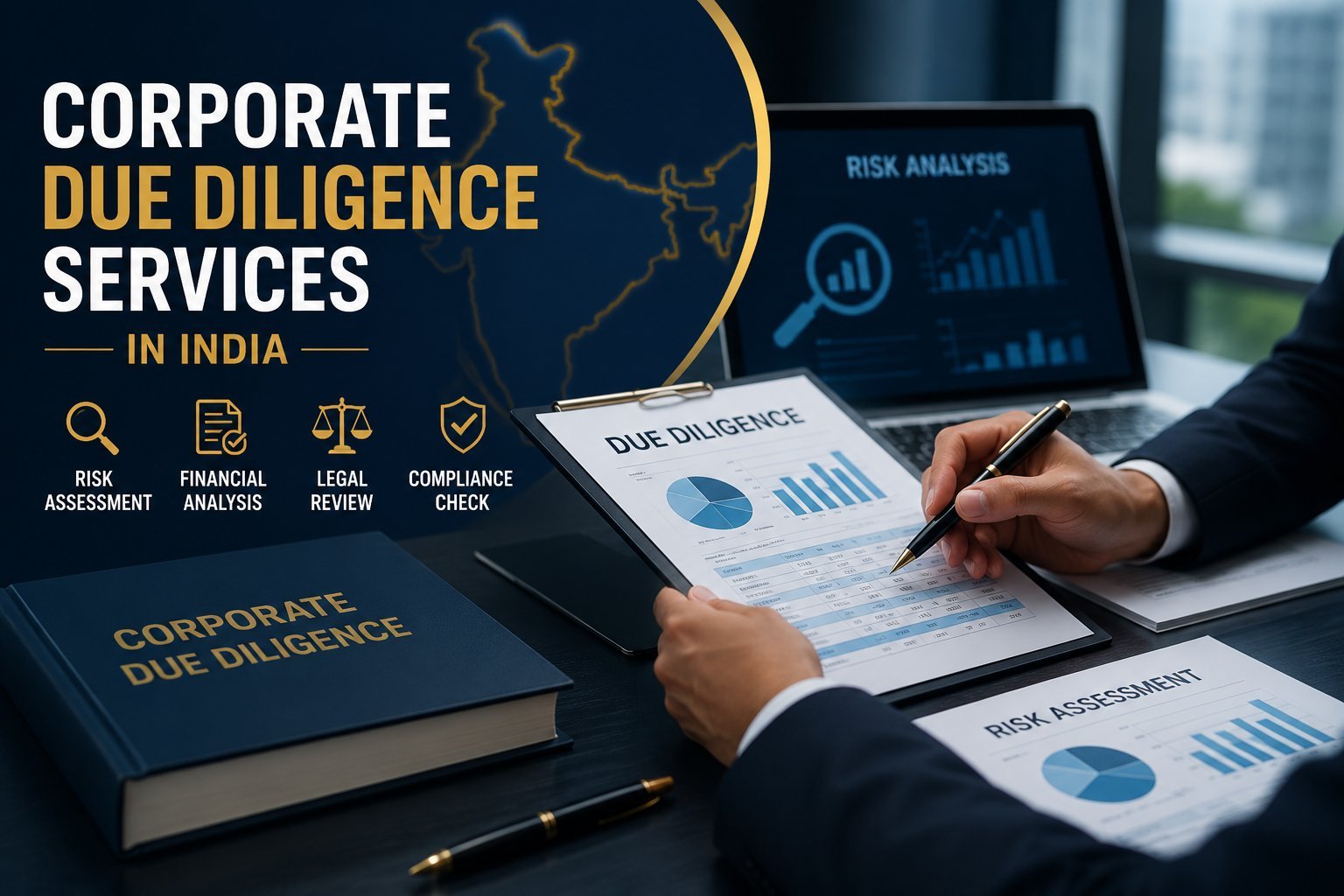
Corporate Due Diligence Services in India
Corporate due diligence is a structured investigation of a company, promoter, director, senior executive, vendor, supplier, distributor, investor, business partner or proposed transaction before a business commits money, authority, confidential information, contractual rights or reputational capital. The objective is to establish what is supported by evidence, what is inconsistent, what remains unverified and what requires specialist review. SEBI’s investor guidance describes due diligence as a comprehensive and thorough analysis of relevant information so material facts about an investment, company or security are known and understood.
For Indian businesses, modern due diligence should connect corporate records with people, ownership, operations, litigation, regulatory exposure, commercial claims, reputation and digital information. MCA corporate information, GST taxpayer information, PAN verification, court and tribunal records, regulatory disclosures, insolvency announcements, open-source intelligence and lawful on-ground verification can each add a layer of evidence.
BFI can position corporate due diligence as an investigative service that complements, rather than replaces, legal due diligence, statutory audit, tax review, valuation, regulatory advice or investment-banking work. The value of the investigation is the disciplined correlation of evidence and the clear separation of fact, discrepancy, risk indicator and unresolved question.
Why Corporate Due Diligence Matters in India's Business Environment

The commercial stakes are rising because India’s transaction ecosystem is becoming more selective, cross-border and information-intensive. EY reports that total Indian M&A deal value reached US$123.8 billion in 2025, up 18% year over year, while transaction volume fell 3% to 2,678 transactions. Cross-border deal value rose 155% to US$33.2 billion and private-equity investment reached US$60.7 billion.[18] Larger and more complex transactions increase the cost of discovering a material problem after signing or closing.
The integrity environment also creates a clear third-party risk case. EY’s Global Integrity Report work highlights that 45% of organizations experienced significant integrity incidents over the prior two years in the cited emerging-market analysis, with 93% of those incidents involving third parties. In its India discussion, 69% of respondents said keeping pace with regulatory changes was challenging, 62% believed unethical behavior was often tolerated when committed by senior leaders, and 76% reported pressure not to report misconduct.
Financial-system data provide another reason to validate counterparties and controls. RBI’s 2024-25 Annual Report recorded 23,953 fraud cases of ₹1 lakh and above reported by banks and financial institutions, with ₹36,014 crore involved. RBI notes that the amount involved does not equal loss, frauds may relate to earlier periods, and the data are subject to reporting revisions. The same report describes cyber security as a major operational risk and notes strengthened fraud-risk management, early-warning signals and red-flagging frameworks.
These data do not mean every vendor, director or business partner is high risk. They do show why a documented, risk-based verification process can be materially more valuable than relying on representations, website claims or a single database.
Corporate due diligence is not simply a background check or a review of company documents. It is a structured investigative process used to understand who you are dealing with, whether the information provided is genuine, what risks may exist, and whether those risks could affect a proposed business relationship.
At Brilliant Forensic Investigation (BFI), corporate due diligence can be customized according to the nature of the transaction, the identity of the subject, the industry, the geographic location, and the level of risk involved.
7 Core Corporate Due Diligence Services Offered by BFI
Vendor Verification and Supplier Due Diligence
Vendor due diligence examines whether a supplier, contractor, manufacturer, distributor, consultant or service provider is a real, operational and commercially credible counterparty for the proposed engagement. The question is not merely whether the entity exists on paper; it is whether the legal identity, ownership, business activity, address, capacity and commercial story are reasonably consistent.
A typical assignment may compare the legal name, trade name, incorporation status, GSTIN, PAN details where lawfully available, registered office, principal place of business, directors or partners, stated activities, operating footprint, references, website history, litigation indicators and other relevant public information. The GST Portal expressly allows a search of registered taxpayers using GSTIN/UIN and can display fields such as legal name, trade name, registration date, constitution of business, principal place of business, cancellation date where applicable and return-filing details; additional information may be available after login.
Where the vendor risk justifies physical verification, BFI can examine the represented office, warehouse, factory, workshop, retail site or distribution point. The objective is to document observable facts-existence of the location, signage, general activity, infrastructure and other assignment-specific indicators-not to guarantee future production, solvency or performance.
For high-value procurement, critical vendors and sole-source suppliers, BFI can structure the review around defined risk questions: Is the supplier operational? Is capacity plausible? Are ownership and management consistent? Are there unexplained related parties? Has the company faced material disputes? Does the online presence match the business narrative? What evidence is still missing?
Company, Promoter and Director Due Diligence
Company and management due diligence creates a consolidated profile of the target enterprise and the people who control, manage or materially influence it. The investigation may cover incorporation history, company type, registered office, directors, promoters, group entities, related companies, stated business activity, operating footprint, public disclosures, relevant litigation, regulatory history and reputational information.
Ownership mapping is particularly important where a business is part of a group or has multiple entities across jurisdictions. Section 90 of the Companies Act, 2013 and the Companies (Significant Beneficial Owners) framework provide important legal context around significant beneficial ownership. The investigator should map only relationships supported by records and clearly label assumptions or unresolved ownership links.
Director and promoter due diligence can include identity consistency, corporate appointments, directorship patterns, professional history, publicly disclosed ownership/control indicators, adverse-information research and other material business-risk signals. MCA master-data and public-document facilities are an important primary-source layer.
The final report should show an entity relationship map where useful: target company → parent/subsidiary → directors/promoters → related companies → relevant counterparties. Such a visual can expose concentration of control, repeated relationships, common addresses or unexplained corporate links that are difficult to see in isolated searches.
Background, Identity, Employment and Qualification Verification
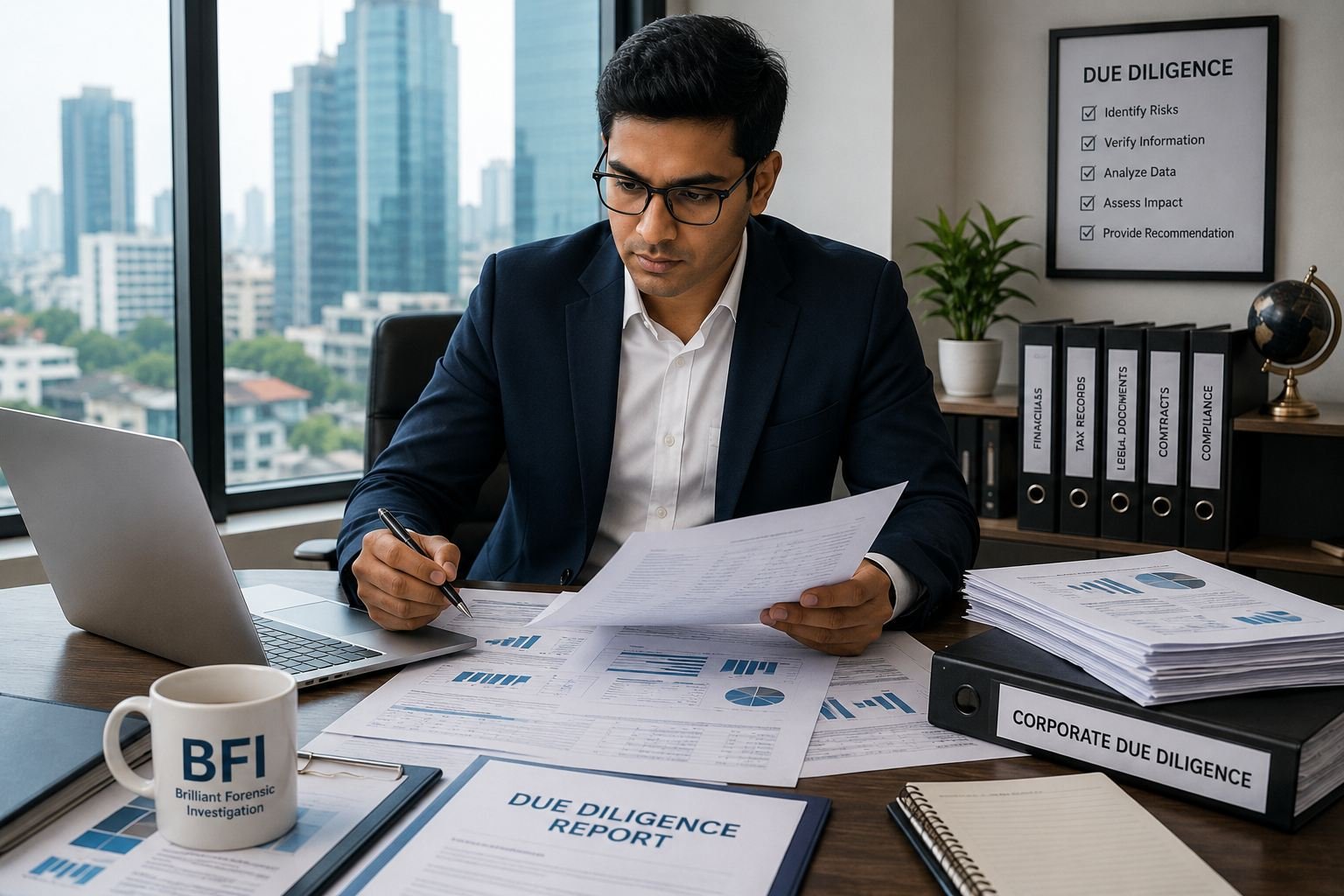
Key executives, technical specialists, consultants, signatories and representatives can create significant financial, operational and reputational exposure. BFI’s verification work can test identity, address, employment history, education, professional qualifications, references and relevant public business information, subject to lawful access and the defined purpose.
Identity should be treated as the foundation of downstream verification. Variations in name, date of birth, photograph, address, chronology or professional credentials can create false matches or conceal inconsistencies. The Income Tax Department’s PAN verification service states that PAN verification can help confirm whether supplied details match the PAN database and whether the PAN is active; it also states that the Verify PAN service is available to registered external agencies, with bulk verification requiring departmental approval.
Qualification verification should go beyond visual acceptance of a certificate where the assignment indicates authenticity concerns. When a document appears altered, copied or manipulated, forensic document examination can be introduced to assess signs of modification, printing inconsistencies, signatures, seals, stamps, additions, erasures and other observable features.
Employment checks should focus on material assertions relevant to the role. A senior finance candidate, plant head, compliance officer or technical expert should be evaluated against the employment chronology and credentials that matter to the business decision rather than subjected to indiscriminate data collection.
Litigation, Regulatory and Compliance Risk Investigation
Litigation due diligence seeks to identify material disputes, claims, insolvency-related proceedings, regulatory actions, enforcement indicators and governance issues that could affect a commercial decision. The search scope should be explicit because no single public database contains every proceeding in India and court-data coverage varies by forum and digitisation status.
The eCourts system supports case-status searching by party name, case number and filing number, making it a useful official starting point for relevant litigation research. Regulatory and insolvency sources should be searched separately. IBBI’s public-announcement system provides current corporate insolvency and liquidation announcements and can be searched by corporate debtor.
Listed-company work may also require attention to SEBI disclosure, governance and related-party transaction requirements. SEBI issued industry standards in February 2025 for minimum information to be provided for review of related-party transactions by audit committees and shareholders. A corporate diligence review should therefore test whether important relationships and transactions deserve additional scrutiny.
For M&A, competition-law issues can be material. The Competition Commission of India states that an acquisition, merger or amalgamation crossing the statutory thresholds can constitute a combination under Section 5 of the Competition Act, and qualifying transactions may trigger filing obligations. Transaction teams should coordinate sensitive-information sharing with competition counsel and observe applicable standstill requirements.
Financial, Commercial and Asset-Risk Review
Investigative financial due diligence is not a statutory audit. Its value is to identify inconsistencies, commercial anomalies and questions that deserve deeper accounting, tax or valuation analysis. Examples include sharp mismatches between claimed scale and observable operations, unexplained liabilities, unusual payment patterns, customer concentration, questionable asset claims, dependence on a small number of counterparties or statements that do not reconcile across independent sources.
SEBI’s due-diligence guidance encourages investors to examine financial health using financial statements and to consider the company’s business model, competitors and economic conditions. BFI can therefore act as an independent verification layer, identifying anomalies and decision points for management and qualified financial advisers.
Asset verification may include documentary checks and, where relevant, physical observation of facilities, machinery, inventory or other business assets. The report should distinguish clearly between (a) documented ownership or entitlement, (b) physically observed existence and (c) commercial claims that have not been independently established. Title, valuation and tax issues should be escalated to appropriately qualified specialists.
RBI’s annual report also illustrates why end-use monitoring and third-party controls matter in regulated lending environments; the report discusses weaknesses identified in areas including use of third parties, inadequate due diligence and end-use monitoring. This strengthens the case for risk-based third-party review when a supplier, borrower, sourcing agent or intermediary is strategically important.
Reputation, OSINT and Digital Identity Due Diligence
Open-source intelligence (OSINT) is the lawful collection and analysis of publicly accessible information. It can include company websites, professional profiles, public business directories, news coverage, regulatory disclosures, industry publications, domain information and other open sources. The strength of OSINT is correlation, not volume.
A company may describe itself as an established manufacturer while public corporate records, website chronology, staffing signals, facility verification and independent market references tell a different story. A director may present a senior profile that is broadly accurate but contains material gaps in chronology. A supposed vendor representative may be using a copied website or impersonating an actual company. These scenarios are investigated through cross-source comparison rather than relying on a single online profile.
BFI should document the source, capture date, context and confidence level of significant findings. Anonymous allegations, social-media accusations and unverified review websites should never automatically be treated as established facts. They are leads that may require corroboration.
Digital identity due diligence is increasingly important as fraudsters use copied websites, look-alike domains, manipulated documents, fake professional profiles and spoofed communications. Where the assignment involves suspected impersonation, BFI can combine identity verification, document examination, digital evidence preservation and forensic analysis.
On-Ground Verification and Market Intelligence
On-ground verification provides an independent reality check against documents and digital representations. Depending on the assignment, BFI may verify offices, factories, warehouses, retail outlets, project locations, business premises or other relevant addresses.
A well-designed site visit starts with a specific hypothesis. The question might be whether the represented office exists, whether the supplier appears operational, whether equipment or facilities are observable, whether a business is actively trading from the stated location or whether the site characteristics broadly match the representation provided by the counterparty.
Market intelligence adds commercial context: competitor presence, distribution relationships, industry reputation, public references, business positioning and other lawful market indicators. The resulting assessment can help management answer both “Is this company real?” and “Does the commercial story make sense?”
The report should remain careful about the limits of an on-ground visit. It is a point-in-time observation. It cannot independently establish ownership of assets, future capacity, financial solvency or the absence of hidden activity.
Corporate Due Diligence for M&A, Private Equity and Strategic Investments
Transaction diligence should be decision-led. In 2025, India’s M&A market recorded US$123.8 billion of deal value across 2,678 transactions, with fewer transactions but higher total value. Cross-border deal value increased to US$33.2 billion, while PE investment reached US$60.7 billion. In that environment, the cost of missing a material issue can be disproportionate to the cost of a targeted investigative review.
BFI’s investigative scope can support a transaction workstream covering the target company, promoters/directors, ownership and control, related entities, litigation indicators, regulatory issues, reputational concerns, business-claim verification, operating-site verification, third-party relationships and digital identity. The resulting findings can be fed into legal, financial, tax, commercial, competition and integration diligence.
The investigation can also be structured around transaction-specific hypotheses: Are reported group entities genuine and active? Is a key promoter linked to additional businesses? Are material disputes absent from the management narrative? Does the operating footprint fit the proposed valuation? Is a distributor actually present in the claimed market? Are key management credentials independently supportable? Such questions turn diligence from a checklist into an intelligence product.
Beneficial Ownership, KYC and AML Considerations in India

Beneficial ownership is a core diligence issue whenever a company, lender, investor, regulated entity or counterparty must understand who ultimately owns or controls an enterprise. Section 90 of the Companies Act, 2013 establishes a significant-beneficial-ownership framework, while the Companies (Significant Beneficial Owners) Rules provide the supporting procedural structure.
For regulated entities, RBI’s KYC Master Direction defines customer due diligence around identifying and verifying customers and beneficial owners using reliable and independent sources. It also requires ongoing due diligence and describes enhanced monitoring for higher-risk situations.
The Prevention of Money-Laundering Act framework also contains enhanced due-diligence provisions for reporting entities. BFI should describe its investigative service as support for risk assessment and evidence collection, not as a replacement for the client’s statutory KYC/AML obligations where those obligations apply.
For cross-border matters, ownership may extend through overseas companies, trusts or nominee structures. The scope should distinguish verified ownership from inferred control and should clearly identify where foreign records require local counsel, licensed researchers, official registries or other specialist sources.
SEBI, Listed Companies and Related-Party Risk
Listed-company diligence needs a governance lens. Promoters, directors, subsidiaries, associates and other related entities can create relationships that are commercially legitimate yet materially relevant to valuation, governance, pricing, conflicts and disclosure.
SEBI’s February 2025 industry standards identify minimum information for audit-committee and shareholder review of related-party transactions. A BFI investigation can support this work by mapping counterparties, common directors, common addresses, public ownership indicators, business relationships and other facts that warrant legal or compliance review.
The report should avoid declaring a transaction improper merely because an association exists. The investigative question is whether the relationship, pattern or disclosure deserves escalation and whether the underlying facts are consistent with the company’s stated position.
Digital Personal Data Protection and Lawful Investigation
Corporate investigations often involve personal data, especially when director, promoter, employee or vendor checks are performed. India’s Digital Personal Data Protection Act, 2023 and the 2025 Rules create a structured framework for digital personal data, with different provisions commencing on different dates. The commencement notifications issued in November 2025 established a staged implementation timetable.
The page should therefore promise lawful investigation rather than unlimited data access. BFI should use information only for legitimate investigative purposes, apply appropriate access controls and retention discipline, avoid unauthorised access to private accounts, avoid procurement of restricted personal data, and avoid impersonation or other intrusive methods.
Where a case involves personal data at scale or a regulated organisation, the client should determine the applicable compliance role, purpose, notice, lawful basis, security, retention and grievance obligations with qualified privacy counsel.
How BFI Conducts Corporate Due Diligence in India: 10-Step Investigation Process
Step 1 — Define the decision and risk questions
Start with the decision: vendor onboarding, investment, acquisition, partnership, executive appointment, lending, distributor appointment, fraud response or another purpose. Define the questions that could change the decision.
Step 2 — Collect subject information
Capture legal name, identifiers, websites, addresses, key people, contracts, proposals, organisational charts, CVs, financial information and known concerns.
Step 3 — Establish the corporate baseline
Build the primary-source baseline using available MCA, GST, PAN and other authoritative records appropriate to the subject and purpose.
Step 4 — Map ownership and management
Connect directors, promoters, significant ownership indicators, group entities, subsidiaries and relevant business relationships.
Step 5 — Verify people and representations
Test identity, professional history, qualifications, employment, addresses, websites, business claims and other decision-critical representations.
Step 6 — Conduct legal, regulatory and adverse-information checks
Review relevant court, tribunal, insolvency, regulatory, enforcement, adverse-media and governance signals, with search scope and limitations documented.
Step 7 — Conduct commercial and operational checks
Examine capacity, business footprint, references, market presence, assets and other indicators that help test whether the commercial story is plausible
Step 8 — Conduct on-ground verification where justified
Use physical verification when documentary or online evidence cannot answer an important question or when transaction risk warrants it.
Step 9 — Correlate evidence and rank risks
Classify findings by evidence strength and materiality. A red flag is strongest when multiple independent indicators point in the same direction.
Step 10 — Issue a decision-oriented report
Provide verified findings, discrepancies, unresolved questions, source references, limitations, risk grading and recommended next actions. Specialist issues should be escalated to legal, accounting, tax, competition, valuation or privacy professionals.
Why Choose Brilliant Forensic Investigation (BFI)?
Frequently Asked Questions (FAQs)
-
What are Corporate Due Diligence Services?
Corporate due diligence services involve systematic investigation and verification of a company, person, vendor, partner, investor or transaction to identify relevant financial, legal, operational, reputational and identity-related risks.
-
What is Vendor Verification
Vendor verification is an investigation into a supplier, contractor or service provider to assess its business legitimacy, ownership, operations, financial indicators, compliance, litigation and reputation.
-
What is Background Verification?
Background verification involves checking relevant aspects of an individual's identity, address, employment, education, professional credentials, references and other agreed screening parameters.
-
What is a Social Media Check?
A social media check reviews publicly accessible online profiles and information to identify relevant inconsistencies, reputational concerns, digital identity issues or other risk indicators.
-
What is Company Profiling?
Company profiling is a structured assessment of a business's identity, history, ownership, management, operations, reputation, litigation, market presence and other relevant characteristics.

Contact Brilliant Forensic Investigation
Protect Your Business Before You Commit
A major investment, acquisition, partnership, vendor appointment or senior-level recruitment decision should not be based solely on documents supplied by the other party.
Brilliant Forensic Investigation provides customized Corporate Due Diligence Services in India combining background verification, vendor verification, company profiling, identity investigation, financial-risk review, litigation research, open-source intelligence, digital investigation and on-ground verification.
Our approach is designed to help organizations verify information, identify inconsistencies, understand potential risks and make better-informed business decisions.
Call To Action

For cases requiring forensic examination, BFI can also integrate relevant forensic capabilities such as document examination, digital forensics, fingerprint analysis and expert forensic consultation.
📞 Contact Us: 9990292279
🌐 Visit Our Website: https://forensicexpertinvestigation.com/
✉️ Email: ceo.bfi@gmail.com
Corporate Due Diligence Services India
Corporate Due Diligence Expert Services in Andaman and Nicobar Islands (union territory)-Port Blair | Corporate Due Diligence Expert Services in Andhra Pradesh – Adoni, Amaravati, Anantapur, Chandragiri, Chittoor, Dowlaiswaram, Eluru, Guntur, Kadapa, Kakinada, Kurnool, Machilipatnam, Nagarjunakoṇḍa, Rajahmundry, Srikakulam, Tirupati, Vijayawada, Visakhapatnam, Vizianagaram, Yemmiganur | Corporate Due Diligence Expert Services in Arunachal Pradesh – Itanagar | Corporate Due Diligence Expert Services in Assam – Dhuburi, Dibrugarh, Dispur, Guwahati, Jorhat, Nagaon, Sivasagar, Silchar, Tezpur, Tinsukia | Corporate Due Diligence Expert Services in Bihar – Ara, Barauni, Begusarai, Bettiah, Bhagalpur, Bihar Sharif, Bodh Gaya, Buxar, Chapra, Darbhanga, Dehri, Dinapur Nizamat, Gaya, Hajipur, Jamalpur, Katihar, Madhubani, Motihari, Munger, Muzaffarpur, Patna, Purnia, Pusa, Saharsa, Samastipur, Sasaram, Sitamarhi, Siwan | Corporate Due Diligence Expert Services in Chandigarh (union territory) – Chandigarh | Corporate Due Diligence Expert Services in Chhattisgarh – Ambikapur, Bhilai, Bilaspur, Dhamtari, Durg, Jagdalpur, Raipur, Rajnandgaon | Corporate Due Diligence Expert Services in Dadra and Nagar Haveli and Daman and Diu (union territory) – Daman, Diu, Silvassa | Corporate Due Diligence Expert Services in Delhi (national capital territory) – Delhi, New Delhi |Corporate Due Diligence Expert Services in Goa – Madgaon, Panaji | Corporate Crime Scene Investigation – Services in Gujarat – Ahmadabad, Amreli, Bharuch, Bhavnagar, Bhuj, Dwarka, Gandhinagar, Godhra, Jamnagar, Junagadh, Kandla, Khambhat, Kheda, Mahesana, Morbi, Nadiad, Navsari, Okha, Palanpur, Patan, Porbandar, Rajkot, Surat, Surendranagar, Valsad, Veraval | Corporate Due Diligence Expert Services in Haryana – Ambala, Bhiwani, Chandigarh, Faridabad, Firozpur Jhirka, Gurugram, Hansi, Hisar, Jind, Kaithal, Karnal, Kurukshetra, Panipat, Pehowa, Rewari, Rohtak, Sirsa, Sonipat | Corporate Due Diligence Expert Services in Himachal Pradesh – Bilaspur, Chamba, Dalhousie, Dharmshala, Hamirpur, Kangra, Kullu, Mandi, Nahan, Shimla, Una | Corporate Due Diligence Expert Services in Jammu and Kashmir (union territory) – Anantnag, Baramula, Doda, Gulmarg, Jammu, Kathua, Punch, Rajouri, Srinagar, Udhampur | Corporate Due Diligence Expert Services in Jharkhand – Bokaro, Chaibasa, Deoghar, Dhanbad, Dumka, Giridih, Hazaribag, Jamshedpur, Jharia, Rajmahal, Ranchi, Saraikela | Corporate Due Diligence Expert Services in Karnataka – Badami, Ballari, Bengaluru, Belagavi, Bhadravati, Bidar, Chikkamagaluru, Chitradurga, Davangere, Halebid, Hassan, Hubballi-Dharwad, Kalaburagi, Kolar, Madikeri, Mandya, Mangaluru, Mysuru, Raichur, Shivamogga, Shravanabelagola, Shrirangapattana, Tumakuru, Vijayapura | Corporate Due Diligence Expert Services in Kerala – Alappuzha, Vatakara, Idukki, Kannur, Kochi, Kollam, Kottayam, Kozhikode, Mattancheri, Palakkad, Thalassery, Thiruvananthapuram, Thrissur | Corporate Due Diligence Expert Services in Ladakh (union territory) – Kargil, Leh | Corporate Due Diligence Expert Services in Madhya Pradesh – Balaghat, Barwani, Betul, Bharhut, Bhind, Bhojpur, Bhopal, Burhanpur, Chhatarpur, Chhindwara, Damoh, Datia, Dewas, Dhar, Dr. Ambedkar Nagar (Mhow), Guna, Gwalior, Hoshangabad, Indore, Itarsi, Jabalpur, Jhabua, Khajuraho, Khandwa, Khargone, Maheshwar, Mandla, Mandsaur, Morena, Murwara, Narsimhapur, Narsinghgarh, Narwar, Neemuch, Nowgong, Orchha, Panna, Raisen, Rajgarh, Ratlam, Rewa, Sagar, Sarangpur, Satna, Sehore, Seoni, Shahdol, Shajapur, Sheopur, Shivpuri, Ujjain, Vidisha | Corporate Due Diligence Expert Services in Maharashtra – Ahmadnagar, Akola, Amravati, Aurangabad, Bhandara, Bhusawal, Bid, Buldhana, Chandrapur, Daulatabad, Dhule, Jalgaon, Kalyan, Karli, Kolhapur, Mahabaleshwar, Malegaon, Matheran, Mumbai, Nagpur, Nanded, Nashik, Osmanabad, Pandharpur, Parbhani, Pune, Ratnagiri, Sangli, Satara, Sevagram, Solapur, Thane, Ulhasnagar, Vasai-Virar, Wardha, Yavatmal |Corporate Due Diligence Expert Services in Manipur – Imphal | Corporate Due Diligence Expert Services in Meghalaya – Cherrapunji, Shillong | Corporate Due Diligence Expert Services in Mizoram – Aizawl, Lunglei | Corporate Due Diligence Expert Services in Nagaland – Kohima, Mon, Phek, Wokha, Zunheboto | Corporate Due Diligence Expert Services in Odisha – Balangir, Baleshwar, Baripada, Bhubaneshwar, Brahmapur, Cuttack, Dhenkanal, Kendujhar, Konark, Koraput, Paradip, Phulabani, Puri, Sambalpur, Udayagiri | Corporate Due Diligence Expert Services in Puducherry (union territory) – Karaikal, Mahe, Puducherry, Yanam | Corporate Due Diligence Expert Services in Punjab – Amritsar, Batala, Chandigarh, Faridkot, Firozpur, Gurdaspur, Hoshiarpur, Jalandhar, Kapurthala, Ludhiana, Nabha, Patiala, Rupnagar, Sangrur | Corporate Due Diligence Expert Services in Rajasthan – Abu, Ajmer, Alwar, Amer, Barmer, Beawar, Bharatpur, Bhilwara, Bikaner, Bundi, Chittaurgarh, Churu, Dhaulpur, Dungarpur, Ganganagar, Hanumangarh, Jaipur, Jaisalmer, Jalor, Jhalawar, Jhunjhunu, Jodhpur, Kishangarh, Kota, Merta, Nagaur, Nathdwara, Pali, Phalodi, Pushkar, Sawai Madhopur, Shahpura, Sikar, Sirohi, Tonk, Udaipur | Corporate Due Diligence Expert Services in Sikkim – Gangtok, Gyalshing, Lachung, Mangan | Corporate Due Diligence Expert Services in Tamil Nadu – Arcot, Chengalpattu, Chennai, Chidambaram, Coimbatore, Cuddalore, Dharmapuri, Dindigul, Erode, Kanchipuram, Kanniyakumari, Kodaikanal, Kumbakonam, Madurai, Mamallapuram, Nagappattinam, Nagercoil, Palayamkottai, Pudukkottai, Rajapalayam, Ramanathapuram, Salem, Thanjavur, Tiruchchirappalli, Tirunelveli, Tiruppur, Thoothukudi, Udhagamandalam, Vellore | Corporate Due Diligence Expert Services in Telangana – Hyderabad, Karimnagar, Khammam, Mahbubnagar, Nizamabad, Sangareddi, Warangal | Corporate Due Diligence Expert Services in Tripura – Agartala | Corporate Due Diligence Expert Services in Uttar Pradesh – Agra, Aligarh, Amroha, Ayodhya, Azamgarh, Bahraich, Ballia, Banda, Bara Banki, Bareilly, Basti, Bijnor, Bithur, Budaun, Bulandshahr, Deoria, Etah, Etawah, Faizabad, Farrukhabad-cum-Fatehgarh, Fatehpur, Fatehpur Sikri, Ghaziabad, Ghazipur, Gonda, Gorakhpur, Hamirpur, Hardoi, Hathras, Jalaun, Jaunpur, Jhansi, Kannauj, Kanpur, Lakhimpur, Lalitpur, Lucknow, Mainpuri, Mathura, Meerut, Mirzapur-Vindhyachal, Moradabad, Muzaffarnagar, Partapgarh, Pilibhit, Prayagraj, Rae Bareli, Rampur, Saharanpur, Sambhal, Shahjahanpur, Sitapur, Sultanpur, Tehri, Varanasi | Corporate Due Diligence Expert Services in Uttarakhand – Almora, Dehra Dun, Haridwar, Mussoorie, Nainital, Pithoragarh | Corporate Due Diligence Expert Services in West Bengal – Alipore, Alipur Duar, Asansol, Baharampur, Bally, Balurghat, Bankura, Baranagar, Barasat, Barrackpore, Basirhat, Bhatpara, Bishnupur, Budge Budge, Burdwan, Chandernagore, Darjeeling, Diamond Harbour, Dum Dum, Durgapur, Halisahar, Haora, Hugli, Ingraj Bazar, Jalpaiguri, Kalimpong, Kamarhati, Kanchrapara, Kharagpur, Cooch Behar, Kolkata, Krishnanagar, Malda, Midnapore, Murshidabad, Nabadwip, Palashi, Panihati, Purulia, Raiganj, Santipur, Shantiniketan, Shrirampur, Siliguri, Siuri, Tamluk, Titagarh.
Corporate Due-Diligence Various Cities of India
Brilliant Forensic Investigation (BFI) provides Corporate Due-Diligence services across major cities and regions in India, including Mumbai, New Delhi, Bangalore, Hyderabad, Ahmedabad, Chennai, Kolkata, Surat, Pune, Jaipur, Lucknow, Kanpur, Nagpur, Indore, Thane, Bhopal, Visakhapatnam, Pimpri-Chinchwad, Patna, Vadodara, Ghaziabad, Ludhiana, Agra, Nashik, Meerut, Kalyan-Dombivali, Vasai-Virar, Varanasi, Srinagar, Aurangabad, Dhanbad, Amritsar, Navi Mumbai, Allahabad, Howrah, Ranchi, Gwalior, Coimbatore, Vijayawada, Jodhpur, Madurai, Raipur, Kota, Chandigarh, Guwahati, Solapur, Hubballi-Dharwad, Nellore, Bhavnagar, Dehradun, Durgapur, Asansol, Rourkela, Nanded, Kolhapur, Ajmer, Akola, Gulbarga, Mangalore, Erode, Belgaum, Ambattur, Tirunelveli, Malegaon, Gaya, Jalgaon, Udaipur, Maheshtala, Davanagere, Kozhikode, Kurnool, Rajpur-Sonarpur, Bhatpara, Rajahmundry, Bokaro, South Dumdum, Bellary, Patiala, Gopalpur, Agartala, Bhagalpur, Muzaffarnagar, Ahmednagar, Mathura, Kollam, Avadi, Kadapa, Kamarhati, Sambalpur, Bilaspur, Shahjahanpur, Satara, Bijapur, Rampur, Shivamogga, Chandrapur, Junagadh, Thrissur, Alwar, Bardhaman, Kulti, Kakinada, Nizamabad, Parbhani, Tumkur, Khammam, Ozhukarai, Bihar Sharif, Panipat, Darbhanga, Bally, Aizawl, Dewas, Ichalkaranji, Karnal, Bathinda, Jalna, Eluru, Kirari Suleman Nagar, Mehsana, Durg, Barasat, Purnia, Satna, Mau, Sonipat, Farrukhabad, Sagar, Imphal, Ratlam, Hapur, Begusarai, Gandhidham, Baranagar, Tiruvottiyur, Puducherry, Sikar, Thoothukudi, Rewa, Mirzapur, Raichur, Pali, Ramagundam, Haridwar, Thanjavur, Bulandshahr, Uluberia, Murwara, Sambhal, Singrauli, Nadiad, Secunderabad, Naihati, Bidhannagar, Pallavaram, Bidar, Munger, Panchkula, Burhanpur, Raurkela Industrial Township, Chittoor, Jehanabad, Kharagpur, Dindigul, Gandhinagar, Hospet, Nangloi Jat, Malda, Ongole, Deoghar, Chapra, Haldia, Khandwa, Nandyal, Morena, Amroha, Anand, Bhind, Bhalswa Jahangir Pur, Rae Bareli, Madhyamgram, Bhiwani, Panvel, Baharampur, Ambala, Morbi, Fatehpur, Mahabubnagar, Bhusawal, Orai, Bahraich, Vellore, Raiganj, Sirsa, Danapur, Serampore, Sultan Pur Majra, Guna, Jaunpur, Shivpuri, Surendranagar-Dudhrej, Kumbakonam, Dehri, Madanapalle, Phagwara, Narasaraopet, Tadipatri, Kishanganj, Karaikudi, Faridabad, Rajkot, Jabalpur, Tiruchirappalli, Bareilly, Mysore, Tiruppur, Gurgaon, Aligarh, Jalandhar, Bhubaneswar, Salem, Mira-Bhayandar, Warangal, Guntur, Bhiwandi, Saharanpur, Gorakhpur, Bikaner, Amravati, Noida, Jamshedpur, Bhilai, Cuttack, Firozabad, Kochi, Jamnagar, Ujjain, Loni, Siliguri, Jhansi, Ulhasnagar, Jammu, Sangli-Miraj-Kupwad, Thiruvananthapuram, Panihati, Latur, Dhule, Tirupati, Rohtak, Korba, Bhilwara, Berhampur, Arrah, Anantapur, Karimnagar, Etawah, Ambarnath, North Dumdum, Bharatpur, Vijayanagaram, Katihar, Nagercoil, Sri Ganganagar, Karawal Nagar, Mango, Katni, Yamunanagar, Unnao, Chinsurah, Alappuzha, Kottayam, Machilipatnam, Shimla, Adoni, Udupi, Tenali, Proddatur, Saharsa, Hindupur, Sasaram, Hajipur, Bhimavaram, Siwan, Bettiah, Guntakal, Srikakulam, Motihari, Dharmavaram, Gudivada, Suryapet, Kavali, Tadepalligudem, Amaravati, Buxar, and Gangtok, as well as Kolkata and other locations throughout West Bengal. BFI aims to support individuals, advocates, law firms, corporate organizations, insurance companies, and institutions with professional forensic investigation, scientific evidence examination, and expert consultation services, subject to service availability and case requirements.