
-
ceo.bfi@gmail.com
Send Email
-
2C, C-6/A Block, Janakpuri, Delhi India 110058
Visit Our Office
99902-92279
Confidentiality Guaranteed
99902-92279
Confidentiality Guaranteed
Signature Expert Services India
Signature Expert Services India
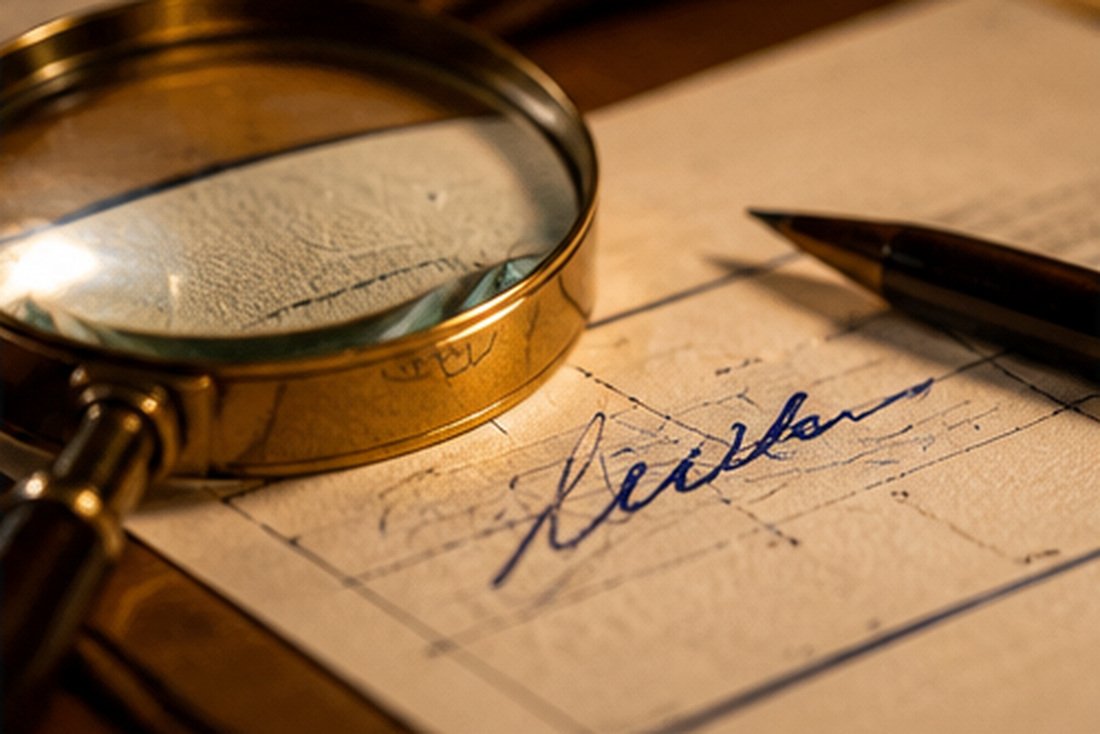
Brilliant Forensic Investigation (BFI) provides professional Signature Expert Services in India for the scientific examination, comparison and verification of questioned signatures appearing on legal, financial, commercial, personal and official documents. A disputed signature can become the central issue in a property dispute, cheque case, contractual disagreement, inheritance matter, loan transaction, corporate dispute, insurance claim, employment matter or criminal investigation. Because genuine signatures naturally vary from one execution to another, determining authenticity requires considerably more than comparing whether two signatures simply “look alike.” A forensic signature examination considers the manner in which the writing was produced, the characteristics present in the questioned signature, the range of natural variation demonstrated by appropriate reference signatures, and any features that may be consistent with simulation, tracing, disguise or other forms of fabrication.
BFI’s existing Signature Expert Services page describes examination of questioned signatures, forgery detection, pressure patterns, stroke sequence, rhythm, pen lifts and natural variation and states that its services are offered for civil, criminal, corporate, banking, insurance and other disputes. The expanded BFI approach presented here places those services within the broader framework of forensic document examination so that the examination can address not only the visible shape of a signature but also its execution characteristics, document context, associated handwriting, ink and physical-document features where relevant.
A forensic signature expert does not decide in advance that a signature is genuine or forged. The scientific task is to examine the evidence and formulate an opinion supported by the observed characteristics and the available comparison material. This distinction is important because current forensic research recognizes both the value of handwriting and signature examination and the need to manage human factors, quality assurance and the risk of error. NIST’s Expert Working Group on Human Factors in Handwriting Examination specifically addressed examination procedures, documenting discriminating features, reporting, testimony, training, quality assurance and ways of reducing error.
What Is a Signature Expert?
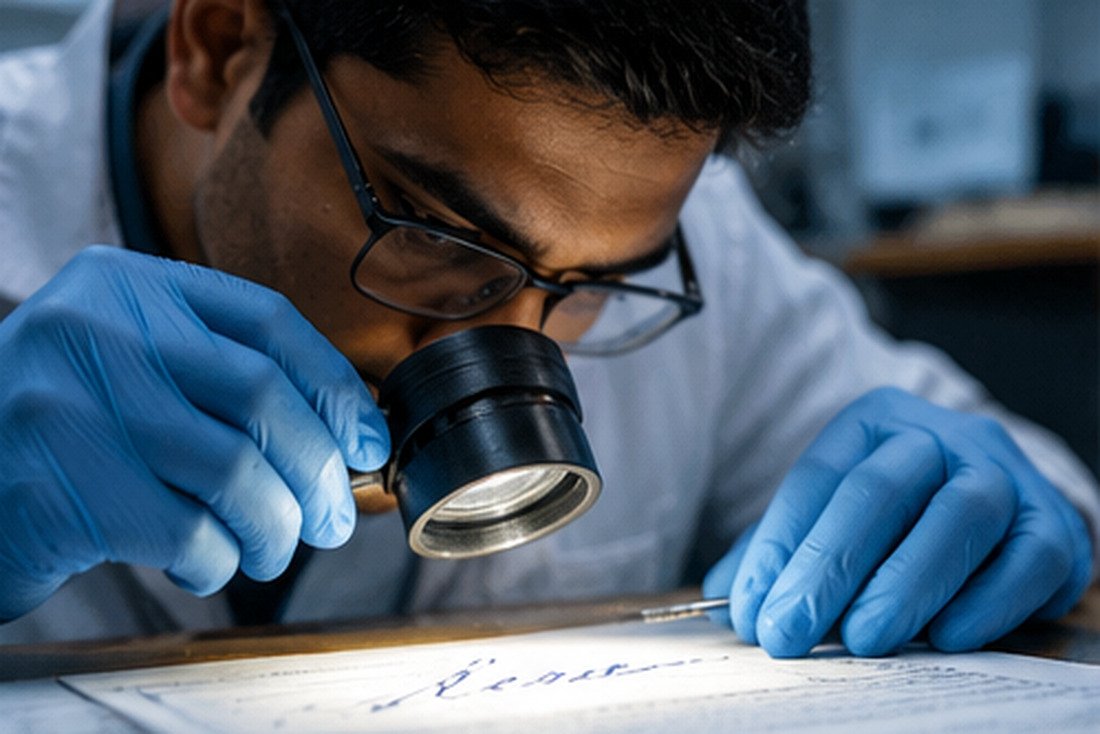
A Signature Expert or forensic document examiner is a specialist who examines disputed signatures and related document evidence using scientific comparison and document-analysis methods. The examination may be concerned with questions such as whether a questioned signature is consistent with a particular person’s known signatures, whether two questioned signatures were likely produced by the same writer, whether a signature exhibits characteristics consistent with natural writing or simulation, or whether the signature has been affected by tracing, copying, alteration or mechanical reproduction.
Signature examination is a specialized area within questioned-document examination. The Government of India’s National Judicial Academy identifies questioned-document examination as including handwriting, signatures and initials, alterations, erasures, obliterations and overwriting, sequence of strokes, digital written-document analysis, and examination of paper, ink, watermarks, printing technology and stamp impressions.
The forensic examination of a signature is therefore broader than ordinary handwriting comparison. An examiner may need to understand the document on which the signature appears, the type of writing instrument, the nature of the writing movement, the quality of the source image, the availability of genuine comparison material and the possibility that the signature was produced through a method other than ordinary freehand writing.
What Is Forensic Signature Examination?
Forensic signature examination is the scientific assessment of a questioned signature or group of signatures to determine whether the observed characteristics are consistent with the proposed writer or with a particular mode of production.
A genuine signature is not expected to be mechanically identical every time the same individual signs. Human movement naturally introduces variation. NIST’s forensic handwriting work specifically highlights the importance of studying natural variation and warns against treating handwriting as though every genuine execution must be identical. The availability of multiple appropriate known samples is therefore important because it enables the examiner to evaluate the range of variation that may occur naturally within one person’s writing.
The forensic question is consequently not simply “Do these two signatures look similar?” The stronger question is whether the similarities, differences and manner of execution, when evaluated together, are consistent with the relevant hypotheses and the available reference material.
Why Signature Verification Is Important
Signatures are used to authenticate documents, authorize transactions and express agreement or approval. They may appear on cheques, loan documents, contracts, deeds, wills, affidavits, employment documents, bank forms, insurance papers, corporate resolutions, powers of attorney, official records and other instruments.
When a signature is disputed, the consequences can extend well beyond the signature itself. A questioned signature may affect whether a transaction is attributed to a particular person, whether an agreement was allegedly executed, whether a financial instruction was authorized or whether a document is being relied upon in litigation.
Forensic examination cannot independently decide the legal validity of the underlying transaction. Its role is to provide scientific information about the questioned signature and related document evidence so that the competent authority, lawyer, investigator or court can evaluate that evidence within the complete factual and legal context.
Indian law recognizes the relevance of expert opinion in handwriting and signatures. Section 39 of the Bharatiya Sakshya Adhiniyam, 2023 provides that where a court has to form an opinion concerning the identity of handwriting or finger impressions, the opinions of persons specially skilled in those questions are relevant facts. Section 41 separately addresses opinions concerning the person by whom a document was written or signed.
Signature Verification and Signature Comparison
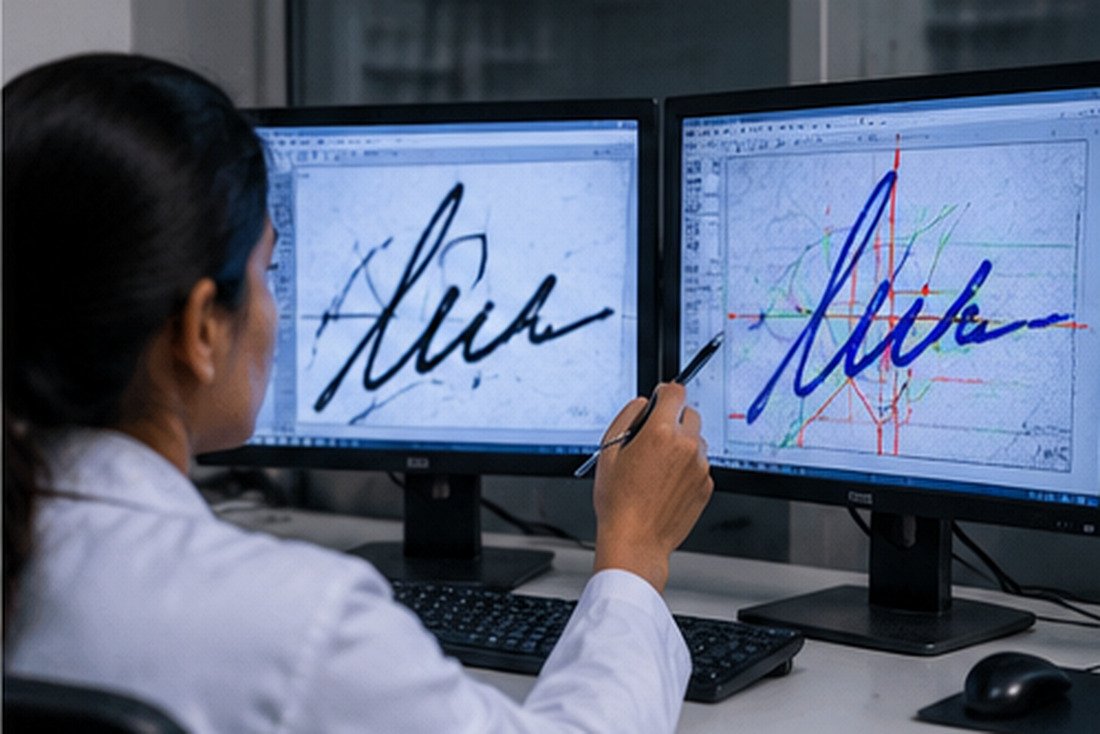
Signature verification generally involves comparing a questioned signature with appropriate known or admitted reference signatures. The comparison should be designed so that the examiner can evaluate whether the questioned writing falls within the natural variation demonstrated by the reference material.
The choice of reference signatures matters. NIST’s work notes that multiple known samples allow an examiner to account for natural variation, while the quality of comparison material can affect the reliability of the examination. Signatures made decades apart, under radically different circumstances, or under abnormal physical conditions may present different challenges from signatures produced during a similar period and under similar circumstances.
BFI can therefore consider not only the number of signatures supplied but also their quality, provenance, timing, writing conditions and comparability with the questioned material.
Handwritten Signature Characteristics Examined by BFI
A signature contains a combination of movement and structural characteristics. Depending on the evidence, examination may consider line quality, stroke formation, proportions, spacing, alignment, connecting strokes, pen lifts, speed-related characteristics, pressure effects, tremor, rhythm, beginning and ending strokes, relative positioning and other individual writing features.
These features should not be interpreted as isolated “tests.” For example, a slight tremor by itself does not prove forgery because genuine signatures can exhibit variation for many reasons. Likewise, a similar slant by itself does not establish common authorship.
The significance comes from the combination of characteristics and the manner in which they behave across suitable reference material. NIST’s research specifically emphasizes that forensic handwriting examination involves both readily visible features and subtler characteristics of how the writing was produced.
Natural Variation in Genuine Signatures
One of the most important concepts in signature examination is natural variation. The same person does not necessarily produce an identical signature every time. Differences can arise from writing speed, writing position, surface, pen, health, stress, physical movement, available space, intended purpose and many other factors.
This means that a forensic examiner should not automatically classify a signature as forged merely because it differs from a known specimen. Conversely, repeated superficial similarity does not automatically establish genuineness.
NIST’s current explanatory material specifically notes the importance of multiple known samples for evaluating an individual’s range of natural handwriting variation.
Signature Forgery Detection
Signature forgery can occur through different methods, and the forensic characteristics can vary accordingly. A person may attempt to reproduce another individual’s signature freehand, trace an existing signature, reproduce a signature by copying or mechanically transfer an image into another document. Digital manipulation creates an additional category in which an image of a signature can be inserted or altered electronically.
The forensic examination therefore attempts to identify characteristics that are compatible or incompatible with the proposed method of execution.
The National Judicial Academy’s questioned-document material includes signatures, detection of forgery, alteration, sequence of strokes, digital written-document analysis and related document-production examination within the broader field of questioned documents.
surface, pen, health, stress, physical movement, available space, intended purpose and many other factors.
This means that a forensic examiner should not automatically classify a signature as forged merely because it differs from a known specimen. Conversely, repeated superficial similarity does not automatically establish genuineness.
NIST’s current explanatory material specifically notes the importance of multiple known samples for evaluating an individual’s range of natural handwriting variation.
Simulated Signature Examination
A simulated signature is an attempt to imitate another person’s signature. A skilled imitator may reproduce the overall visual appearance convincingly while struggling to replicate the natural movement characteristics of the genuine writer.
An examiner may therefore consider features associated with line quality, fluency, hesitation, stroke relationships, construction, speed and other aspects of execution. The examination must distinguish between characteristics produced by simulation and characteristics that can occur naturally in genuine signatures.
The purpose is not to label every unusual signature as a simulation. The conclusion must be based on the evidence actually available.
Traced Signature Examination
Tracing attempts to reproduce the shape of an existing signature by following its outline or image. Traced writing can sometimes exhibit characteristics that differ from naturally produced writing because the movement process is different.
Depending upon the quality of the questioned material, forensic examination may investigate features associated with hesitation, unnatural movement, line quality, duplicated formations, unusual pen lifts or other evidence of constrained execution.
Recent Indian judicial discussion has specifically addressed traced-signature analysis and the use of comparative techniques in evaluating questioned signatures. The courts, however, continue to emphasize that the weight of expert opinion depends on the expert’s reasoning and the circumstances of the complete case.
Disguised Signature and Disguised Handwriting Examination
A person may intentionally change aspects of their own handwriting or signature to make identification more difficult. Such writing may be referred to as disguised writing.
The difficulty in these cases lies in separating deliberate changes from genuine natural variation. An examiner may compare characteristics across suitable known material and look for persistent habits that may remain despite attempts to modify the writing style.
NIST’s human-factors work is relevant here because it emphasizes a systems approach to handwriting examination and the importance of structured processes that reduce avoidable errors in interpretation.
Signature Examination on Cheques
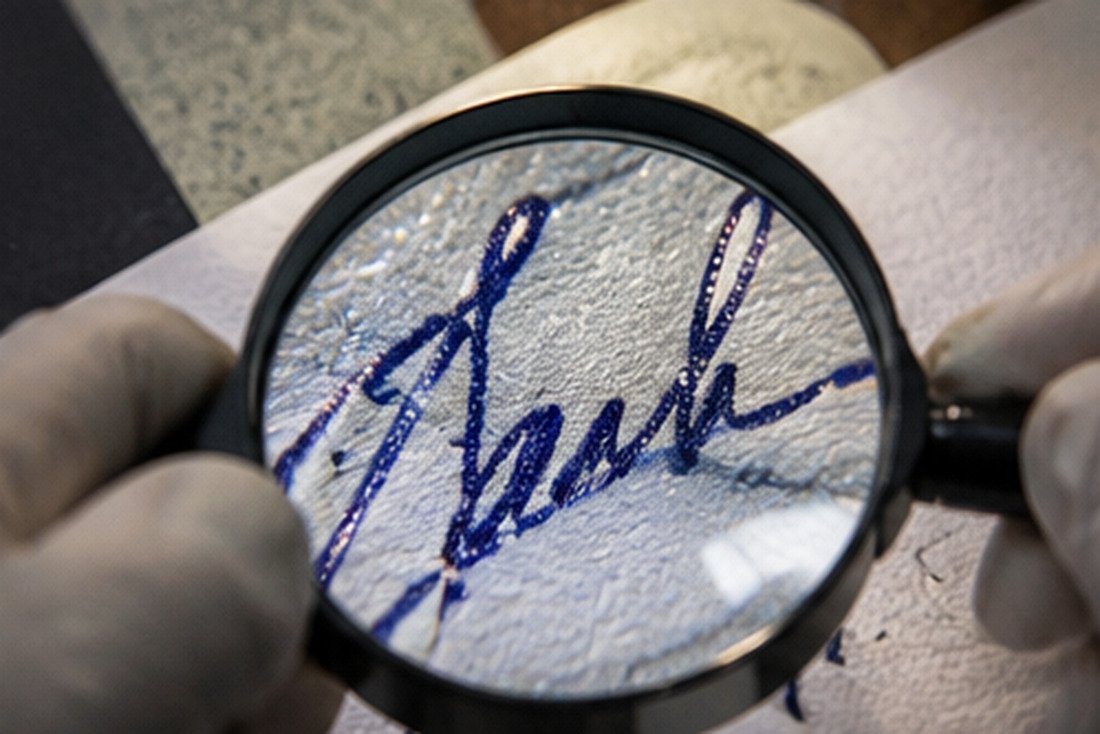
Cheques are among the documents in which disputed signatures may have immediate financial consequences. A cheque may be questioned because the account holder denies signing it, the signature appears inconsistent with known signatures, or there are concerns regarding additional entries or alterations.
BFI can examine the questioned signature together with suitable genuine specimens and, where relevant, consider the document as a whole. Examination may also need to address overwriting, additions, alterations or inconsistencies elsewhere on the cheque.
Government forensic laboratories in India specifically list cheques and other financial documents among the materials examined by questioned-document divisions. Delhi FSL includes cheques, bank drafts and related financial documents within its Documents Division.
Signature Examination on Wills and Testamentary Documents
Wills can be particularly sensitive because a disputed signature may affect significant property and succession rights. Signature examination in such cases may need to be accompanied by examination of handwriting, attestation-related documents, alterations, additions, paper and other features depending on the dispute.
A forensic examiner does not determine whether a will is legally valid or whether a person possessed testamentary capacity. Those are legal and factual questions. The forensic role is limited to the technical examination of the relevant document evidence.
Signature Examination on Agreements and Contracts
Contracts and agreements frequently contain signatures that indicate execution or acknowledgment. A dispute may arise when one party denies having signed the document or claims that the signature was reproduced, added or transferred.
BFI can examine the disputed signature together with available reference specimens and, where necessary, examine the document for associated alterations or production characteristics.
Where the signature appears on multiple pages, the comparison may also consider whether the signatures show a consistent manner of execution and whether surrounding document features raise additional forensic questions.
Signature Examination in Property Disputes
Property matters can involve sale deeds, agreements to sell, powers of attorney, gift deeds, affidavits, declarations and other documents bearing signatures.
A questioned signature may form part of a larger dispute concerning execution, authorization or subsequent document modification. Forensic examination can provide technical evidence concerning the signature or writing characteristics, but ownership, title and legal enforceability remain matters for the competent legal authority.
Signature Examination in Banking and Financial Fraud
Banking and financial institutions may encounter disputes involving cheques, loan documentation, account-opening records, withdrawal forms, payment mandates and other financial instruments.
The forensic question may involve whether a disputed signature is consistent with genuine signatures attributed to the account holder, whether there are signs of simulation or tracing, or whether the signature appears to have been incorporated into a manipulated document.
In cases involving both physical and electronic records, signature analysis may form one part of a larger fraud investigation. Digital transaction records, emails, CCTV and device evidence may need to be considered separately by appropriate forensic disciplines.
Corporate Signature Verification
Corporate organizations use signatures and approvals across contracts, board documents, authorizations, invoices, banking instructions, employment documents and internal records.
When a corporate signature is disputed, the forensic examination may consider the questioned signature together with known signatures and the surrounding document context. Where the matter also involves digital files or email communications, a coordinated digital-forensic examination may be appropriate.
This multidisciplinary perspective can be particularly useful when a disputed signature forms only one component of an alleged document or transaction manipulation.
Signature Verification for Photocopies and Scanned Documents
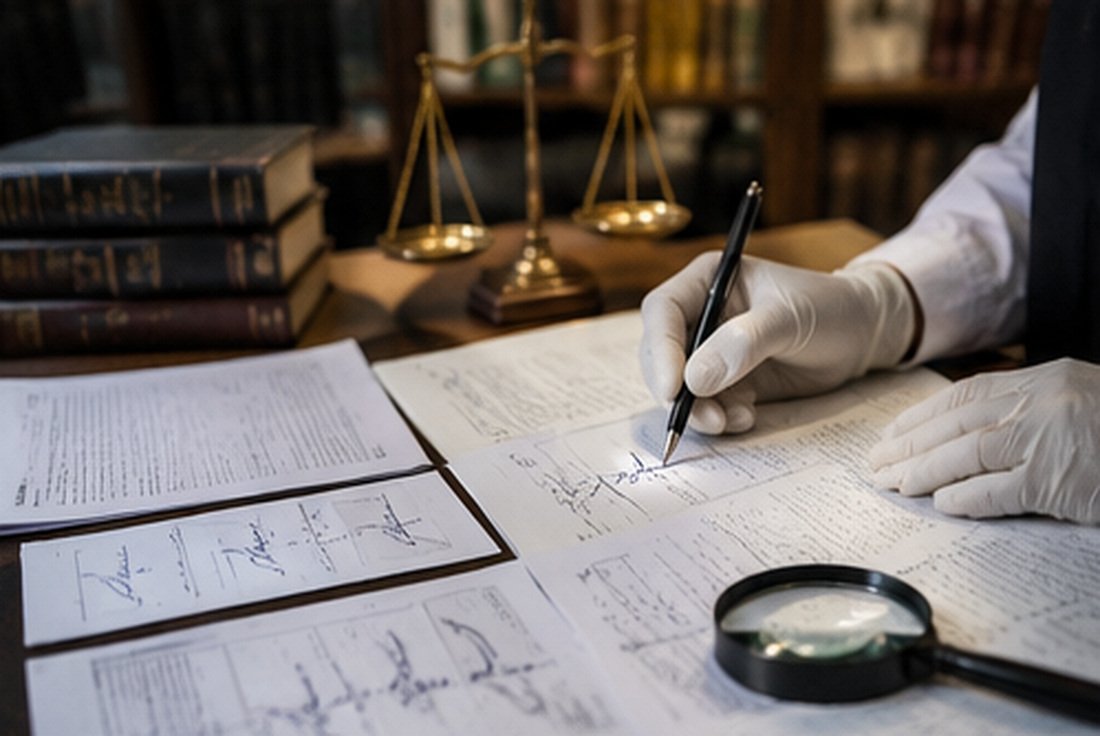
Clients often possess only photocopies, scans or photographs of disputed documents.
Certain handwriting and signature characteristics may still be visible in a high-quality reproduction, but the examination can be more limited because physical characteristics of the original writing process may no longer be available.
NFSU specifically identifies the increasing challenge posed by photocopies and computer printouts in contemporary questioned-document examination.
BFI can assess whether the supplied reproduction is technically suitable for the specific forensic question and state any corresponding limitations.
Digital Signature Verification — Different From Handwritten Signature Examination
A digital signature is not simply a handwritten signature stored as an image. Digital-signature verification operates through cryptographic technology and certificate infrastructure.
The Controller of Certifying Authorities (CCA), Ministry of Electronics and Information Technology, explains that verification of a digital signature involves the signer’s certificate and the certificate chain up to the root, together with certificate-status information where applicable. CCA also states that digital-signature verification is governed by the India PKI framework and related guidelines.
BFI can therefore distinguish between forensic examination of a handwritten signature and technical verification of a cryptographic digital signature. A visual comparison of a signature image cannot replace certificate-chain validation for a genuine digital signature. Current CCA guidance was updated in June 2026, including revised interoperability and identity-verification guidance.
Where a document contains a genuine digital signature, the relevant technical evidence can include the Digital Signature Certificate, issuer chain, revocation information and verification result. CCA specifically explains the importance of certificate-chain verification and certificate-status checking.
Signature Alteration and Document Tampering
A genuine signature may appear on a document that was subsequently altered. This makes it important not to assume that authentication of a signature automatically authenticates the entire document.
A document can contain a genuine signature and still have altered text, substituted pages, additions, erasures or other modifications.
BFI can therefore examine the signature and, where the assignment requires it, consider associated document features so that the forensic question is properly defined.
Signature Verification in India: Legal Evidence
The Bharatiya Sakshya Adhiniyam, 2023 is the current Indian evidence statute. Section 39 recognizes relevant expert opinion concerning the identity of handwriting or finger impressions, while section 41 recognizes relevant opinions concerning the person by whom a document was written or signed. Section 72 also permits comparison of admitted or proved signatures, writings or seals and allows the court, in the circumstances specified by the provision, to direct a person to write words or figures for comparison.
This statutory framework means a forensic signature report can constitute relevant expert evidence when properly prepared and presented, but it does not mean that an expert’s opinion automatically determines the legal issue.
Cases We Handle
BFI’s Signature Expert Services can be relevant to disputes involving cheques, wills, agreements, contracts, sale deeds, property documents, affidavits, loan and mortgage documents, bank records, corporate documents, identity-related records, official documents, employment papers, insurance documentation and other signed instruments.
The suitability of a particular document depends on the forensic question, the quality of the original or copy, the availability of genuine comparison material and the condition of the evidence.
Why Choose Brilliant Forensic Investigation?
Brilliant Forensic Investigation approaches signature analysis as part of a broader forensic-document discipline rather than as a simple visual comparison service.
The BFI website currently presents signature analysis alongside handwriting examination, questioned documents, digital forensics, fingerprint examination and other forensic disciplines, which can be useful when a disputed signature forms part of a larger document or fraud investigation.
This broader approach allows the forensic question to be framed appropriately. In one case, signature comparison may be sufficient. In another, the examination may need to extend to the document’s paper, ink, alterations, printing, digital file structure or surrounding evidence.
Pan-India Signature Expert Services
BFI’s current website describes signature and forensic services in Delhi, Delhi NCR and multiple Indian locations including Noida, Gurugram, Ghaziabad, Lucknow, Mumbai, Pune, Chennai, Kolkata, Bengaluru, Hyderabad, Indore and Ujjain.
Forensic assistance may involve examination of submitted documents, preliminary technical consultation, evidence review, formal forensic reporting and, where appropriately engaged, expert assistance in legal proceedings.
The precise service arrangement depends upon the nature of the case, evidence available, location and professional scope.
How Long Does Signature Examination Take?
The duration depends on the number of questioned signatures, quantity and quality of comparison material, condition of the evidence, complexity of the examination, whether physical document analysis is also required and whether a formal report is requested.
A simple comparison may involve a significantly different workload from a complex document-fraud investigation involving several documents, multiple signatures, alterations and digital files.
BFI should therefore provide an estimated timeframe after reviewing the actual scope rather than promising a fixed turnaround for every case.
Contact Brilliant Forensic Investigation
When a signature is disputed, preserving the original evidence before further handling can be important. Brilliant Forensic Investigation provides Signature Expert Services in India for questioned signatures appearing on cheques, wills, agreements, property documents, banking records, contracts, affidavits, corporate records, official documents and other signed material.
BFI can assess the nature of the dispute, the available questioned material and the comparison evidence and determine the appropriate forensic scope.
Call To Action

📞 Contact Us: 9990292279
🌐 Visit Our Website: https://forensicexpertinvestigation.com/
✉️ Email: ceo.bfi@gmail.com
Frequently Asked Questions About Signature Expert Services
-
What is a forensic signature expert?
A forensic signature expert is a specialist who examines questioned signatures and related document evidence using scientific comparison methods to evaluate questions concerning authenticity, authorship, simulation, tracing or other forms of reproduction.
-
Can a forensic expert tell whether a signature is genuine?
A forensic examination may provide an opinion concerning whether the questioned signature is consistent or inconsistent with suitable genuine reference material. The strength of the conclusion depends on the evidence available and the examination performed.
-
What characteristics are examined in a signature?
Depending on the case, the examiner may evaluate line quality, stroke formation, proportions, spacing, alignment, pen lifts, movement, rhythm, pressure-related characteristics, tremor, connecting strokes and other features of execution.
-
Can BFI examine a forged signature on a cheque?
Yes. Cheques are among the financial documents routinely encountered in questioned-document examination, subject to the availability and condition of the evidence.
-
Can a disputed signature on a will be examined?
Yes. Wills are an established category of questioned documents and may be examined for signatures and other relevant document characteristics.

Signature Expert Services India
union territory Forensic Signature Expert Services in Andaman and Nicobar Islands (union territory)-Port Blair | Forensic Signature Expert Services in Andhra Pradesh – Adoni, Amaravati, Anantapur, Chandragiri, Chittoor, Dowlaiswaram, Eluru, Guntur, Kadapa, Kakinada, Kurnool, Machilipatnam, Nagarjunakoṇḍa, Rajahmundry, Srikakulam, Tirupati, Vijayawada, Visakhapatnam, Vizianagaram, Yemmiganur | Forensic Signature Expert Services in Arunachal Pradesh – Itanagar | Forensic Signature Expert Services in Assam – Dhuburi, Dibrugarh, Dispur, Guwahati, Jorhat, Nagaon, Sivasagar, Silchar, Tezpur, Tinsukia | Forensic Signature Expert Services in Bihar – Ara, Barauni, Begusarai, Bettiah, Bhagalpur, Bihar Sharif, Bodh Gaya, Buxar, Chapra, Darbhanga, Dehri, Dinapur Nizamat, Gaya, Hajipur, Jamalpur, Katihar, Madhubani, Motihari, Munger, Muzaffarpur, Patna, Purnia, Pusa, Saharsa, Samastipur, Sasaram, Sitamarhi, Siwan | Forensic Signature Expert Services in Chandigarh (union territory) – Chandigarh | Forensic Signature Expert Services in Chhattisgarh – Ambikapur, Bhilai, Bilaspur, Dhamtari, Durg, Jagdalpur, Raipur, Rajnandgaon | Forensic Signature Expert Services in Dadra and Nagar Haveli and Daman and Diu (union territory) – Daman, Diu, Silvassa | Forensic Signature Expert Services in Delhi (national capital territory) – Delhi, New Delhi | Forensic Signature Expert Services in Goa – Madgaon, Panaji | Forensic Signature Expert Services in Gujarat – Ahmadabad, Amreli, Bharuch, Bhavnagar, Bhuj, Dwarka, Gandhinagar, Godhra, Jamnagar, Junagadh, Kandla, Khambhat, Kheda, Mahesana, Morbi, Nadiad, Navsari, Okha, Palanpur, Patan, Porbandar, Rajkot, Surat, Surendranagar, Valsad, Veraval | Forensic Signature Expert Services in Haryana – Ambala, Bhiwani, Chandigarh, Faridabad, Firozpur Jhirka, Gurugram, Hansi, Hisar, Jind, Kaithal, Karnal, Kurukshetra, Panipat, Pehowa, Rewari, Rohtak, Sirsa, Sonipat | Forensic Signature Expert Services in Himachal Pradesh – Bilaspur, Chamba, Dalhousie, Dharmshala, Hamirpur, Kangra, Kullu, Mandi, Nahan, Shimla, Una | Forensic Signature Expert Services in Jammu and Kashmir (union territory) – Anantnag, Baramula, Doda, Gulmarg, Jammu, Kathua, Punch, Rajouri, Srinagar, Udhampur | Forensic Signature Expert Services in Jharkhand – Bokaro, Chaibasa, Deoghar, Dhanbad, Dumka, Giridih, Hazaribag, Jamshedpur, Jharia, Rajmahal, Ranchi, Saraikela | Forensic Signature Expert Services in Karnataka – Badami, Ballari, Bengaluru, Belagavi, Bhadravati, Bidar, Chikkamagaluru, Chitradurga, Davangere, Halebid, Hassan, Hubballi-Dharwad, Kalaburagi, Kolar, Madikeri, Mandya, Mangaluru, Mysuru, Raichur, Shivamogga, Shravanabelagola, Shrirangapattana, Tumakuru, Vijayapura | Forensic Signature Expert Services in Kerala – Alappuzha, Vatakara, Idukki, Kannur, Kochi, Kollam, Kottayam, Kozhikode, Mattancheri, Palakkad, Thalassery, Thiruvananthapuram, Thrissur | Forensic Signature Expert Services in Ladakh (union territory) – Kargil, Leh | Forensic Signature Expert Services in Madhya Pradesh – Balaghat, Barwani, Betul, Bharhut, Bhind, Bhojpur, Bhopal, Burhanpur, Chhatarpur, Chhindwara, Damoh, Datia, Dewas, Dhar, Dr. Ambedkar Nagar (Mhow), Guna, Gwalior, Hoshangabad, Indore, Itarsi, Jabalpur, Jhabua, Khajuraho, Khandwa, Khargone, Maheshwar, Mandla, Mandsaur, Morena, Murwara, Narsimhapur, Narsinghgarh, Narwar, Neemuch, Nowgong, Orchha, Panna, Raisen, Rajgarh, Ratlam, Rewa, Sagar, Sarangpur, Satna, Sehore, Seoni, Shahdol, Shajapur, Sheopur, Shivpuri, Ujjain, Vidisha | Forensic Signature Expert Services in Maharashtra – Ahmadnagar, Akola, Amravati, Aurangabad, Bhandara, Bhusawal, Bid, Buldhana, Chandrapur, Daulatabad, Dhule, Jalgaon, Kalyan, Karli, Kolhapur, Mahabaleshwar, Malegaon, Matheran, Mumbai, Nagpur, Nanded, Nashik, Osmanabad, Pandharpur, Parbhani, Pune, Ratnagiri, Sangli, Satara, Sevagram, Solapur, Thane, Ulhasnagar, Vasai-Virar, Wardha, Yavatmal | Forensic Signature Expert Services in Manipur – Imphal | Forensic Signature Expert Services in Meghalaya – Cherrapunji, Shillong | Forensic Signature Expert Services in Mizoram – Aizawl, Lunglei | Forensic Signature Expert Services in Nagaland – Kohima, Mon, Phek, Wokha, Zunheboto | Forensic Signature Expert Services in Odisha – Balangir, Baleshwar, Baripada, Bhubaneshwar, Brahmapur, Cuttack, Dhenkanal, Kendujhar, Konark, Koraput, Paradip, Phulabani, Puri, Sambalpur, Udayagiri | Forensic Signature Expert Services in Puducherry (union territory) – Karaikal, Mahe, Puducherry, Yanam | Forensic Signature Expert Services in Punjab – Amritsar, Batala, Chandigarh, Faridkot, Firozpur, Gurdaspur, Hoshiarpur, Jalandhar, Kapurthala, Ludhiana, Nabha, Patiala, Rupnagar, Sangrur | Forensic Signature Expert Services in Rajasthan – Abu, Ajmer, Alwar, Amer, Barmer, Beawar, Bharatpur, Bhilwara, Bikaner, Bundi, Chittaurgarh, Churu, Dhaulpur, Dungarpur, Ganganagar, Hanumangarh, Jaipur, Jaisalmer, Jalor, Jhalawar, Jhunjhunu, Jodhpur, Kishangarh, Kota, Merta, Nagaur, Nathdwara, Pali, Phalodi, Pushkar, Sawai Madhopur, Shahpura, Sikar, Sirohi, Tonk, Udaipur | Forensic Signature Expert Services in Sikkim – Gangtok, Gyalshing, Lachung, Mangan | Forensic Signature Expert Services in Tamil Nadu – Arcot, Chengalpattu, Chennai, Chidambaram, Coimbatore, Cuddalore, Dharmapuri, Dindigul, Erode, Kanchipuram, Kanniyakumari, Kodaikanal, Kumbakonam, Madurai, Mamallapuram, Nagappattinam, Nagercoil, Palayamkottai, Pudukkottai, Rajapalayam, Ramanathapuram, Salem, Thanjavur, Tiruchchirappalli, Tirunelveli, Tiruppur, Thoothukudi, Udhagamandalam, Vellore | Forensic Signature Expert Services in Telangana – Hyderabad, Karimnagar, Khammam, Mahbubnagar, Nizamabad, Sangareddi, Warangal | Forensic Signature Expert Services in Tripura – Agartala | Forensic Signature Expert Services in Uttar Pradesh – Agra, Aligarh, Amroha, Ayodhya, Azamgarh, Bahraich, Ballia, Banda, Bara Banki, Bareilly, Basti, Bijnor, Bithur, Budaun, Bulandshahr, Deoria, Etah, Etawah, Faizabad, Farrukhabad-cum-Fatehgarh, Fatehpur, Fatehpur Sikri, Ghaziabad, Ghazipur, Gonda, Gorakhpur, Hamirpur, Hardoi, Hathras, Jalaun, Jaunpur, Jhansi, Kannauj, Kanpur, Lakhimpur, Lalitpur, Lucknow, Mainpuri, Mathura, Meerut, Mirzapur-Vindhyachal, Moradabad, Muzaffarnagar, Partapgarh, Pilibhit, Prayagraj, Rae Bareli, Rampur, Saharanpur, Sambhal, Shahjahanpur, Sitapur, Sultanpur, Tehri, Varanasi | Forensic Signature Expert Services in Uttarakhand – Almora, Dehra Dun, Haridwar, Mussoorie, Nainital, Pithoragarh | Forensic Signature Expert Services in West Bengal – Alipore, Alipur Duar, Asansol, Baharampur, Bally, Balurghat, Bankura, Baranagar, Barasat, Barrackpore, Basirhat, Bhatpara, Bishnupur, Budge Budge, Burdwan, Chandernagore, Darjeeling, Diamond Harbour, Dum Dum, Durgapur, Halisahar, Haora, Hugli, Ingraj Bazar, Jalpaiguri, Kalimpong, Kamarhati, Kanchrapara, Kharagpur, Cooch Behar, Kolkata, Krishnanagar, Malda, Midnapore, Murshidabad, Nabadwip, Palashi, Panihati, Purulia, Raiganj, Santipur, Shantiniketan, Shrirampur, Siliguri, Siuri, Tamluk, Titagarh.
Forensic Signature Expert services in Various Cities of India
Mumbai | New Delhi | Bangalore | Hyderabad |
Ahmedabad | Chennai | Kolkata | Surat |
Pune | Jaipur | Lucknow | Kanpur |
Nagpur | Indore | Thane | Bhopal |
Visakhapatnam | Pimpri-Chinchwad | Patna | Vadodara |
Ghaziabad | Ludhiana | Agra | Nashik |
Meerut | Kalyan-Dombivali | Vasai-Virar | Varanasi |
Srinagar | Aurangabad | Dhanbad | Amritsar |
Navi Mumbai | Allahabad | Howrah | Ranchi |
Gwalior | Coimbatore | Vijayawada | Jodhpur |
Madurai | Raipur | Kota | Chandigarh |
Guwahati | Solapur | Hubballi-Dharwad | Nellore |
Bhavnagar | Dehradun | Durgapur | Asansol |
Rourkela | Nanded | Kolhapur | Ajmer |
Akola | Gulbarga | Mangalore | Erode |
Belgaum | Ambattur | Tirunelveli | Malegaon |
Gaya | Jalgaon | Udaipur | Maheshtala |
Davanagere | Kozhikode | Kurnool | RajpurSonarpur |
Bhatpara | Rajahmundry | Bokaro | South Dumdum |
Bellary | Patiala | Gopalpur | Agartala |
Bhagalpur | Muzaffarnagar | Ahmednagar | Mathura |
Kollam | Avadi | Kadapa | Kamarhati |
Sambalpur | Bilaspur | Shahjahanpur | Satara |
Bijapur | Rampur | Shivamogga | Chandrapur |
Junagadh | Thrissu | Alwar | Bardhaman |
Kulti | Kakinada | Nizamabad | Parbhani |
Tumkur | Khammam | Ozhukarai | Bihar Sharif |
Aurangabad | Panipat | Darbhanga | Bally |
Aizawl | Dewas | Ichalkaranji | Karnal |
Bathinda | Jalna | Eluru | KirariSuleman Nagar |
Mehsana | Durg | Barasat | Purnia |
Satna | Mau | Sonipat | Farrukhabad |
Sagar | Rourkela | Imphal | Ratlam |
Hapur | Begusarai | New Delhi | Gandhidham |
Baranagar | Tiruvottiyur | Pondicherry | Sikar |
Thoothukudi | Rewa | Mirzapur | Raichur |
Pali | Ramagundam | Haridwar | Thanjavur |
Bulandshahr | Uluberia | Murwara | Sambhal |
Singrauli | Nadiad | Secunderabad | Naihati |
Bidhan Nagar | Pallavaram | Bidar | Munger |
Panchkula | Burhanpur | Raurkela Industrial Township | Chittoor |
Jehanabad | Kharagpur | Dindigul | Gandhinagar |
Hospet | NangloiJat | Malda | Ongole |
Deoghar | Chapra | Haldia | Khandwa |
Nandyal | Chittoor | Morena | Amroha |
Anand | Bhind | Bhalswa Jahangir Pur | Raebareli |
Madhyamgram | Bhiwani | Navi Mumbai | PanvelRaigad |
Baharampur | Ambala | Morbi | Fatehpur |
Mahaboobnagar | Bhusawal | Orai | Bahraich |
Vellore | Sambalpur | Raiganj | Sirsa |
Danapur | Serampore | Sultan PurMajra | Guna |
Jaunpur | Panvel | Shivpuri | Surendranagar Dudhrej |
Kumbakonam | Dehri | Madanapalle | Phagwara |
Narasaraopet | Tadipatri | Kishanganj | Karaikudi |
Faridabad | Rajkot | Jabalpur | Tiruchirappalli |
Bareilly | Mysore | Tiruppur | Gurgaon |
Aligarh | Jalandhar | Bhubaneswar | Salem |
Mira-Bhayandar | Warangal | Jalgaon | Guntur |
Bhiwandi | Saharanpur | Gorakhpur | Bikaner |
Amravati | Noida | Jamshedpur | Bhilai |
Cuttack | Firozabad | Kochi | Jamnagar |
Ujjain | Loni | Siliguri | Jhansi |
Ulhasnagar | Jammu | Sangli-Miraj&Kupwad | Thiruvananthapuram |
Panihati | Latur | Dhule | Tirupati |
Rohtak | Korba | Bhilwara | Berhampur |
Arrah | Anantapur | Karimnagar | Etawah |
Ambarnath | North Dumdum | Bharatpur | Vijayanagaram |
Katihar | Nagercoil | Sri Ganganagar | Karawal Nagar |
Mango | Katni | Yamunanagar | Unnao |
Chinsurah | Alappuzha | Kottayam | Machilipatnam |
Shimla | Adoni | Udupi | Tenali |
Proddatur | Saharsa | Hindupur | Sasaram |
Hajipur | Bhimavaram | Siwan | Bettiah |
Guntakal | Srikakulam | Motihari | Dharmavaram |
Gudivada | Suryapet | Kavali | Tadepalligudem |
Amaravati | Buxar | Gangtok | Kolkata-West Bengal |